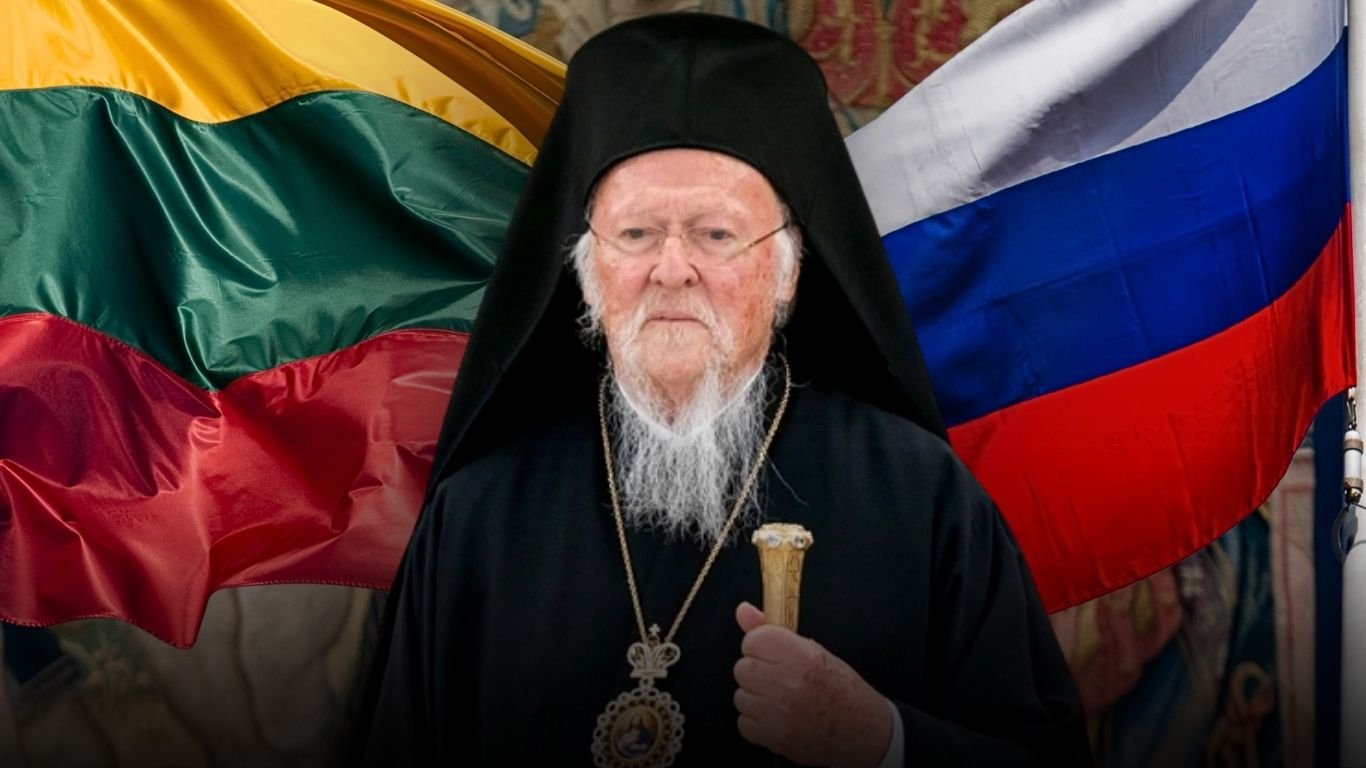
In recent days, Russia’s Foreign Intelligence Service (SVR) issued a press release claiming that Ecumenical Patriarch Bartholomew, “the devil incarnate” and the “Antichrist,” has “cast his black eye” on the Baltic states in order, with the support of British intelligence services, to “push out Russian Orthodoxy” and impose “puppet structures.” This release was republished by all independent Russian media outlets. It also drew reactions from priests of the Constantinople Patriarchate in Lithuania and from the Ecumenical Patriarchate itself. (The response stated that “the Mother Church of Constantinople, which is also the Mother of the Church of Russia, expresses its deepest regret over a new Russian attack against the person of His All-Holiness Ecumenical Patriarch Bartholomew, which this time was carried out by state services of the country.”)
We prepared a small overview of reactions to this event in Lithuania, supplementing it with an exclusive comment from Lithuanian expert Vytautas Bruveris.
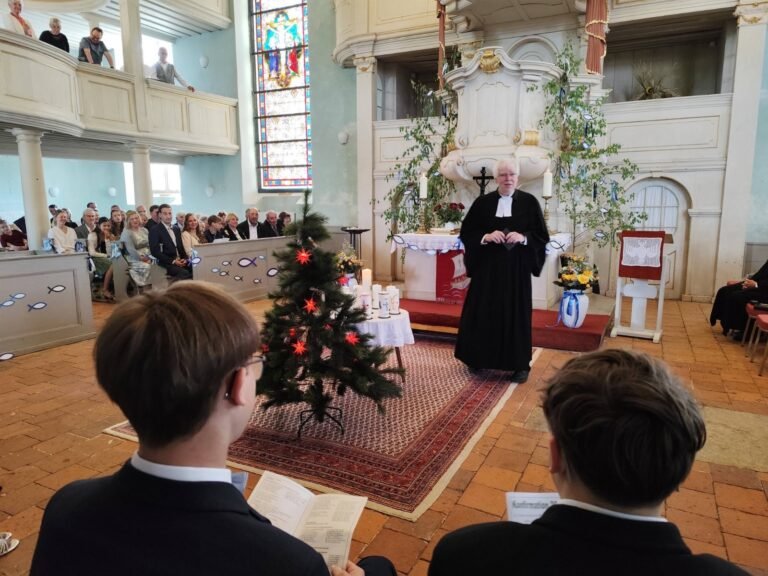
“The statements of the SVR show that the Exarchate of the Ecumenical Patriarchate in Lithuania has become a noticeable factor and irritates structures that would not like to see in our country a church free from Moscow’s influence,” — Exarch of the Ecumenical Patriarchate in Lithuania Fr. Vitalijus Mockus.
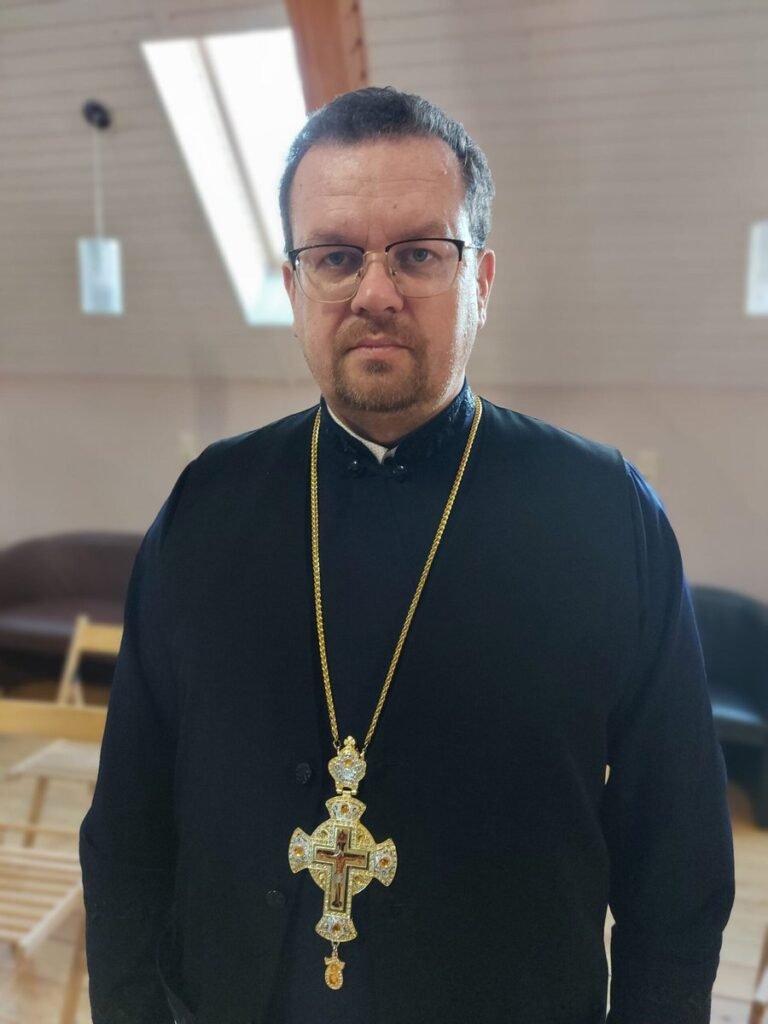
“Such statements show that the Exarchate of the Ecumenical Patriarchate in Lithuania has become a noticeable factor and irritates structures that would not like to see in our country a church free from Moscow’s influence. The formulations used are more characteristic of the church rhetoric of the Moscow Patriarchate than of state or security structures. This, in my view, points to their close connection.
And statements about the independence of the Lithuanian diocese of the Moscow Patriarchate from Moscow have no grounds. The first Orthodox bishop of the Moscow Patriarchate in Vilnius appeared only in the mid-19th century, whereas the Orthodox tradition in these lands, as part of the Kyiv Metropolis under the jurisdiction of Constantinople, dates back to the 13th century. After the beginning of the invasion, many Orthodox believers understood that things could not continue this way. Commemorating Patriarch Kirill at services became morally impossible for people. The initiative was supported by representatives of different strata of society.
Over two years, 12 parishes of the Constantinople Patriarchate have been created in Lithuania, despite the absence of their own church buildings.
We celebrate services in premises provided by Catholic and Protestant communities, public organizations, a museum, and a university. This shows that in Lithuania there is a stable demand for a church free from Moscow.
Many residents of the country are not yet aware of the existence of the Exarchate; however, according to him, over time this situation will change.
Today, in Lithuania, there is an opportunity to preserve the Orthodox faith and pray with a clear conscience, without at the same time listening to propaganda.”
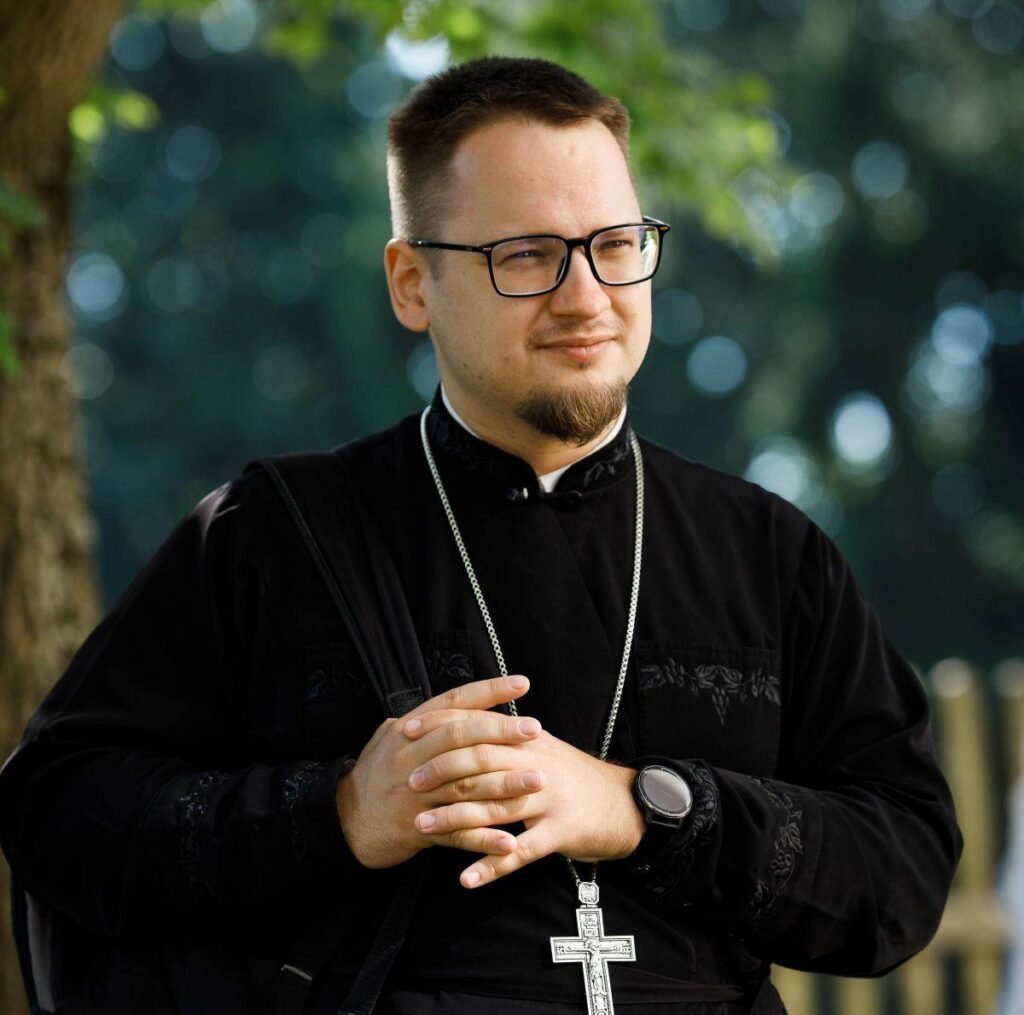
Gintaras Sungaila, priest of the Constantinople Patriarchate in Lithuania: “It is interesting whether at some point clergy in Lithuania with Russian citizenship, serving in the diocese of the Moscow Patriarchate (including the metropolitan), will react to the fact that their authorities call the first and most venerated bishop of the Orthodox Church the Antichrist?
And, as it turns out, we already, like the Ukrainians, are ‘neo-Nazis.’”
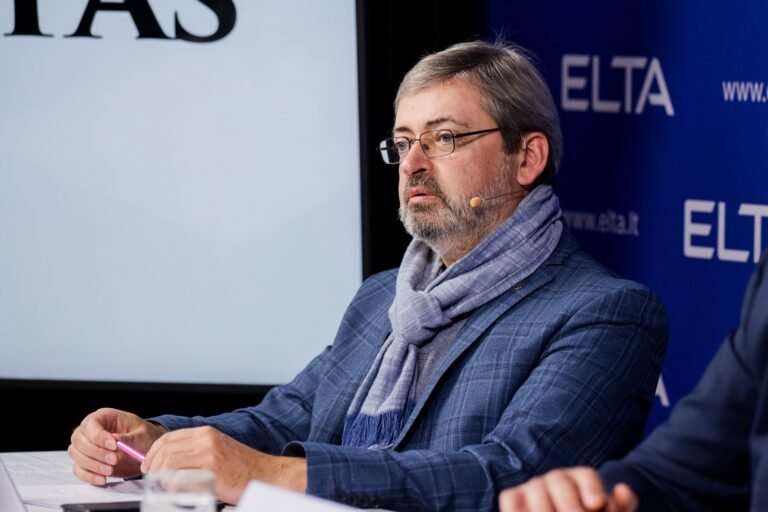
“The SVR statement is a kind of tragicomic self-exposure” — Vytautas Bruveris.
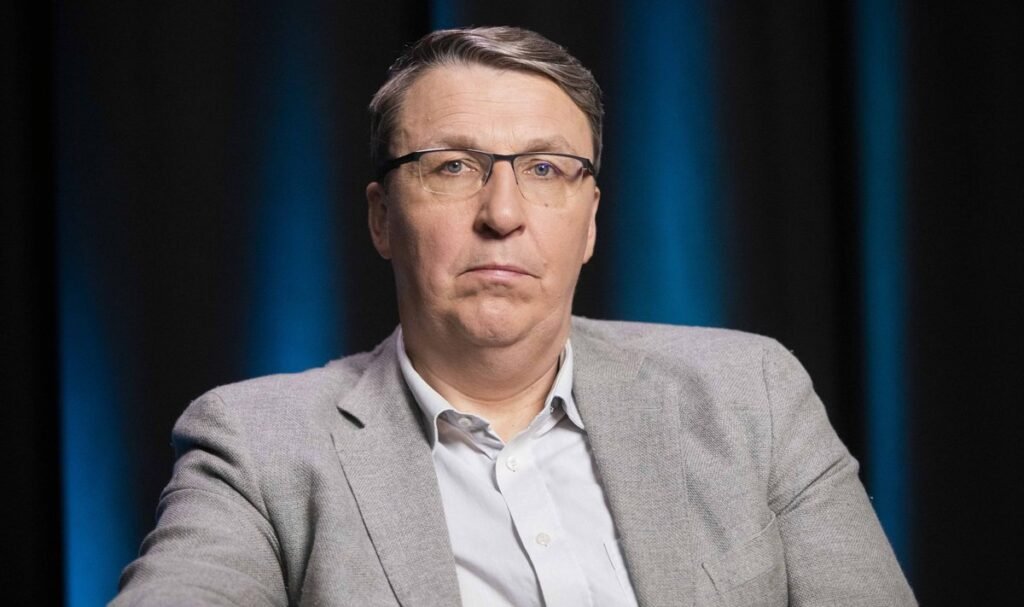
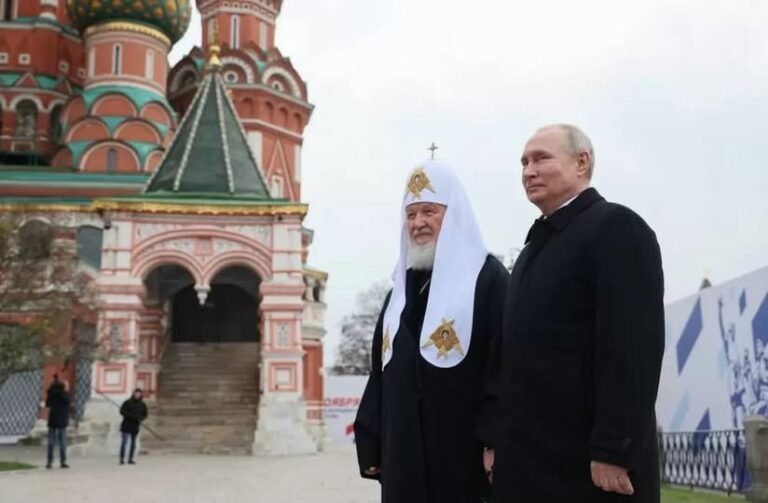
“Why the SVR is worried is understandable. Because real historical, tectonic, and civilizational shifts are taking place with the separation of national churches from the Moscow Patriarchate, which increasingly resembles a sect. For them this is painful. Why this statement appeared precisely now (let us recall that the Exarchate of the Ecumenical Patriarchate of Lithuania, as a canonical alternative to the Moscow Patriarchate, has been operating for two years already — ed.), is difficult to say. After all, it was done demonstratively, and the SVR statement was republished by the Russian Ministry of Foreign Affairs. I read this as some kind of signal. Perhaps it is a signal to the Ecumenical Patriarchate, perhaps to Ukraine, which is mentioned as the first ‘schismatic structure.’ We know, we see, look, we are watching everything. But the process is going on. Churches will separate from the Moscow Patriarchate; I am convinced that historically this process is irreversible. And I hope and believe that the Moscow sect will lose influence just as the Russian dictatorship will lose it. The situation in Lithuania and in Ukraine confirms that the process is underway, that Moscow will lose believers. But on the other hand, this statement is a kind of tragicomic self-exposure. They consider themselves smart and cool guys who twist the world, but here they have provided an indestructible argument that the Moscow Patriarchate is part of the regime, part of the dictatorship. They admit and loudly declare: this is our agent network, do not touch it. That is, they make it clear that the Moscow Patriarchate is a terrorist subdivision of the overall Moscow dictatorship. The SVR openly declared that we and the Moscow Patriarchate are one whole. And for genuinely believing people this is irrefutable proof that one must leave this church and this environment.”
Based on materials from Lithuanian media.