At the International Religious Freedom Summit in Washington, greetings from the Dalai Lama were read out, a message from George W. Bush was delivered, and the role of the Russian Orthodox Church in Ukraine was discussed.
Yesterday, February 3, the formal part of the International Religious Freedom Summit in Washington (IRF Summit 2026) concluded. It is the largest international forum dedicated to protecting one of the most sensitive human rights connected to faith. In the coming days, related events will continue outside the main summit program in the form of meetings, thematic sessions, and advocacy initiatives.
Thus, an Advocacy Day on Capitol Hill is taking place today for registered participants. At the same time, Ukrainian Week is being held, a series of special events with the participation of the Ukrainian delegation, human rights defenders, and politicians.
Global Advocacy for Freedom of Conscience and Belief
The main summit brings together a broad coalition of religious communities. This year it gathered representatives of 90 organizations representing more than 30 religious traditions. The program includes plenary meetings, thematic addresses, and parallel sessions devoted to practical action, accountability, and raising awareness among policymakers and experts.
All events are aimed at advancing freedom of religion, conscience, and belief worldwide. The demand for and effectiveness of this dialogue is evidenced by the participation of prominent international speakers and human rights advocates. The summit not only records the current state of religious freedom but also shapes the agenda and proposes possible solutions.
In a certain sense, it serves as an indicator of how the international community assesses ongoing processes and responds to key challenges. Based on publications in foreign media, we have prepared an overview of the most notable speeches.
Religious Freedom as a Moral and Geopolitical Challenge
IRF Summit Co Chair Dr. Katrina Lantos Swett, President of the Lantos Foundation for Human Rights, stated that the international movement for religious freedom is at a turning point.
“These were the best of times, these were the worst of times,” she said, borrowing a line from Charles Dickens to describe, in her words, the simultaneous growth of momentum in defense of religious freedom and the intensification of repression faced by believers. “Today, more people than ever before live in countries and regions where their most fundamental rights of conscience are restricted, suppressed, and under threat.”
Summit Co Chair Sam Brownback, who served as US Ambassador at Large for International Religious Freedom from 2018 to 2021, described the movement as both a moral and a geopolitical struggle.
“Our movement is truly global, and dictators around the world fear it because we represent the very essence of freedom,” Brownback said. “They fear religious freedom more than aircraft carriers or even nuclear weapons.”
He called believers living under repressive regimes “our main allies,” emphasizing that their resilience and public witness challenge authoritarian systems from within.
Authoritarianism and the Erosion of Fundamental Rights Worldwide
Maureen Ferguson, a commissioner of the US Commission on International Religious Freedom USCIRF, noted in an interview on the sidelines of the summit:
“Religious people often become targets of authoritarian governments because they cannot be fully controlled. They believe in a power higher than the authority of the state.”
USCIRF, an independent bipartisan US federal commission that monitors the state of religious freedom worldwide, pointed in its 2025 annual report to the rise of authoritarianism as one of the key threats to international religious freedom.
“There is a direct connection between the strengthening of authoritarian regimes and the suppression of religious freedom,” Ferguson emphasized.
Messages from Global Moral and Political Leaders
Among those who spoke at the summit was former Speaker of the US House of Representatives Nancy Pelosi, a Democrat from California. She personally delivered a message from the Dalai Lama, the spiritual leader of Tibetan Buddhism living in exile in India.
“I am deeply grateful for your efforts to protect and promote one of the most fundamental human rights, freedom of thought, conscience, and religion. Religious freedom is not only the freedom to practice a particular religion. At its core, it means freedom of thought, the right of every person to reflect, to ask questions, and to choose their beliefs independently without fear or coercion,” the message said.
“This freedom to seek the truth is the foundation of human dignity and peaceful coexistence in our increasingly interconnected world,” it noted.
Former US President George W. Bush also addressed summit participants in a pre recorded video message.
“Unfortunately, too many people in the world still live without this freedom. Many are forced to pray in secret. Some languish in prisons simply for exercising this basic human right,” he said, adding that he and his wife, former First Lady Laura Bush, “join you in solidarity with those who are oppressed for their beliefs.”
“We welcome your work to free those wrongfully detained and we pray for the day when your work will no longer be necessary,” the former president added.
National Security, Foreign Policy, and Religious Freedom
Nicole Bibbins Sedaca, a senior fellow at the George W. Bush Institute, speaking at one of the panel discussions, noted:
“If you compare the countries designated as Countries of Particular Concern with those that national security communities consider most dangerous to democracies and the global system, in many cases they are the same countries.”
The US Department of State designates as Countries of Particular Concern CPC those states in which particularly severe violations of freedom of religion or belief occur under the International Religious Freedom Act IRFA. The law requires the US government to update this list annually. Non state actors with similar behavior are designated as Entities of Particular Concern.
Bibbins Sedaca emphasized that where other fundamental freedoms are restricted, freedom of religion is inevitably curtailed as well. According to her, autocratic regimes view the suppression of independent voices as an element of a strategy to maintain complete control over power.
“Their strategy is control through violence at home and abroad, suppressing anything that could pose a threat to the regime. That is why it is critically important to integrate religious freedom into national security and foreign policy strategy,” she said.
In the same discussion, Scott Busby, a senior fellow at the Center for Strategic and International Studies, noted:
“Religious freedom is a kind of barometer of how other freedoms are treated overall.”
Ferguson also positively assessed the decision of the Donald Trump administration to again include Nigeria on the list of Countries of Particular Concern in response to violence by Islamist groups directed primarily against Christian communities and in some cases against moderate Muslims.
“This decision increased pressure on the Nigerian authorities to protect vulnerable populations, including Muslim communities that also become victims of extremists,” she noted.
Responding to a question about the impact of cuts to programs of the US Agency for International Development USAID, Ferguson said that the reallocation of foreign assistance priorities is the prerogative of the new administration. According to her, the administration led by Secretary of State Marco Rubio, known for his support of religious freedom, will in the long term ensure funding for programs that work effectively in this area.
As is known, the remaining functions of USAID were transferred to the US Department of State on July 1. Funding cuts affected, among others, projects of Catholic and other religious humanitarian organizations.
Ukrainian Week at the summit. On the role of the Russian Orthodox Church and violations of rights in occupied territories
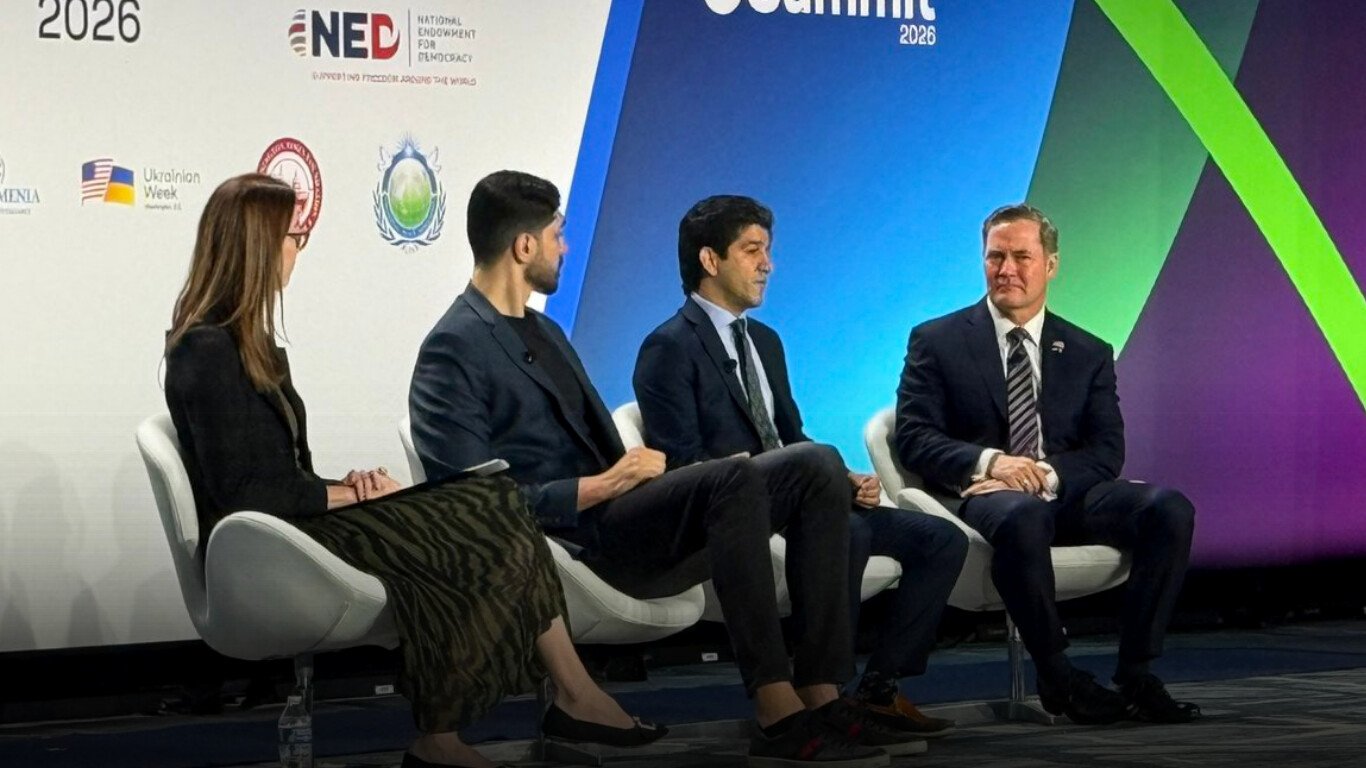
As part of the summit, the fifth Ukrainian Week has begun, an international platform for dialogue, advocacy, and partnership between Ukraine and the United States. The events run through February 7 and bring together more than 2000 participants, including US lawmakers, Ukrainian government officials, religious leaders, veterans, business representatives, and civil society.
The first discussion panel was devoted to the topic “The Impact of War on Religious Freedom in Ukraine.” It featured the Head of the State Service of Ukraine for Ethnopolitics and Freedom of Conscience Viktor Yelenskyi. He stated that in territories occupied by Russia, freedom of religion effectively ceases to exist as a right. Religious communities are forced either to accept the rules of the occupying authorities or to cease their activities. Clergy are intimidated, abducted, and expelled. Churches and prayer houses are seized or used as instruments of control.
Yelenskyi separately addressed the role of the Russian Orthodox Church, which, in his words, in the conditions of war acts not as an outside observer but as an active participant, justifying aggression, violence, and occupation with rhetoric of a “spiritual mission.” He stressed that this is not about theological disagreements but about complicity in crimes.
Viktor Yelenskyi also noted that for Ukraine, freedom of conscience remains a fundamental value even in conditions of war. The state, he said, acts within the framework of law and insists on the need to document and legally assess crimes against this freedom.
During the discussion, Ukrainian and American officials, religious figures, and experts emphasized facts of persecution of clergy, pressure on religious communities, and the role of the Russian Orthodox Church in the ideological justification of the war against Ukraine. Particular attention was paid to issues of accountability for crimes against freedom of conscience and preventing impunity, as well as the importance of international solidarity in protecting religious freedom in Ukraine.
This year, Ukrainian Week in Washington has special symbolic significance as it takes place in the year of the 250th anniversary of the United States. At the center of attention is the strengthening of the strategic partnership between the two countries at a time when shared values of freedom, faith, and human dignity are being severely tested by Russian aggression against Ukraine.
Based on materials from foreign media
Anna Jansone, LF