The return to state ownership of churches of the Moscow Patriarchate in Moldova is not an “attack on faith” but the enforcement of the principle of religious neutrality.
This was stated by political analyst Mihai Isac on the TV channel TVR Moldova, Cotidianul reports.
The expert commented on the authorities’ intention to return around 800 churches of the Russian Orthodox Church to the state and on the disinformation campaign of the Moscow Patriarchate in Moldova. He explained that court intervention is aimed at correcting violations of the law, not at changing faith or religious affiliation.
“On the basis of an unlawful agreement concluded during the pro-Russian Voronin regime, the Ministry of Culture granted numerous churches and monasteries for use to the Chișinău Metropolis subordinate to the Moscow Patriarchate. The court annulled these acts because the rights of the Bessarabian Metropolis were ignored and because of the state’s obligation to treat religions neutrally and equally,” the expert said.
At the same time, he stressed that the issue is being used to create panic and incite religious tension.
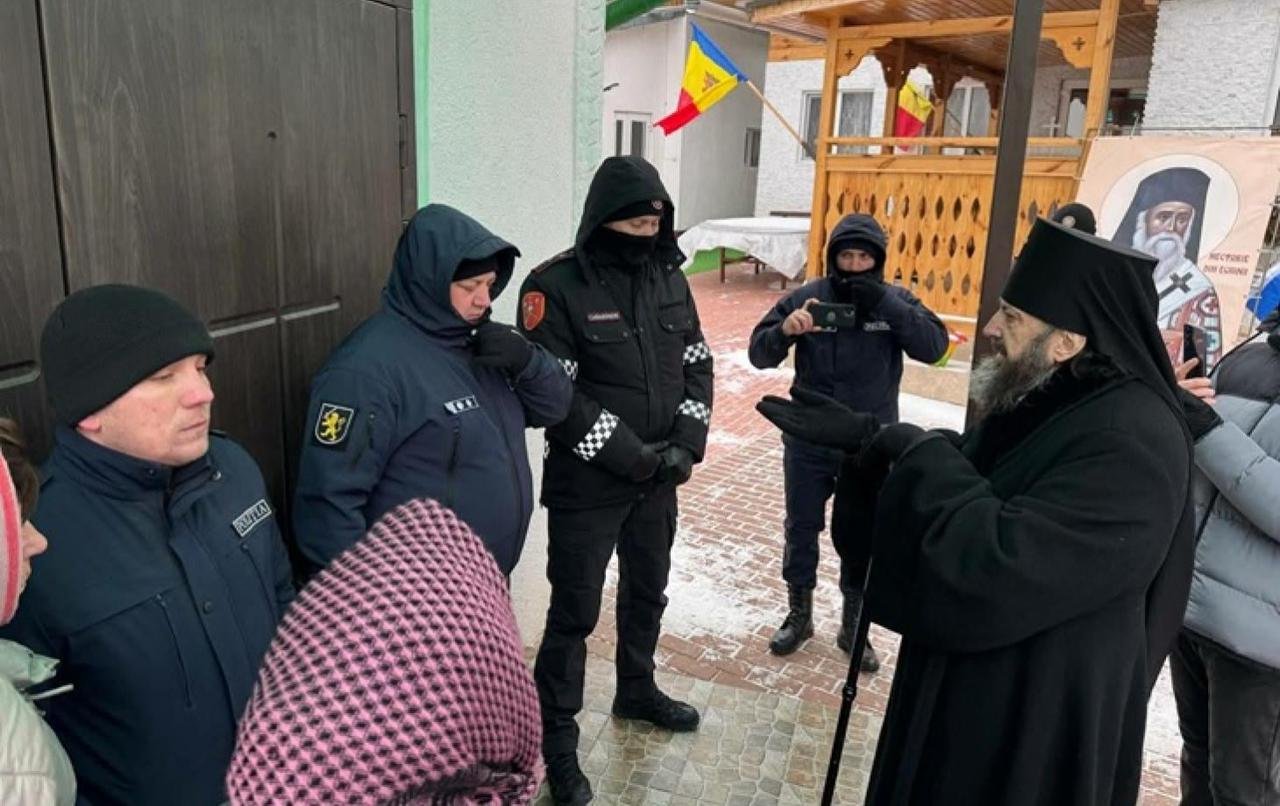
“The Republic of Moldova must protect not the monopoly of any one religious structure but the freedom of every individual to practice their faith. The Constitution of the Republic of Moldova guarantees freedom of conscience, states that religions are free, autonomous, and separate from the state. Grinăuți or Dereneu were pitiful examples of the authorities’ capitulation to pro-Russian pressure,” the analyst added.
Mihai Isac emphasized that what is at stake is not faith but the manipulation of public opinion through the distortion of legal processes.
“Against the backdrop of these events, the Russian Bishop of Bălți, Markell, is trying to alarm Orthodox Christians in the Republic of Moldova. Of course, not a word is said about the role of the Moscow Patriarchate in supporting the Russian occupation regime in Transnistria. We see how this topic has been used by Telegram channels such as Sare și Lumina, which presented the court dispute as an attack on the canonical church, with hints of a conspiracy, external funding, and even a Ukrainian scenario,” he said.
According to the analyst, faith is not in danger, but the law must be applied equally to all.
“In a democratic state, the church is respected, faith is freely practiced, and the law is applied equally to all, not according to the principle of who shouts louder about the approach of the Romanians,” Mihai Isac concluded.
As LF reported, more than 800 churches in Moldova classified as historical monuments may return to state ownership. These are churches of the Metropolis of Moldova, which is part of the Russian Orthodox Church. This was stated by Minister of Culture Cristian Jardan.
Will the Russian Orthodox Church manage to preserve its ecclesiastical influence in Moldova by distorting the information space and altering the country’s political course? LF analysis on this topic is available via the link.