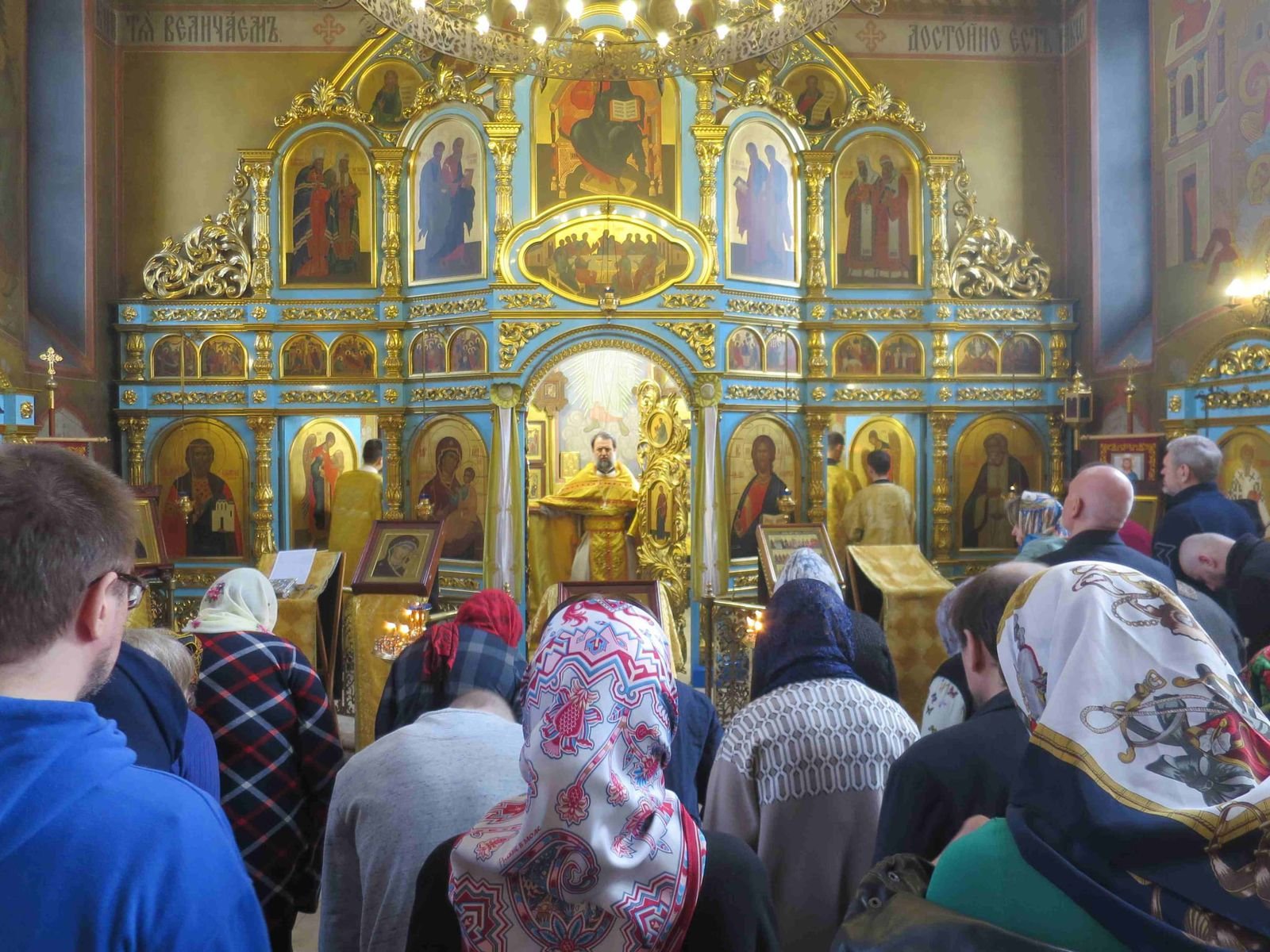
Among Orthodox Russians, 32% never attend church services, while 10% have never been inside a church.
This was reported in the results of a survey conducted by the Orthodox St. Tikhon’s University for the Humanities, according to NSN.
At the same time, the study found that 65% of Russians identify themselves as Orthodox Christians.
The report also states that 16% do not identify with any religion, while only 6% described themselves as atheists. Islam is practiced by 9% of respondents, 3% follow other beliefs, and 1% found it difficult to answer.
The share of Orthodox believers has meanwhile been declining, from 78% in 2011 to 67% in 2020. The percentage of those who do not identify with any religion has increased from 11% in 2011 to 16% in 2024.
Among today’s Orthodox Christians, 32% never attend services. Regular participation in services was reported by 17%. Churches are visited by 33% of respondents. Another 10% of Orthodox believers have never been inside a church.
LF Commentary:
We have published statistics from an official educational institution of the Russian Orthodox Church, yet we cannot refrain from making an important clarification.
For example, the Levada Center reported in 2023 that 43% of respondents never attend religious services at all, while only 12% attend at least once a month. More recent publications based on 2026 surveys show even lower figures, with around 55% not attending services and only 16% attending at least once a month.
Another question also remains unanswered: can indicators such as abortion rates, suicide, alcoholism and crime truly be considered measures of religiosity?
The Russian Federation claims that it is waging a war for “traditional values,” yet within the country a deep social divide is evident, including high alcohol-related mortality, high suicide rates, weak real religious practice and the severe condition of the indigenous small-numbered peoples of the North.
Russia is no longer the absolute world “leader” in suicide rates, yet it remains among the countries with very high levels. WHO and international databases indicate approximately 21 to 24 suicides per 100,000 population, with particularly high rates among men.
Independent studies link alcohol to an enormous share of premature mortality in the Russian Federation. One study on Russia indicated that alcohol was associated with approximately 21.6% of all deaths. This serves as a powerful counterargument to the image of a “healthy traditional society.”
There is clear demographic vulnerability, social disintegration and a loss of the conditions necessary for the cultural reproduction of the peoples of the North. Research concerning Chukotka, the Nenets Autonomous Okrug and other northern regions demonstrates extremely high levels of alcoholism and suicide among certain indigenous communities. In Chukotka during the 1990s, suicide rates of around 150 to 166 per 100,000 were reported, many times higher than the Russian national average.
A state that claims the role of defender of “values” does not demonstrate the capacity to protect basic human values within its own country, namely life, health, family, communal resilience and the cultural survival of small peoples.
Imperial rhetoric conceals the failure of social policy and the complete inability of the Russian Orthodox Church to serve as the moral compass of society.