Metropolitan Hilarion (Alfeyev) has been detained by the Czech authorities. According to a report on the priest’s Telegram channel, the detention took place on 24 May in Karlovy Vary, where Hilarion, who had previously headed the Budapest and Hungarian Diocese of the Russian Orthodox Church, was assigned to minister at the end of 2024:
The hierarch’s Telegram channel reports that “after departing from the Orthodox Church of the Holy Chief Apostles Peter and Paul in Karlovy Vary, the vehicle carrying Metropolitan Hilarion and the cameraman accompanying him was stopped. According to the metropolitan and his legal defence, police officers did not provide any clear reasons for the stop related to a possible traffic violation and immediately proceeded to search the vehicle. During the search, four small containers containing a white substance were discovered in the luggage compartment. The composition, origin, and nature of the substance can only be determined by a competent forensic examination.”
Hilarion Alfeyev formerly headed the Department for External Church Relations of the Russian Orthodox Church, a department often referred to as the ROC’s “great” or “church foreign ministry”, and was regarded as an original and unquestioned partner of Russian intelligence structures. During the process of granting autocephaly to Ukraine, he led resistance to the move, travelling to a dozen local churches in an effort to persuade them not to recognise the Ukrainian Church even if it were ultimately granted a Tomos.
But the mission did not save him from disgrace.
In 2022, he was removed from the post of head of the Department for External Church Relations of the Russian Orthodox Church. Many observers linked this to internal church politics and the war against Ukraine. In 2023, Ukraine placed him on its sanctions list.
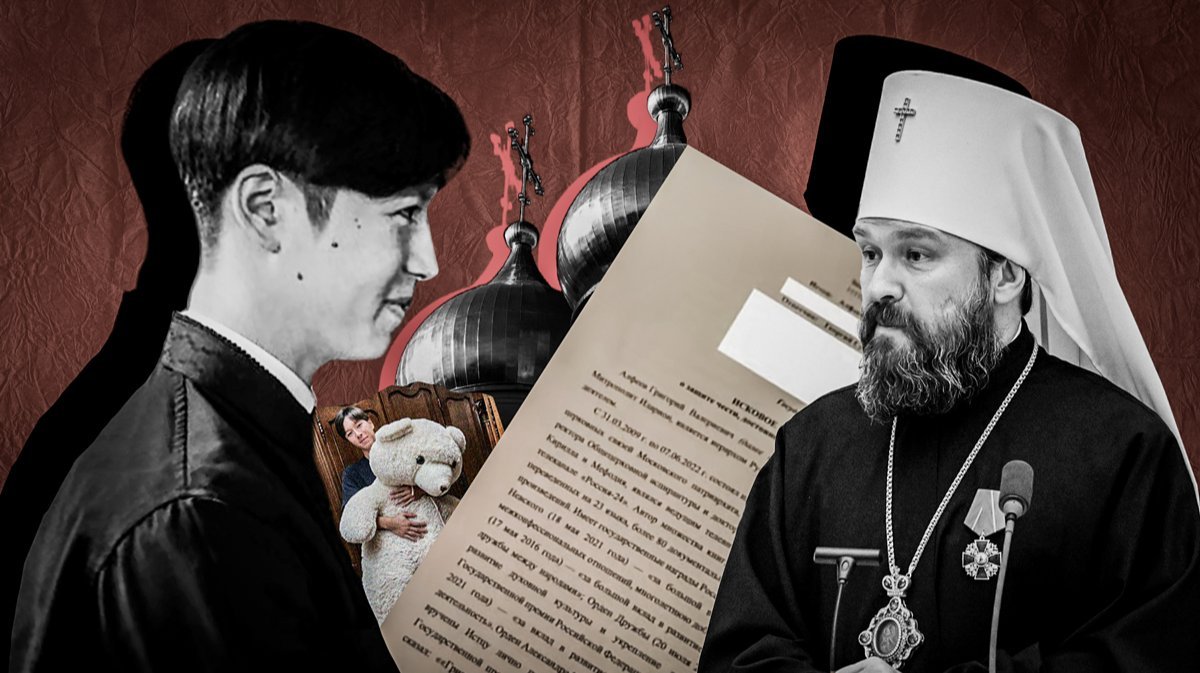
In December 2024, the Synod of the Russian Orthodox Church relieved him of his administration of the ROC diocese in Hungary and sent him into retirement, citing a lifestyle and relationships with those around him that were inconsistent with the image of a monk and clergyman.
Journalists from The Insider wrote that in Hungary Hilarion may have served not only as a church intermediary but also as Moscow’s political intermediary in contacts with Viktor Orbán’s circle and Russian oligarchs.
His former assistant, Georgy Suzuki, also claimed that he had taken part with him in meetings that resembled informal diplomacy in the interests of the Kremlin. Hungarian national security expert Péter Buda openly advanced the view that Hilarion was closer to the Russian special services than to the Church.
Our outlet will continue to follow the fate of the metropolitan, who for all thoughtful analysts has become the embodiment of the connection between the Russian Orthodox Church and intelligence agencies.