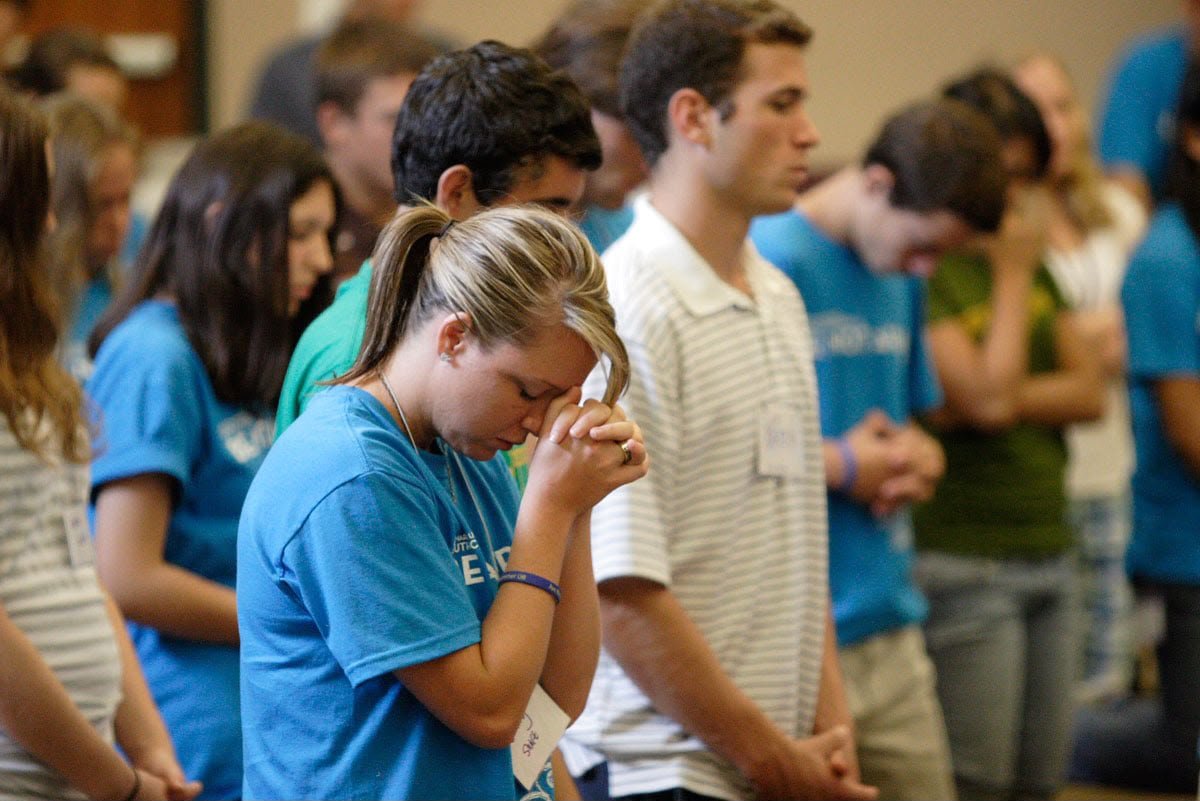
Members of Generation Z who attend church demonstrate the highest level of engagement in church life. They attend church more frequently than older generations, participate in small groups more actively than any other age group, and are more involved in ministry, evangelism, and spiritual growth.
This is according to a new study by Lifeway Research, as reported by Relevant.
Among Protestants, members of Generation Z attend worship services an average of 6.2 times per month. This is significantly higher than the figures for Millennials at 4.8, Generation X at 5.1, and Baby Boomers and older adults at 4.5. They also attend small group meetings an average of five times per month, nearly twice the rate of Generation X and Baby Boomers.
They are also highly active in ministry. Young adults are more likely than other age groups to feed the hungry, visit the sick, memorize passages of Scripture, fast, and invite nonbelievers to church. Nearly four in ten have participated in international missionary trips, and two thirds say they intentionally build friendships with non Christians in order to share their faith.
However, despite all this activity, Lifeway specialists found signs that faith often does not translate into everyday life.
The researchers also found that younger churchgoers are more likely to experience doubts about fundamental theological truths.
We previously reported that, according to a new study conducted by the Danish Bible Society, increasing numbers of young Danes are becoming interested in matters of faith, reading the Bible, and attending church services. The findings were presented in the report God and the Danes: Faith Analysis 2026, published in the spring of 2026. The study is based on a survey of 3,000 residents of Denmark and shows that religiosity among young people is significantly higher than among older generations.
As LF previously reported, the number of believers is declining in traditionally Christian regions. This conclusion is presented in the report Status of Global Christianity 2026, prepared by the Center for the Study of Global Christianity at Gordon-Conwell Theological Seminary in the United States.
A study involving more than 24,000 Christian churchgoers in the United States found that church attendance has increased five years after the pandemic. The report was prepared by Faith Communities Today as part of a project examining the impact of the pandemic on church congregations.