No democratic society should tolerate a situation in which a local church receives instructions from Moscow, from a structure that supports war.
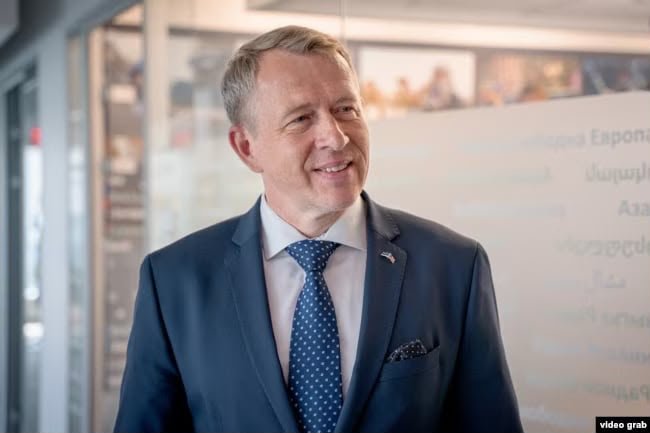
This was stated in an interview with Radio Free Europe/Radio Liberty in Washington by Joosep Kaasik, Deputy Secretary General for Internal Security at Estonia’s Ministry of the Interior.
Commenting on the adoption in Estonia of a law ending the administrative ties between the Estonian Orthodox Church and the Moscow Patriarchate, Kaasik noted that at the beginning of the war in Ukraine, the government concluded that, because of the actions of the Russian authorities, Russia could be characterized as a terrorist regime.
“When we amended the legislation, the main principle was that no religious association operating in Estonia should have administrative ties with a terrorist state in any part of the world. This is a universal principle. It does not apply only to Russia.
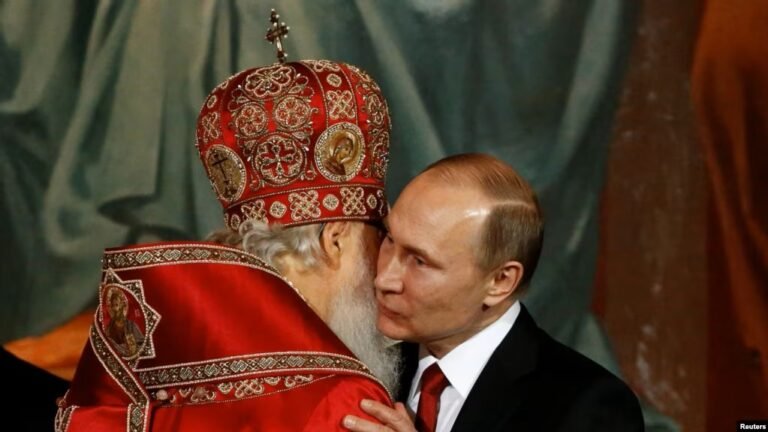
The second point is that the Patriarch of the Russian Orthodox Church openly declared this to be a holy war. In other words, the Moscow Patriarchate publicly supported this war of aggression and this regime. We must take this into account when we talk about the activities of churches in democratic countries.
By virtue of their administrative structure, they receive instructions directly from Moscow. I cannot imagine how this could function normally if those instructions come from an institution that supports the war against Ukraine. No democratic society should tolerate this,” he said.
According to the official, this is precisely why the law was amended, prohibiting religious organizations from maintaining direct administrative ties with foreign structures that openly support terrorism or other forms of violent activity.
He stressed that the issue is not limited to Russia.
“This law is not directed specifically against Russia. It is based on general principles. Today we are talking about one church, but in the future it could be any other religious organization with similar administrative ties,” Kaasik said.
As previously reported, Estonia’s Ministry of the Interior sent all religious associations registered in the country an official notification regarding the entry into force of amendments to the Churches and Congregations Act. The ministry reminded organizations that they must bring their statutes, governing bodies, and activities into compliance with the new requirements, which are intended to safeguard national security, by December 28, 2026.
As LF previously reported, a court in Estonia ruled that the revised version of the Churches and Congregations Act, adopted by the Riigikogu in the autumn of 2025, is constitutional. The ruling was issued by the Supreme Court in Tallinn. The law primarily concerns the Estonian Christian Orthodox Church, formerly the Estonian Orthodox Church of the Moscow Patriarchate, which will be required to separate from the Russian Orthodox Church.
As is well known, Estonian President Alar Karis declined to promulgate the revised version of the Churches and Congregations Act adopted by the Riigikogu in April 2025. In June of the same year, parliament passed the law again in an amended form, but the president once again declined to promulgate it and proposed that the Riigikogu reconsider the legislation and bring it into conformity with the Constitution.
However, the Riigikogu made no further amendments and passed the law in the same form. On October 3, 2025, Karis then petitioned the Supreme Court to declare the law unconstitutional.
Following the Supreme Court’s ruling, the Estonian Christian Orthodox Church no longer has the room for maneuver it previously enjoyed. The Churches and Congregations Act requires religious organizations to sever their administrative and financial ties with their foreign governing centers. Cosmetic changes, such as adding a few more provisions to their statutes, are no longer sufficient. This was stated by Estonia’s Minister of the Interior, Igor Taro. The law gives religious organizations six months to bring their statutes, governing bodies, and activities into compliance with the new requirements.
As LF previously reported, Estonia’s Supreme Court held a public hearing on February 3 to consider President Alar Karis’s petition seeking to have the amendments to the Churches and Congregations Act declared unconstitutional. The church affiliated with the Moscow Patriarchate maintains that the legislation is directed against it, while parliament cites considerations of national security.
As is well known, the annual report of Estonia’s Internal Security Service states that the Estonian Christian Orthodox Church, which is subordinate to the Moscow Patriarchate, continues to be governed by the Russian Orthodox Church despite presenting itself as independent. Although the church changed its name last year, only cosmetic amendments were made to its statutes in order to create the appearance of independence from the Moscow Patriarch, who continues to use Christian rhetoric to justify Russia’s war of aggression against Ukraine.
As LF previously reported, Estonia’s Internal Security Service identified clergy members and individuals associated with the Russian Orthodox Church whose activities were deemed to threaten national security. Because of their support for Russia’s aggression against Ukraine and their promotion of the Kremlin’s foreign policy, these individuals were barred from entering Estonia and the Schengen Area.
Earlier, Russia’s Ministry of Foreign Affairs responded to the Estonian Supreme Court’s decision upholding the constitutionality of the Churches and Congregations Act. Russian Foreign Ministry spokesperson Maria Zakharova stated that “Moscow condemns any discriminatory actions taken by Estonia to sever ties with the Russian Orthodox Church.”
Earlier, Patriarch Kirill Gundyayev of the Russian Orthodox Church claimed that a campaign against the Russian Orthodox Church was continuing in a number of countries, including Estonia.
Although the Russian Orthodox Church considers Estonia part of its canonical territory in its official documents, this is not the case from the standpoint of Orthodox canon law. This is the view of church historian Priit Rohtmets and specialist in Orthodox canon law David Heith-Stade.
As Priit Rohtmets, Associate Professor at the University of Tartu, told LF in an interview, the Russian Orthodox Church will have to abandon its own imperial identity.