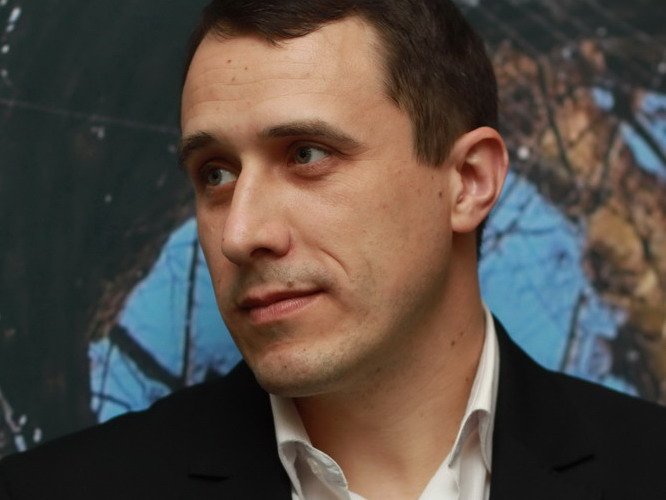
The Russian Orthodox Church is facilitating Russia’s absorption of Belarus and the destruction of Belarusian national identity. Belarusian politician and former political prisoner Pavel Sevyarynets made the accusation in an interview with journalist Yuriy Makarov. According to Sevyarynets, the Moscow Patriarchate has become an instrument for spreading the imperial ideology of the “Russian World” and justifying Russia’s aggression against Ukraine.
“The Russian Orthodox Church in present-day Belarus continues its policy of occupation and ethnocide against the Belarusian people. How many times have Belarusian believers heard statements from Moscow, from visiting church hierarchs and Russian politicians: ‘There is no such people as the Belarusians. They are all Russians…’” Sevyarynets said.
According to the politician, the concept of “Holy Rus’” promoted by the Moscow Patriarchate poses a threat not only to Belarus’s political independence but also to the national consciousness of the Belarusian people.
“The concept, the idea of Holy Rus’, is a direct justification for annexations. It is nothing less than the destruction of the Belarusian people, their identity and their soul,” he stressed.
Sevyarynets also criticised the internal structure of the Russian Orthodox Church, arguing that its centralised system of governance leaves no room for clergy to express independent views, including on the war and relations between Belarus and Russia.
“In reality, the Russian Orthodox Church, especially now, is a rigidly organised hierarchy. It is a structure in which there is no room for dissent, no room for independent views on any important issue. Everything is formulated in Moscow. Everything is rubber-stamped,” the politician noted.
Sevyarynets also addressed the question of responsibility among clergy who continue to serve within the structures of the Moscow Patriarchate despite the church leadership’s position on the war against Ukraine.
In his view, disagreement with the patriarch’s statements does not absolve clergy of moral responsibility for belonging to a church organisation that supports the Kremlin’s policies.
“If someone disagrees with what their patriarch says, they always have a choice: to remain within that structure and thereby support its stated position,” Sevyarynets said.
“Therefore, of course, those priests who remain within the structure of the Russian Orthodox Church bear a share of the responsibility,” he added.
As an alternative to the Moscow Patriarchate, the politician proposed that Orthodox communities move under the jurisdiction of the Patriarchate of Constantinople. He urged believers in Belarus and Lithuania to reconsider their affiliation with church structures linked to Moscow.
According to Sevyarynets, the choice of ecclesiastical jurisdiction today carries not only religious but also moral significance, as it reflects attitudes towards war, human life and national independence.
The politician believes that Orthodox Christians should be guided by the Gospel principles of peace and truth rather than the Kremlin’s political interests.