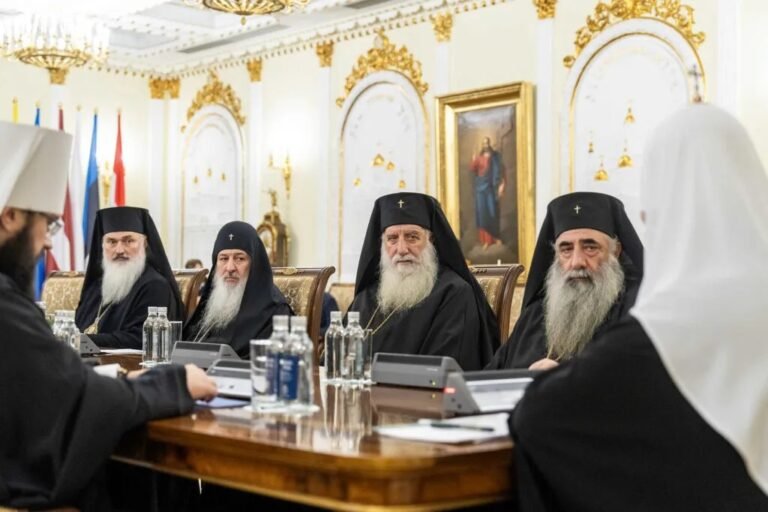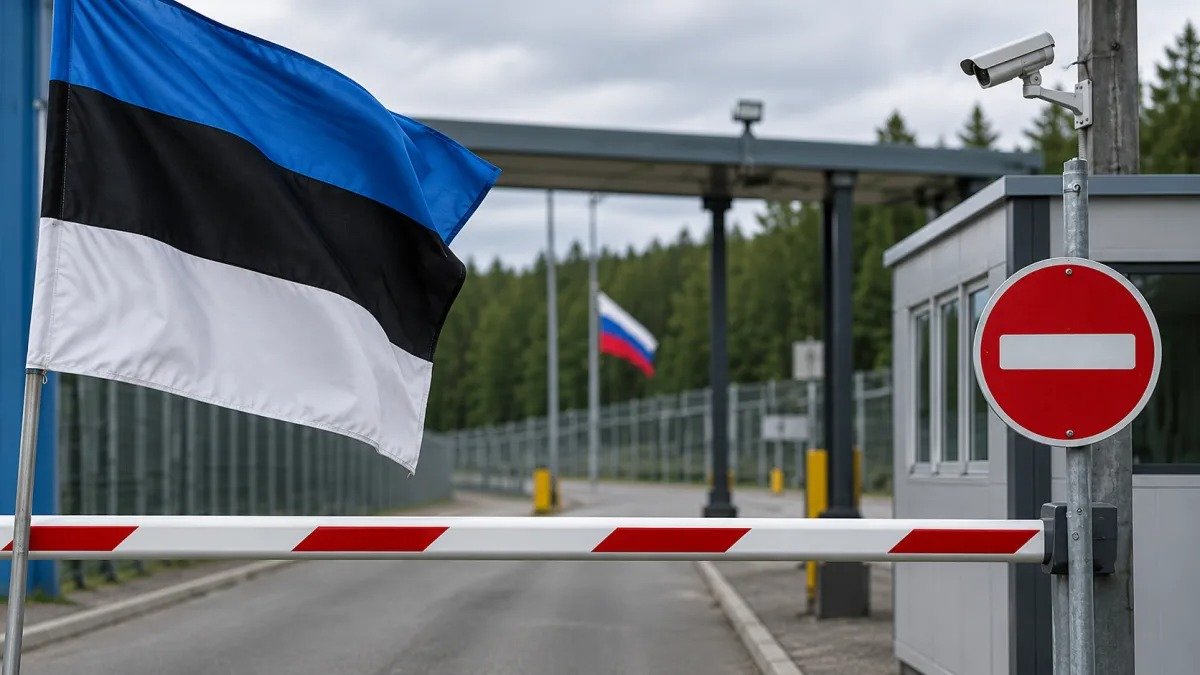
On 23 November, Estonia’s chargé d’affaires in Russia, Marek Juhtegi, was summoned to the Russian Foreign Ministry, where a “strong protest” was lodged with him over the Estonian government’s decision to close crossing points on the Russian-Estonian border from 1 December. The ministry also expressed dissatisfaction with the “threat of the complete liquidation of the Estonian Orthodox Christian Church” (Moscow Patriarchate – LF).
This was stated in a statement issued by the Russian Foreign Ministry.
The Estonian diplomat was told that such steps “once again reveal the virulently Russophobic nature of the Estonian regime” and “come close to unleashing an open war with Russia”.
According to the ministry’s press release, “Estonia continues to actively support the Kyiv regime, tacitly allowing Ukrainian drones to use its airspace to carry out attacks on northwestern Russia”.
The ministry also alleged “repressive actions targeting Russian speakers” and a “threat of the complete liquidation of the Estonian Orthodox Christian Church”.
Moscow stressed that it “reserves the right to adopt a comprehensive set of political and diplomatic measures aimed at protecting Russia’s national interests and the legitimate rights of our country’s citizens”.
As previously reported, on 20 November, the Estonian government announced that crossings of the Estonian-Russian border would be suspended on 1 December. The decision was taken after Russian military intelligence orchestrated an attempted act of sabotage against Threod Systems, an Estonian defence industry company that manufactures reconnaissance and combat drones.
Earlier, Patriarch Kirill Gundyayev of the Russian Orthodox Church claimed that a campaign against the Russian Orthodox Church was continuing in several countries, including Estonia.
Although the Russian Orthodox Church regards Estonia in its documents as part of its canonical territory, this is not the case under Orthodox canon law, according to church historian Priit Rohtmets and Orthodox canon law specialist David Heith-Stade.