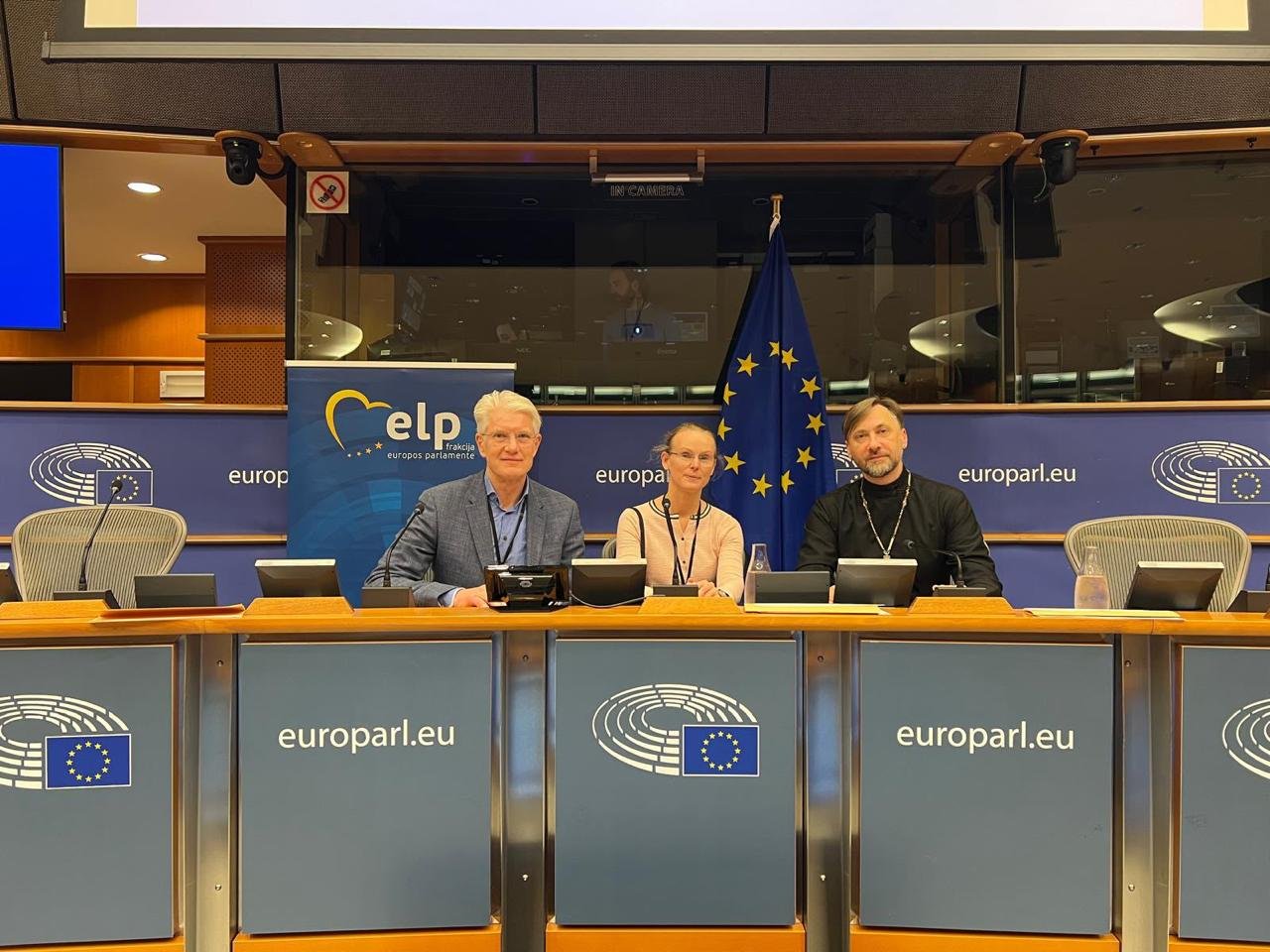
On 17 November 2026, the European Parliament in Brussels hosted a screening of the documentary film “Prisoners: Punishers”, which examines systematic crimes committed by Russian security forces against Ukraine’s civilian population.
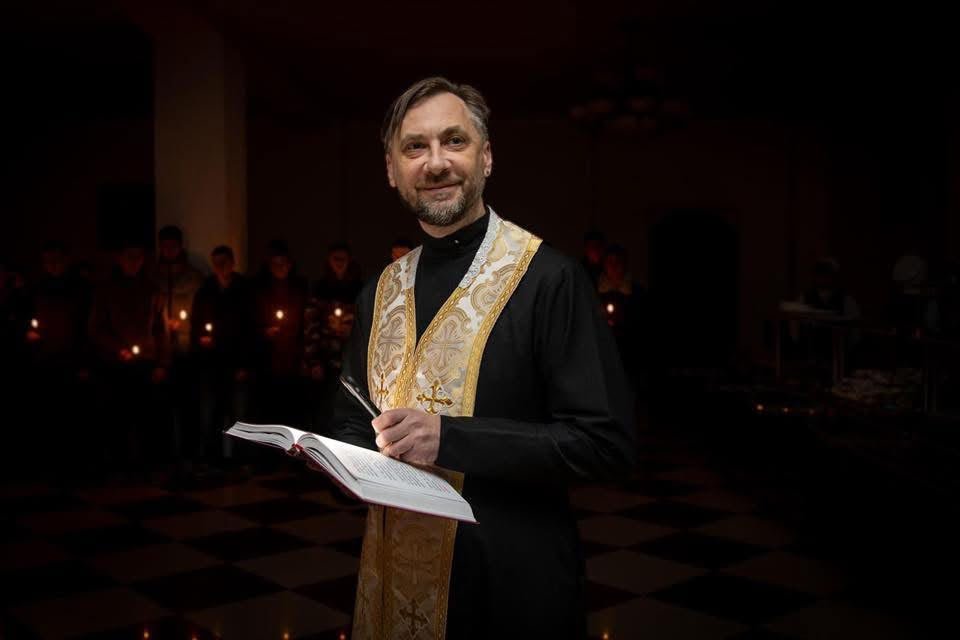
During the event, Archpriest Serhiy Dmytriyev, head of the non-governmental organisation Eleos-Ukraine, presented the attending Members of the European Parliament with a report entitled “Who Is Your God? Religious Terror in the Temporarily Occupied Territories”, prepared by the human rights organisations International Partnership for Human Rights (IPHR) and Truth Hounds.
Speaking to Libertas Fidei, Father Serhiy highlighted the scale and brutality of religious persecution.
“When we speak of religious persecution in Ukraine’s occupied territories, we are not merely talking about restrictions on freedom of religion, the closure of places of worship or bans on religious services. We are talking about extreme physical, psychological and sexual violence, abductions, torture, rape and murder. Religious terror has become one of the instruments through which the Russian occupation authorities seek to break the moral and spiritual resistance of Ukrainian society.
According to the report we presented, seven of the twelve clergy members interviewed had been subjected to physical violence. Six had been beaten, four had been tortured with electric shocks, and five had experienced various forms of sexualised violence, including threats and attempted rape. Electrodes were attached to their fingers, ears and genitals. These methods of torture were accompanied by beatings, strangulation and humiliation.
Clergy members were tortured for refusing to cooperate with the occupation authorities, submit to the Moscow Patriarchate, renounce their beliefs or endorse Russian propaganda. In some cases, simply praying for Ukraine or using the Ukrainian language during religious services was enough to trigger persecution.
According to available data, by February 2025, Russian occupation forces had killed at least 80 clergy members of various faiths, while more than 200 had been subjected to abduction, torture and unlawful detention.
One of the most horrific examples is the fate of Stepan Podolchak, a priest of the Orthodox Church of Ukraine who was tortured to death by Russian occupation forces in Kalanchak, Kherson Region.
What we are witnessing is not a series of isolated abuses, but systematic violence targeting those who remain steadfast in their faith, dignity and Ukrainian identity.”
Father Serhiy paid particular attention to sexual violence as one of the instruments of Russian occupation terror.
“I have previously spoken about a case in which 40 Ukrainian women who had been raped by Russians were brought to a city hospital at the same time. Behind every such figure are individual human stories, profound trauma and shattered lives.
The Office of the United Nations High Commissioner for Human Rights has documented 892 cases of conflict-related sexual violence. The survivors include 725 men, 151 women and 16 children. The Global Survivors Fund identified 1,080 survivors through a separate pilot project. Yet we understand that the true scale of these crimes is considerably greater.
Sexual violence is used not merely to inflict physical suffering. It is an instrument for humiliating individuals, stripping them of their dignity, breaking their will and intimidating entire communities. This is precisely why crimes against clergy and religious believers must be considered within the broader context of Russia’s system of terror in the occupied territories.”
According to Father Serhiy, documenting crimes and holding perpetrators accountable must go hand in hand with establishing effective mechanisms to support survivors.
“Ukraine has already taken an important step by adopting Law No. 4067-IX, commonly known as Bardina’s Law. It provides for the official recognition of survivors’ status, while its implementation mechanism includes a one-off payment of €3,000 and access to medical, psychological, legal and social assistance.
However, sustainable funding for this mechanism has yet to be secured. We propose a two-stage model under which international partners would allocate €22 million in 2027–2028 to provide assistance to up to 6,000 survivors, including women, men and children. From 2028 onwards, this programme should be gradually integrated into Ukraine’s recovery financing framework, including through European Union financial instruments.
Frozen Russian assets could serve as one possible source of funding for reparations.
It is fundamentally important to us that European policymakers understand that freedom of religion in Ukraine’s occupied territories is not merely a matter of religious rights. It is a matter of human life, physical integrity and dignity. People are paying with their health, their freedom and sometimes their lives for refusing to submit to the political and religious ideology imposed by Russia.
Europe must not only condemn these crimes but also help restore justice and dignity to those who have survived this terror.”
The documentary “Prisoners: Punishers” is the third instalment in the “Prisoners” series, which examines crimes committed by Russian security forces against Ukraine’s civilian population.
The previous instalment, “Prisoners: System of Terror”, was presented at the European Parliament on 1 July 2025. The new film has also been screened at the British Parliament in London. The next screening is scheduled for 30 November 2026 in Tallinn.