Moldova Faces an Unusual Challenge: Religious Interference in Elections
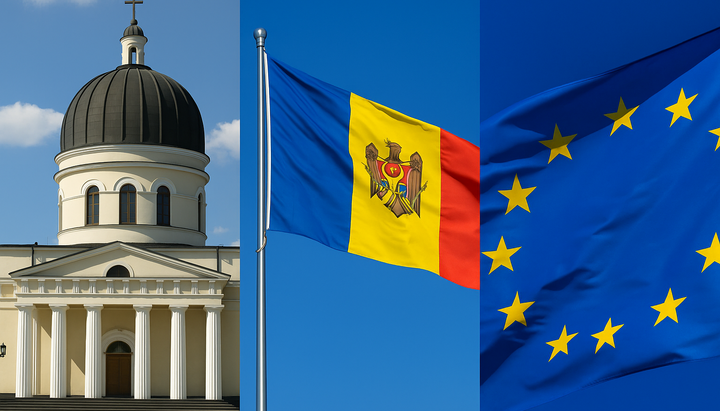
During Moldova’s parliamentary elections, accusations mounted against Orthodox clergy linked to the Russian Orthodox Church (ROC), who were accused of promoting a pro-Russian political agenda. The Orthodox Church, which enjoys high public trust, became a vehicle of Moscow’s “soft power,” shaping public opinion and the country’s geopolitical course. This sparked concern both within Moldova and internationally, where the Kremlin’s attempts to use faith as an instrument of hybrid warfare are now openly acknowledged.
The Orthodox Church in Moldova is canonically subordinate to the Moscow Patriarchate. Its leaders frequently warn of the “dangers” of closer ties with Europe and highlight the country’s cultural and religious affinity with Russia. The head of the Moldovan Metropolitanate (ROC) sits on the Holy Synod of the Russian Church and is regarded as an ally of Patriarch Kirill, a prominent supporter of Kremlin policy. Observers note that this creates a troubling precedent for external influence: as a conservative institution, the church fits seamlessly into pro-Kremlin narratives, particularly given that 70–80% of Moldovans traditionally trust it.
Preaching Politics: Examples and Tactics
Moldovan authorities have increasingly accused the local branch of the ROC of political campaigning from the pulpit. Observers have documented several cases in which clergy participated directly in election campaigns — from urging parishioners to vote for specific candidates during services to collecting signatures for politicians inside churches.
One of the most striking examples involves Archbishop Markell of Bălți and Fălești (secular name: Nicolae Mihăescu), an outspoken pro-Russian cleric. In late 2024, at the height of the presidential race, Markell used the pulpit to effectively endorse opposition candidate Victoria Furtună, describing her as a “fragile Christian, a loving mother and a faithful wife” who would “uphold Christian laws.” Delivered in the cathedral, the speech was seen as outright electioneering under the guise of a sermon. He was later fined 3,500 lei (around $200) for breaching the ban on political activity in religious institutions.
The rhetoric of pro-Russian clergy follows a familiar pattern: parishioners are warned that European integration “threatens traditional values and faith.” Markell has framed the EU as a danger to moral norms, contrasting it with a “Christian Europe.” His sermons have also touched on the war in Ukraine: in one, he prayed for the “softening of the Ukrainian people’s hearts,” a formulation that effectively shifted blame for the conflict onto Kyiv. In this way, church platforms have been used to transmit Kremlin talking points.
Pilgrimages and the Shadow Campaign
A key channel of Russian religious influence in Moldova has been organized trips for clergy to Russia, often followed by a surge in political activity back home. Ahead of the 2024 presidential elections and a referendum on EU integration, hundreds of Moldovan priests were invited to Moscow on “pilgrimages” of remarkable scale.
Reports suggest these visits were fully paid for by the hosts and accompanied by lavish “gifts.” Each priest was reportedly issued a Russian payment card with sums of $1,000 or more, credited after returning to Moldova. Officially, the trips included tours of holy sites and meetings with theologians and historians. In practice, participants were urged to embrace the idea of a “shared historical destiny between Russia and Moldova, bound by Orthodoxy,” while being warned about a “decadent West” that had lost its morality.
Unsurprisingly, pro-Russian activism spiked after these trips. Markell, upon his return from Moscow in autumn 2024, quickly began campaigning against President Maia Sandu and in favour of her challenger. Clergy were encouraged not only to preach but also to run Telegram channels and social media accounts, where political messages were wrapped in religious language. Parishioners were warned of “forced Europeanisation” and the imposition of liberal values, portrayed as the greatest threat from Europe.
Financing for such activities came through various channels. Investigations revealed that the mass “pilgrimages” were funded by “Eurasia,” an organisation registered in Moscow and linked to fugitive Moldovan oligarch Ilan Shor, a well-known pro-Russian populist. This points to a coordinated effort — from Russian political strategists overseeing clerical “tourism” to oligarchs funding propaganda campaigns.
Government and Public Response
The scale of religious interference in politics provoked a strong response from both Moldovan authorities and international partners. President Maia Sandu openly accused Russia of undermining the will of Moldovan voters through the religious sphere. She said the Kremlin had mobilised a network of ROC priests, alongside online “bots,” to spread propaganda, with a particular focus on the Moldovan diaspora abroad. Sandu argued that the use of religion was a key element of Moscow’s strategy to derail Moldova’s pro-European course. After a meeting of the Supreme Security Council in the summer of 2025, she listed the methods of hybrid interference, highlighting church campaigning as one of the “ten tools” of Russia’s subversive activity during the elections in Moldova.
Moldova’s Central Election Commission publicly reminded religious organisations that campaigning is illegal and urged clergy to refrain from political activity. Police and prosecutors signalled their readiness to enforce the law: the fine imposed on Archbishop Markell was presented as a test case, with authorities warning that other clergy could face similar penalties.
Caught between loyalty to Moscow and domestic pressure, Metropolitan Vladimir, head of the Moldovan Metropolitanate, has sought to strike a balance. Meanwhile, the alternative Orthodox jurisdiction — the Metropolitanate of Bessarabia, under the Romanian Patriarchate — reiterated its synodal ruling forbidding clergy from party membership, candidacy, or campaigning. The Romanian Church stressed its neutrality and called on believers to vote with conscience and civic responsibility.
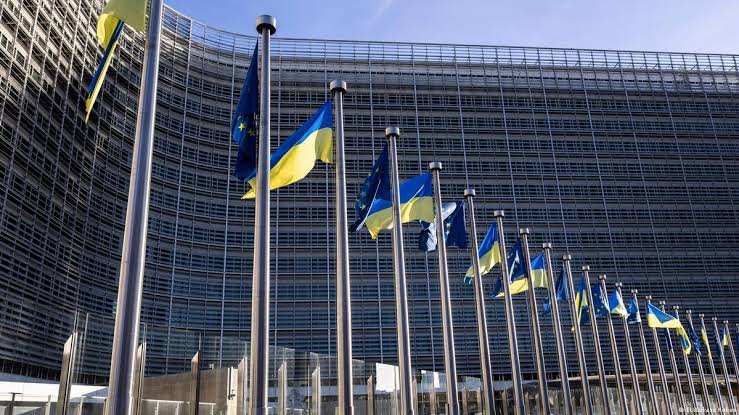
Internationally, Moldova turned to EU partners for support. On 22 September 2025, the European Parliament adopted a resolution condemning Moscow’s increasing attempts to interfere in Moldova’s elections through disinformation, corruption, and the use of the church as a propaganda tool. In Brussels, officials have increasingly described these efforts as a security threat, stressing that the Kremlin has weaponised faith as part of its information warfare — with the abuse of church authority labelled “the most immoral method of Russian influence.”
Between Faith and Politics
Moldova’s ability to withstand Russian pressure in the religious sphere has become an important test of its position on the path toward European integration. But recent revelations show the Kremlin is unlikely to scale back its ambitions. On 24 September 2025, Moldovan police uncovered a clandestine print shop in Chișinău producing large quantities of leaflets inciting religious hatred and discrediting state institutions. Just days later, on 27 September, police found a similar batch being distributed in a church in Hîncești, allegedly by local clergy of the Moldovan Metropolitanate.
The Moldovan case illustrates how the Orthodox Church, long a spiritual anchor for society, can become entangled in geopolitical confrontation. Moscow is actively using Orthodox structures abroad as channels to influence conservative electorates — both in EU states and in countries aspiring to join the bloc. Addressing and preventing the misuse of religion for political purposes is therefore not only a national issue, but a matter of European security as a whole.