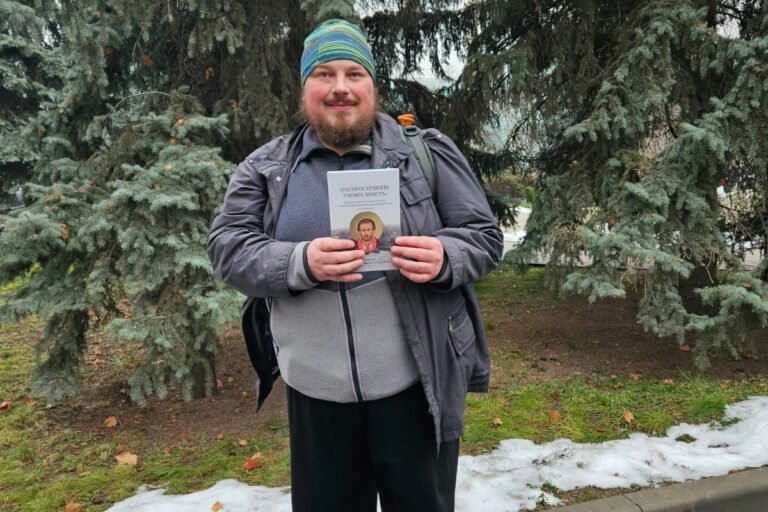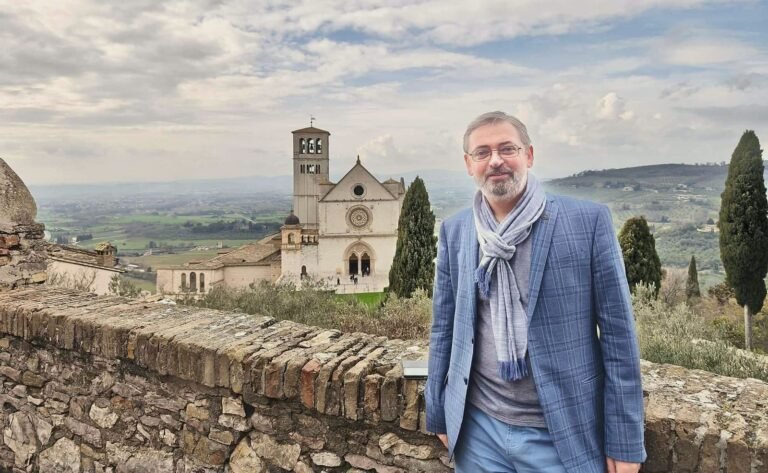
An international conference in Tallinn brought together representatives of religious organizations, journalists, and communication experts to discuss how faith and transparency can become tools for countering disinformation in the digital age.
Faith and Security
The forum, organized by the European Christian Internet Conference (ECIC) with the participation of the World Council of Churches, gathered participants from twelve countries. At the centre of the discussion was the role of religious structures both as carriers of trust and as potential targets for manipulation.
Archbishop Urmas Viilma, head of the Estonian Evangelical Lutheran Church and president of the Estonian Council of Churches, emphasized that religious institutions must remain spaces of spiritual comfort rather than instruments of politics:
“The Church should be a space of spiritual comfort. But when the pulpit becomes a tool of political propaganda, it forces people to choose between their faith and their civic loyalty. A democratic state must protect itself from security threats while respecting freedom of religion.”
When Trust Becomes Vulnerability
Special attention was given to Estonia’s experience in combating disinformation. A representative of the non-governmental organization Propastop spoke about the most common hostile narratives and the ethical methods used to counter them.
Journalist and founder of the Baltic Center for Investigative Journalism Re:Baltica, Inga Springe, presented a study on why audiences today tend to respond more to emotional stories than to facts. She noted that this very tendency makes disinformation particularly effective:
“False narratives exploit emotions rather than arguments — that’s why they spread faster than the truth.”
In the British session, Matthew Batten, Director of Communications for the Church in Wales, cited an example from within the Anglican community. Referring to the Church of England’s response to the Makin Review, he showed how a closed and hierarchical communication model can itself become a source of disinformation — and how digital engagement can transform systems of accountability within the Church.
Ethics and the Fragmentation of the Digital Space
Another focus was the challenge posed by social media. Lari Lohikoski, Head of Online Communications for the Evangelical Lutheran Church of Finland, speaking at the seminar “Social Media in Times of Uncertainty,” highlighted how the digital environment is becoming increasingly fragmented and vulnerable. He stressed the need for ethical standards that could help religious organizations remain resilient in an era of eroding trust.
A European Dimension to the Problem
Participants also visited the e-Estonia Briefing Centre to learn about Estonia’s experience in digital governance and cybersecurity. According to the organizers, this example shows that technological openness and transparency can be compatible with the protection of rights and freedoms.
According to the World Council of Churches, the issue of disinformation extends far beyond internal church communication. It concerns not only the reputation of religious institutions but also the resilience of democratic societies.
For religious institutions, this means developing strategies for open and responsible communication. For European states, it is a matter of national security: protecting millions of citizens from hostile manipulation — particularly against the backdrop of growing Russian influence, where church structures are increasingly used by the Kremlin as instruments of propaganda and pressure on public opinion.