In Tartu, one of the oldest university centers in Northern Europe, an international conference was held where participants discussed how to free Orthodoxy from the influence of its imperial past. Against the backdrop of Russia’s war against Ukraine and the revival of “holy war” rhetoric, the dialogue about faith has become a matter of public consciousness and the spiritual identity of Eastern Europe.
Dialogue on Faith and Power
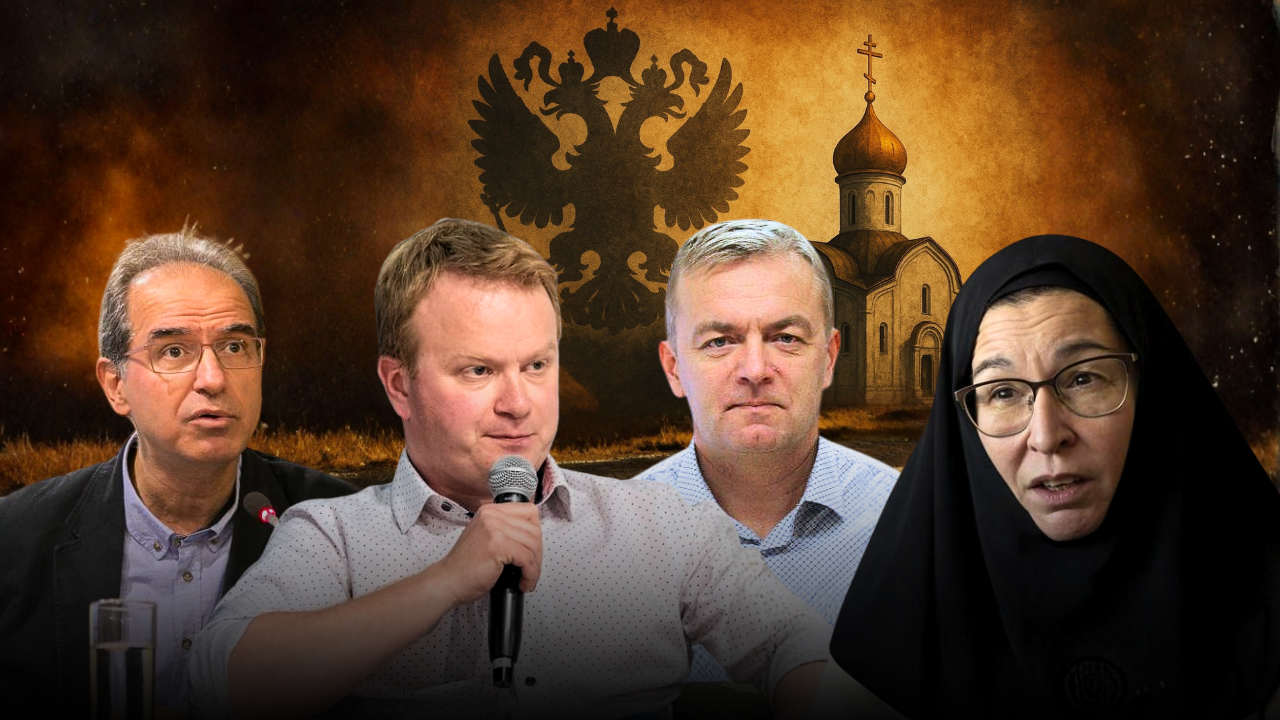
On October 6, 2025, the University of Tartu (Estonia) hosted the conference “Orthodoxy in Imperial and Post-Imperial Contexts.” Scholars, theologians, and clergy from Estonia, Greece, Ukraine, and other countries took part. The event was organized by the University of Tartu, the Volos Academy for Theological Studies (Greece), and the Estonian Orthodox Church.
The central theme was the relationship between religion and power. As Associate Professor of the University of Tartu Priit Rotmets noted, Orthodoxy has never existed outside political forms of authority:
“From Byzantium to modern Russia, Orthodoxy has constantly interacted with the imperial worldview — sometimes resisting it, sometimes sanctifying it. Today, the language of theology is once again being transformed into an ideological tool, as the notion of a ‘holy war’ becomes a justification for state violence.”
Imperial Shadows in Theology
Pantelis Kalaitzidis, Rector of the Volos Academy for Theological Studies, devoted his presentation to Byzantine political theology. He questioned the idea of the emperor as the “image of Christ” and demonstrated that this model continues to influence the thinking of many Orthodox theologians. Using Russia as an example, Kalaitzidis emphasized that such rhetoric is often employed to justify contemporary attempts to revive a “holy empire” under the banner of the “Russian world.”
Orthodox theologian and cleric Sister Vassa Larin spoke about the phenomenon of “imperial nostalgia” within the Russian Orthodox Church Abroad. According to her, the experience of the White Guard and clergy who fled Bolshevik Russia after 1917 produced a distinctive form of Russo-imperial theological rhetoric, where nostalgia for the empire intertwines with a sense of Russian spiritual exceptionalism.
“The Russian Empire continues to live not only in political discourse but also in theological concepts — as an attempt to justify a lost grandeur,” Larin remarked.
The Rhetoric of “Holy War”
Participants also paid special attention to the modern use of religious symbols in politics. Estonian political scientist Alar Kilp analyzed the phenomenon of the “sacralization of war” in Russian discourse. He stressed that when a war is declared “holy,” it represents not merely a theological error but a substitution of the Gospel’s meaning — turning the Church into an ideological apparatus of the state.
“When a war is declared ‘holy,’ it is not theology — it is ideology. Orthodoxy, like any faith, must not become a weapon of the state.”
The conference also focused on the theme of historical memory, through which contemporary Russian political narratives are constructed. In his presentation, Priit Rotmets noted that the Russian Orthodox Church actively uses the past as a political resource, creating a special “theology of history,” in which empire is presented not as a bygone era but as a promised “holy” future.
“De-imperialization” as a Spiritual Process
By the end of the conference, participants agreed that freeing Orthodoxy from its imperial legacy is not a political slogan but a spiritual task. As theologians defined it, the “de-imperialization of the Church” requires a rethinking of the very nature of authority, responsibility, and freedom of conscience.
Researchers pointed out that elements of imperial logic can be reproduced even in democratic societies — when freedom of religion turns into a system of managed loyalty.
In their view, the conversation about the “de-imperialization of faith” forms part of a broader search for how religious institutions can preserve their spiritual dimension without becoming instruments of political interests.
Faith and Public Consciousness
The Tartu conference demonstrated that for Eastern Europe, the liberation of faith from power is vital not only from a theological perspective but also an existential one. It represents a process of rethinking how religious organizations can preserve their spiritual mission without turning into tools of state ideology. This approach, the participants concluded, marks a path toward forming a new religious identity — one freed from the lingering shadows of the Russian Empire.