A campaign unfolding on Capitol Hill has drawn the attention of not only religious analysts but also security experts.
A delegation of representatives of Orthodox organizations linked to the Russian Orthodox Church (ROC) is holding a series of meetings with associates of Donald Trump and members of Congress, promoting claims of the “persecution of the Ukrainian Orthodox Church” in Ukraine. However, experts and members of the U.S. establishment note that President Vladimir Putin has long used the Russian Orthodox Church abroad as a key instrument of Russia’s war effort against Ukraine, providing ideological justification for the conflict and strategic opportunities for intelligence gathering.
The White House confirmed that representatives of Orthodox religious organizations met with staff of the Office of Faith-Based and Neighborhood Partnerships. According to The Hill, the delegation includes members of the Russian Orthodox Church Outside of Russia (ROCOR), the Orthodox Church in America (OCA), and the Serbian Orthodox Church.
Representative Joe Wilson (Republican, South Carolina) circulated a draft letter addressed to U.S. Attorney General Pam Bondi, co-signed by other members of Congress, calling for an investigation into whether “Russian intelligence services are attempting to recruit or exploit Orthodox parishes in the United States with ties to Moscow.”
“I have been informed that ROCOR is actively seeking to expand its political influence in the United States, including through an event reportedly planned for 18 November 2025, aimed at lobbying members of Congress and their staff. Such developments raise legitimate concerns that ROCOR or other jurisdictions of the Russian Orthodox Church may serve as instruments for gathering intelligence or conducting influence operations abroad targeting U.S. policymakers,” Wilson said.
The visit also drew criticism from the Archons of the Ecumenical Patriarchate — a U.S.-based lay brotherhood affiliated with the Greek Orthodox Archdiocese. They described the meetings as “an attempt to legitimize the use of religious structures as tools of Russia’s foreign policy.”
European institutions and analytical centres have in recent years similarly warned that religious organizations affiliated with Moscow are used in influence operations. In April 2024, the Parliamentary Assembly of the Council of Europe called for the Russian Orthodox Church to be recognized as “an instrument of Russian influence and propaganda.”
A central theme brought by the organizers of the current visit and their allies is the accusation that Ukrainian authorities are allegedly persecuting the Ukrainian Orthodox Church (UOC), which remains linked to the Moscow Patriarchate. One of the principal advisers to the campaign is attorney Robert Amsterdam, who represents the UOC in its efforts in the United States to portray Kyiv as a violator of religious freedom.
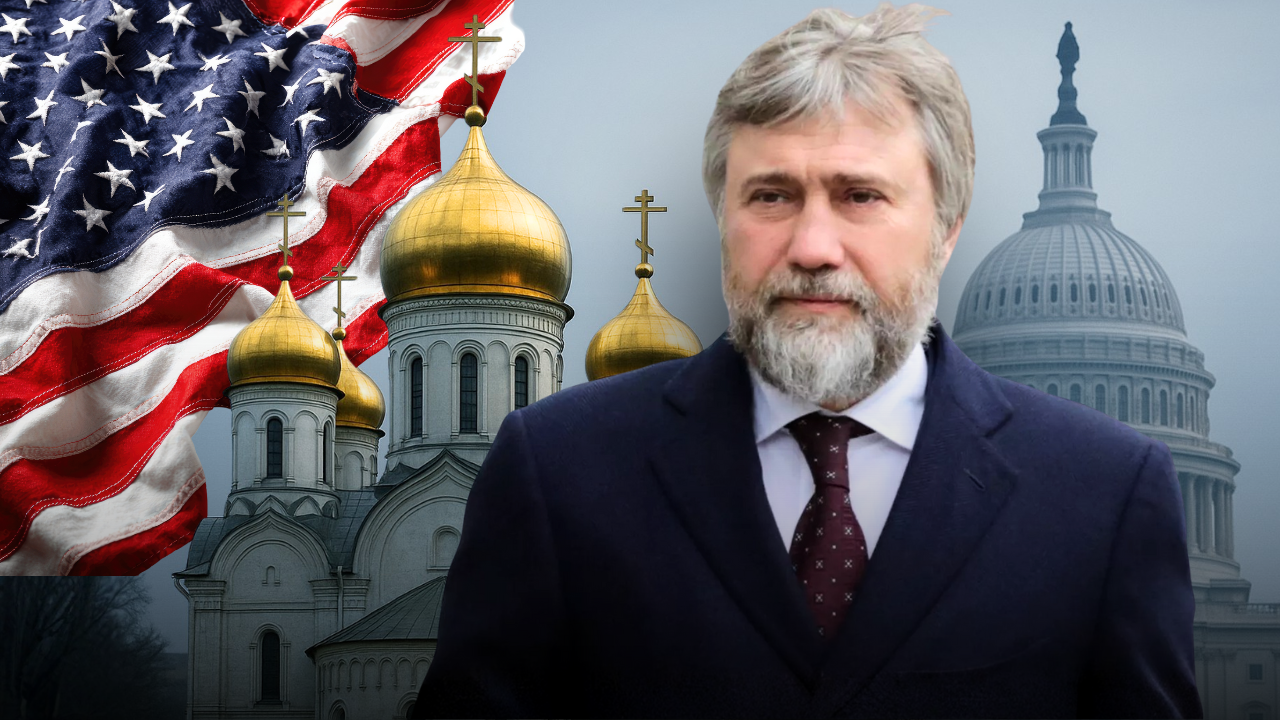
As The Washington Post reported, Amsterdam was engaged as a lobbyist for the UOC by Vadym Novynskyi, a Russian-Ukrainian businessman linked to the top leadership of the Russian Orthodox Church.
- Background: Vadym Novynskyi is a Ukrainian oligarch of Russian origin and a former MP from pro-Russian political factions. Experts say he has long been known in Ukraine as a key infrastructural and financial pillar of the ROC’s influence in the country’s political and public life. Novynskyi maintained close ties with Moscow and with Patriarch Kirill personally, which, according to Ukrainian law enforcement, made him one of the informal overseers of ROC activities in Ukraine. He is currently subject to sanctions and resides outside the country, amid allegations of facilitating Russian influence, treason, and incitement of religious hostility.
Of the roughly 200 Orthodox communities formed by former UOC-MP clergy who left Ukraine after Russia’s full-scale invasion, around 80 were established with the direct involvement and financial support of Novynskyi. These parishes operate in EU countries under the jurisdiction of the Moscow Patriarchate.
The U.S. Commission on International Religious Freedom (USCIRF) and other human-rights bodies have consistently documented systemic violations of religious freedom within Russia itself, including the persecution of “non-traditional” confessions. This underscores that declarations of defending “religious freedom” by organizations affiliated with Moscow require close scrutiny for potential political motivations.