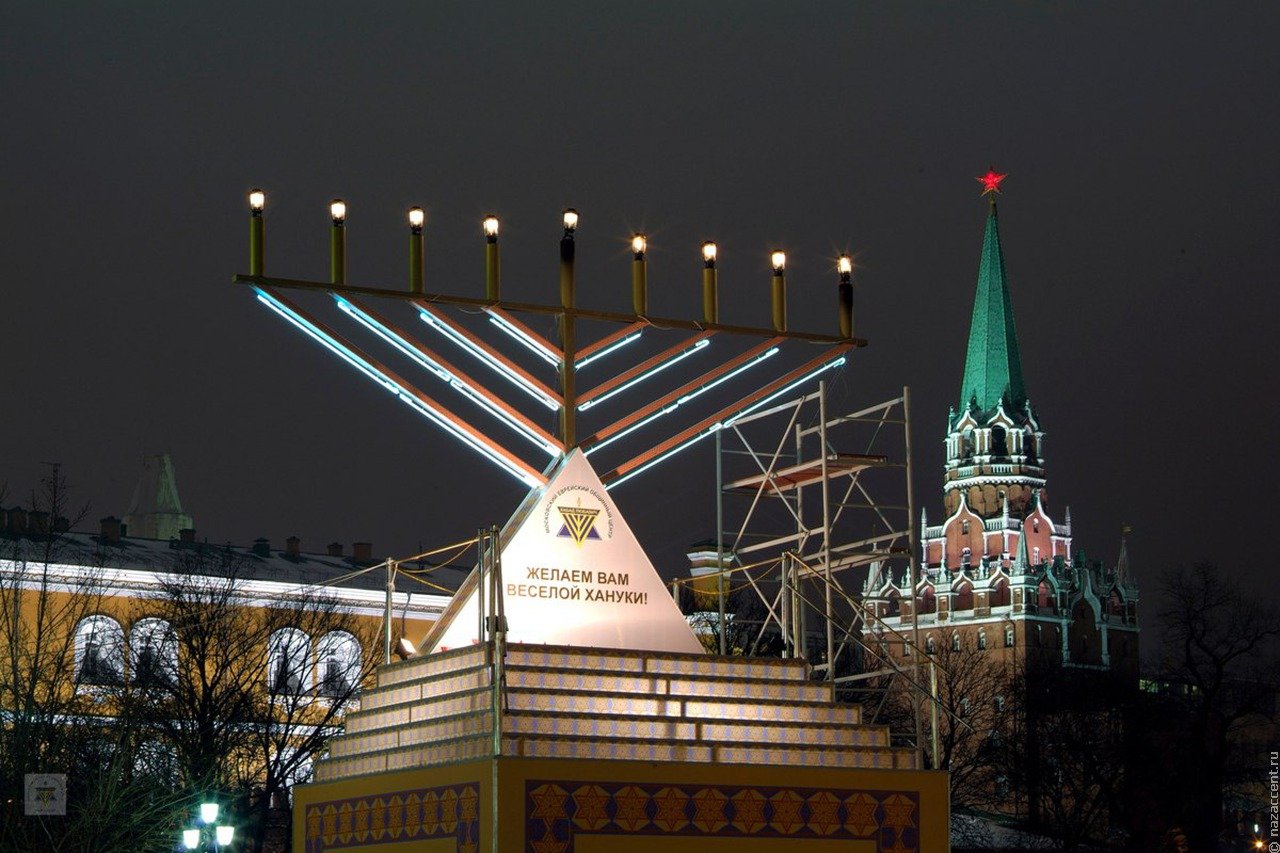
Moscow authorities have, for the first time since 1991, refused to approve a public ceremony for lighting a Hanukkah menorah—the traditional lamp used during the festival of Hanukkah—for the Jewish community. This was reported by the press service of Russia’s Chief Rabbi, Berel Lazar.
Moscow City Hall explained the decision on security grounds. The ceremony was due to take place on Revolution Square, a historically and politically significant site in the center of the Russian capital, where public Hanukkah candle-lighting ceremonies have been held for decades.
The refusal was announced against the backdrop of tragic events abroad. Earlier the same day, during a ceremony to light the first Hanukkah candle in Sydney, Australia, unknown assailants opened fire. Twelve people were killed in the attack. One of the attackers was shot dead by police, while the second sustained serious injuries and was detained.
For the Jewish community, the public lighting of the Hanukkah menorah carries not only religious but also symbolic significance. Holding the ceremony on Revolution Square traditionally underscored the inclusivity of the Jewish community within the city’s civic and public space, attesting to its enduring presence, the preservation of religious traditions, and the possibility of their public observance beyond synagogues and private settings. The cancellation of the ceremony in central Moscow, in the view of some believers, reduces this visibility to a minimum and renders the holiday virtually imperceptible to a broader audience.
Moreover, the decision by the Russian authorities heightens concerns that religious life may gradually be pushed into closed spaces.
For believers, such steps also have a psychological dimension: celebrating the holiday in the city center is associated with recognition and respect, whereas the refusal is perceived as a symbolic contraction of space for tradition and identity.