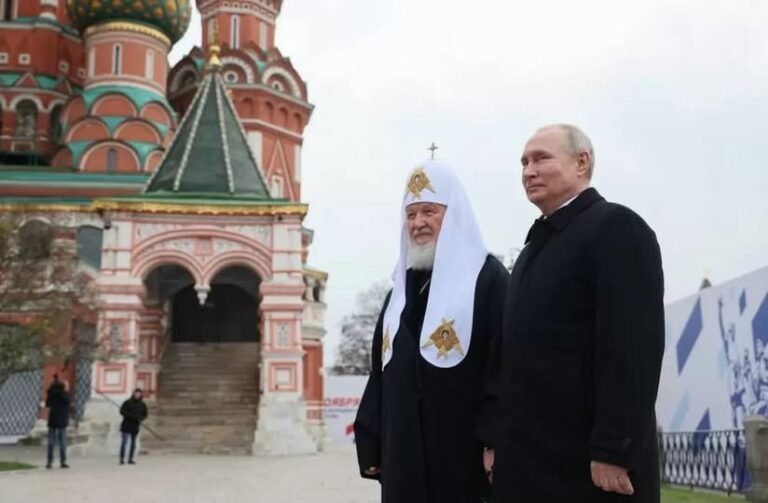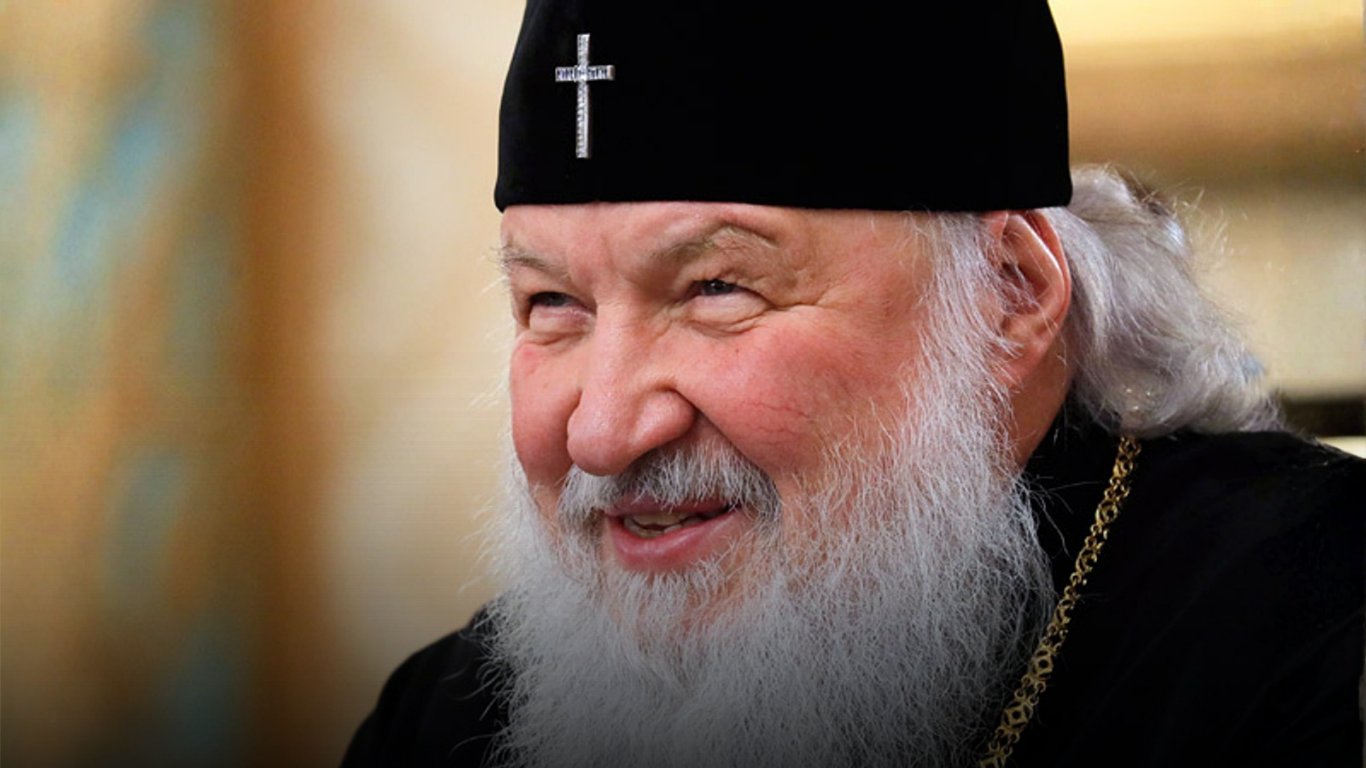
The head of the Russian Orthodox Church, Patriarch Kirill Gundyaev, has stated that Russians are living in an “exceptionally prosperous time” and should be grateful to God and to the country’s leadership — that is, the current Kremlin regime — for what is happening in the country.
The patriarch made this statement during a Sunday sermon at the Church of Prince Vladimir in Moscow. According to him, contemporary Russia is experiencing a period of unprecedented prosperity, and the existing political reality — in which key state positions are occupied by “Orthodox people” — is unique in a historical context.
“Sometimes you even think: ‘Lord, can this really be happening? An Orthodox president, an Orthodox prime minister, Orthodox governors, Orthodox teachers and school principals!’ What more could one ask for? We thank the Lord for all this! For His mercy to the older generation, that we have lived to see this, and that the younger and middle generations are living in this time. This is granted from above. Therefore, we must be grateful to God both for the country in which we live and, I will say frankly, for the authorities, at whose head stand Orthodox people — for the first time since the tsarist era! — and, of course, for everything that Russia is doing today,” Patriarch Kirill Gundyaev declared.
However, this picture of “prosperity” stands in stark contrast to the country’s socio-economic and legal reality. According to official data from Rosstat, millions of Russians continue to live below the poverty line, real household incomes are stagnating, and regional inequality remains among the highest in Europe. A substantial portion of social infrastructure — from healthcare to education — is chronically underfunded, especially outside major cities such as Moscow and Saint Petersburg.
In addition, Russia has for several years been engaged in a protracted war against Ukraine, accompanied by large-scale human losses, forced mobilisation, and criminal prosecution of citizens for anti-war positions. Human rights organisations document a growing number of political prisoners, the expansion of censorship practices, and the systematic suppression of dissent.
Against this backdrop, statements by the head of the Russian Orthodox Church about a “time of prosperity” and the need to thank the authorities are perceived by critics as an element of the sacralisation of state policy and an attempt to provide religious justification for the existing political course. Experts have repeatedly noted that in recent years the Russian Orthodox Church has increasingly acted not as an independent religious institution, but as an ideological ally of the authorities, legitimising their decisions through theological rhetoric.