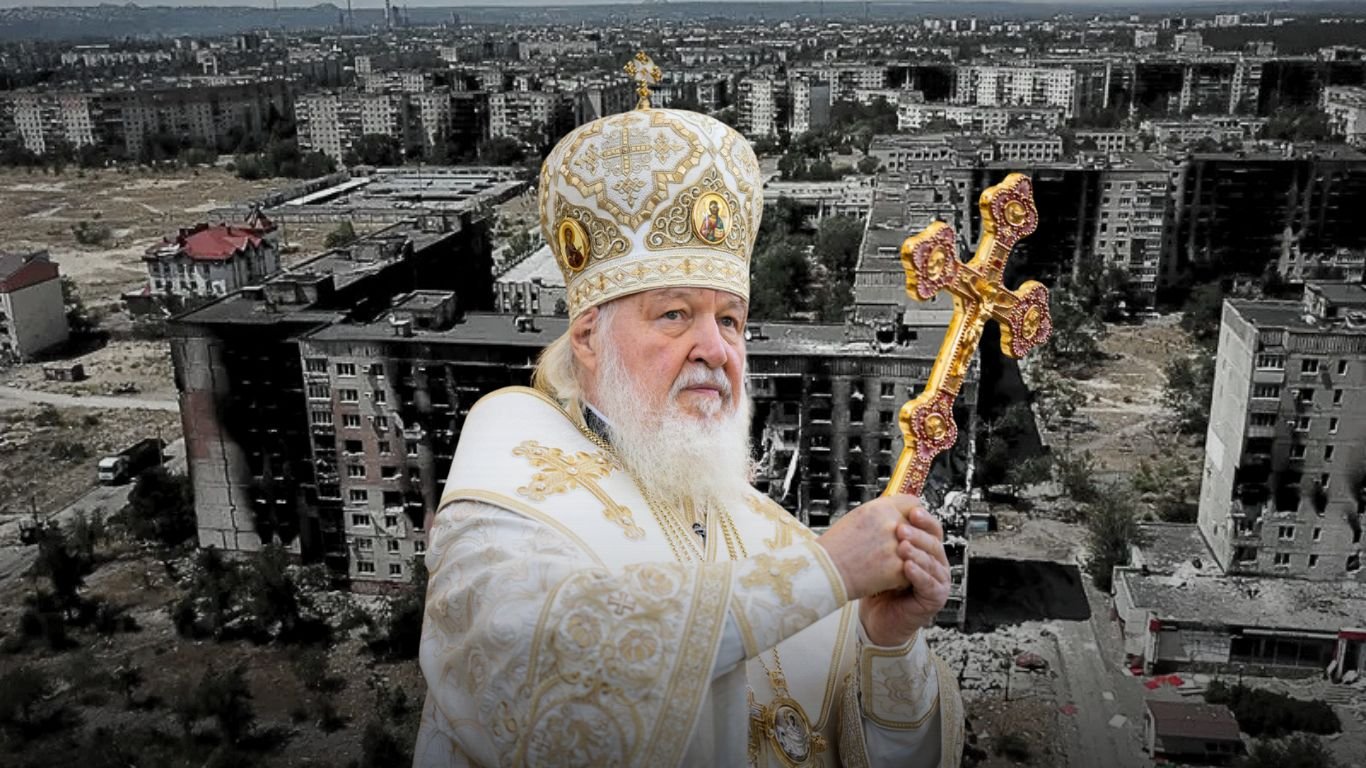
In November 2025, the head of the Russian Orthodox Church, Patriarch Kirill Gundyaev, speaking at a plenary session of the World Russian People’s Council, stated that military valor is “inseparable” from spiritual valor, and that participation in war may be regarded as a form of Christian service.
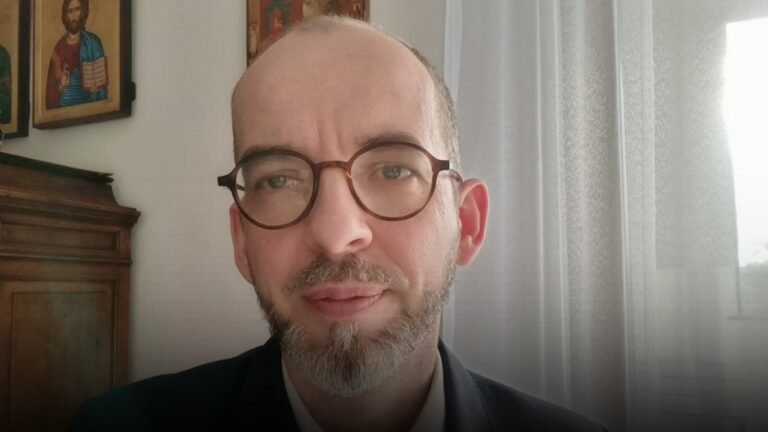
This attempt to justify war through spiritual rhetoric provoked an immediate and sharp reaction within church circles. One of the most profound and well-argued responses was the publication by theologian and writer Abba Miron Bezoruzhnyi entitled “The Church in a Positional Trap, or How War Became a Spiritual Feat”.
A Substitution of the Question: Who Is Really Defending Themselves?
Abba Miron Bezoruzhnyi identifies the key rhetorical device employed by Patriarch Kirill as a substitution of the original question. According to him, the issue is not abstract examples of “defense against evil”, but a concrete and verifiable fact: military actions are being conducted not on Russian territory, but on the land of another state, where civilians are being killed and cities destroyed.
In the author’s view, the danger of such statements lies not only in their political consequences, but above all in their spiritual ones. When war is declared “sacred”, people stop asking questions and lose the ability to distinguish between good and evil. The convenient formula “we are defending ourselves — they are evil” lulls the conscience and removes personal responsibility.
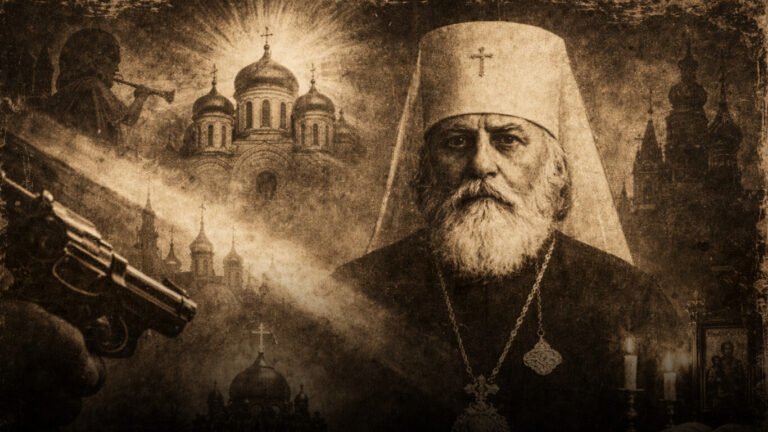
In this, Bezoruzhnyi sees a direct historical parallel with Nazi Germany, where the church gradually came to justify violence as a necessary and legitimate measure. He refers to the experience of the German pastor and theologian Dietrich Bonhoeffer:
“The proposed soporific scheme — ‘we are defending ourselves and they are evil,’ ‘we are ending the war, not starting it’ — contributes to the loss of discernment. German Christians were also told for years that the war was defensive, that Germany was ‘only defending its place in the sun,’ that ‘enemies had surrounded it,’ and that anyone who did not support the front was betraying their own people. Many accepted this scheme as the only possible one. Bonhoeffer observed how the Church gradually grew accustomed to blessing what only yesterday seemed unthinkable even to discuss, and he asked a painful question: who will stand firm when the familiar words about duty, obedience, and sacrifice begin to serve as a justification for violence?”
The Commandment as Personal Responsibility
Bezoruzhnyi pays particular attention to the commandment “Thou shalt not kill”. In the Christian tradition, it is addressed personally to every individual and is not nullified by an order, a position, or belonging to the “right side”. When it begins to be interpreted as though killing “outsiders” is permissible and doubt is a crime, faith, in his view, is transformed into an instrument for justifying cruelty.
“It is as if the commandment is removed from personal experience and rewritten in the format of Old Testament geopolitics: do not kill your own, but strangers may be killed. Such ‘theological’ reports legitimize xenophobia, which Christ sought to overcome throughout His earthly life. Killing is not merely permitted — it is blessed, through the conscious depersonalization and dehumanization of the ‘enemy’. And refusal to support the war is declared ‘assistance to the enemy’”, the theologian emphasizes.
The author also draws attention to the very fact of many years of attempts to justify Russia’s war against Ukraine through religious and ideological language. In his opinion, this testifies not to the strength of the arguments, but to the inner uncertainty of those waging this war.
“Throughout all four years of Russia’s war against Ukraine, attempts have not ceased to provide theological and ideological justifications for what is happening — through reports, sermons, and media appearances. It is necessary to persuade people that this war is not merely just, but defensive and even sacred, that on the side of the Russian army stand not only state interests, but God Himself. The very fact that these explanations have to be repeated and intensified again and again becomes an indicator of falsehood and a lack of faith in what is being proclaimed”.
Where the Line Is Drawn
In conclusion, Abba Miron Bezoruzhnyi stresses that resistance to evil begins not with weapons, but with a refusal to accept lies and substitutions of meaning. While aggression is called “liberation” and destruction “defense”, a person already becomes a participant in evil, even if they themselves do not hold a weapon.
“When people allow reality to be masked at the level of language, they are already participating in evil and violating the commandment ‘Thou shalt not kill’. While aggression is called ‘liberation’, bombardments are termed ‘precision strikes on infrastructure’, and the mass death of civilians ‘collateral damage’, evil triumphs under the cover of respectable formulations. A Christian who agrees to speak this language has already made an inner choice, even if they never fire a shot themselves. Resistance to evil in this sense begins much earlier than resistance to violence by force. It begins with a refusal to let words deceive you. And it does not matter that these are the words of the very patriarch himself. The Apostle Paul taught his flock that if he himself, other apostles, or even angels from heaven were to appear and begin preaching something contrary to the Gospel, they should not be believed or agreed with (Gal. 1:8)”, the theologian emphasized.
Christian “watchfulness” under these conditions means a readiness to think, to ask uncomfortable questions, and to preserve personal conscience, understanding that such a choice is inevitably associated with the loss of comfort, pressure, and condemnation. It is here, in the author’s view, that the boundary runs between living faith and religion transformed into an ideology that serves war.