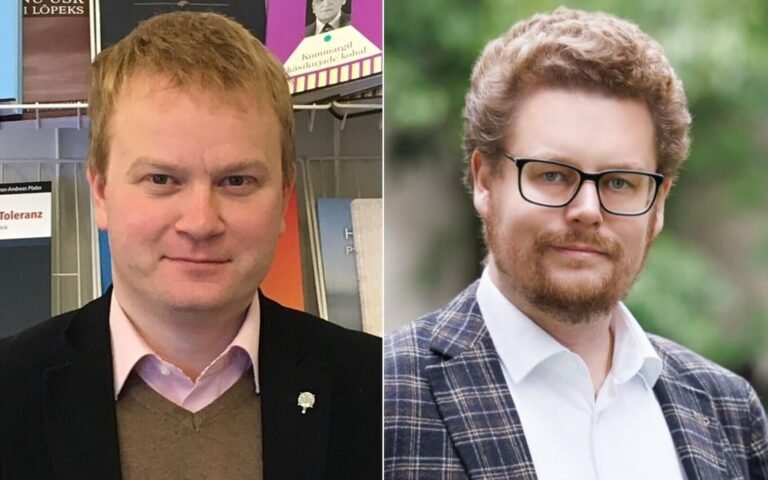
Here is how it was commented on by priest Gintaras Sungaila of the Lithuanian Exarchate of the Ecumenical Patriarchate of Constantinople.
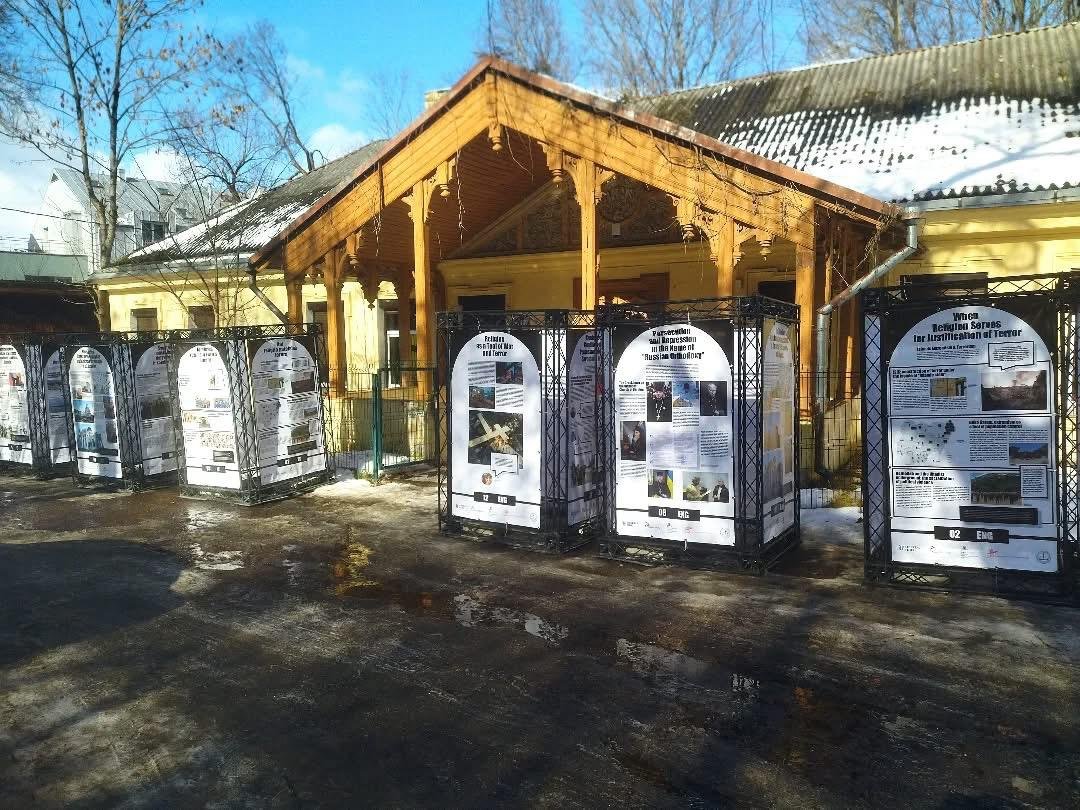
“The exhibition ‘Religion and War,’ prepared by the National Museum of the History of Ukraine in the Second World War together with the Jerzy Giedroyc Forum for Cooperation and Dialogue, the Orthodox Christian Institute for Education and Research, the Institute of History of Lithuania, and the Libertas Fidei initiative team, makes a very strong impression above all because of its relevance,” the priest says, “the materials showing how religious rhetoric is used to justify aggression were especially memorable.
“It often seems that ‘religious wars’ are something from the Middle Ages, from the distant past. However, the exhibition convincingly demonstrates that religious arguments can once again become instruments for legitimising violence even in the twenty first century,” reflects Father Gintaras.
In his opinion, special attention should be paid to the section devoted to the role of the Moscow Patriarchate in the context of Russia’s aggression against Ukraine.
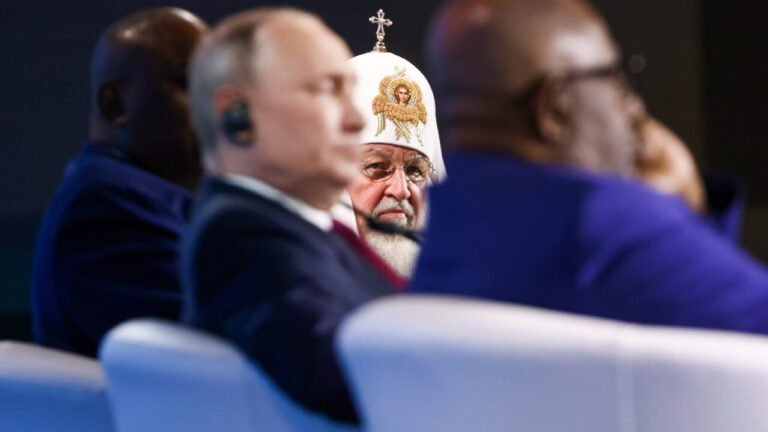
“It shows how Patriarch Kirill of Moscow uses theological and apocalyptic vocabulary to justify the war. Materials are presented on the persecution of clergy who oppose the war, both in Russia itself and in the occupied territories of Ukraine. Testimonies about the misuse of religious structures for intelligence purposes are also important,” the pastor shares.
We remind readers that the exhibition opened on February 23 in Town Hall Square in Vilnius, on the anniversary of the start of Russia’s full scale aggression against Ukraine, and on March 2 it was moved to the centre of the Lithuanian Exarchate at Antakalnio 10.
The priest believes that overall the reaction in Lithuania has been serious and engaged. People stop, read, and discuss. It is clear that the topic is perceived not as abstract but as directly concerning our region and our responsibility.
“In Lithuania there is certainly an understanding that Russia uses religious discourse in its policy. However, many specific facts, for example the scale of persecution of clergy who oppose the war or the mechanisms for using church structures in hybrid activities, remain little known.
For part of society, religion is still associated exclusively with the private sphere or with cultural tradition. The exhibition helps people see that religion can become a factor of social mobilisation, both in a positive and in a destructive sense,” the priest concluded.