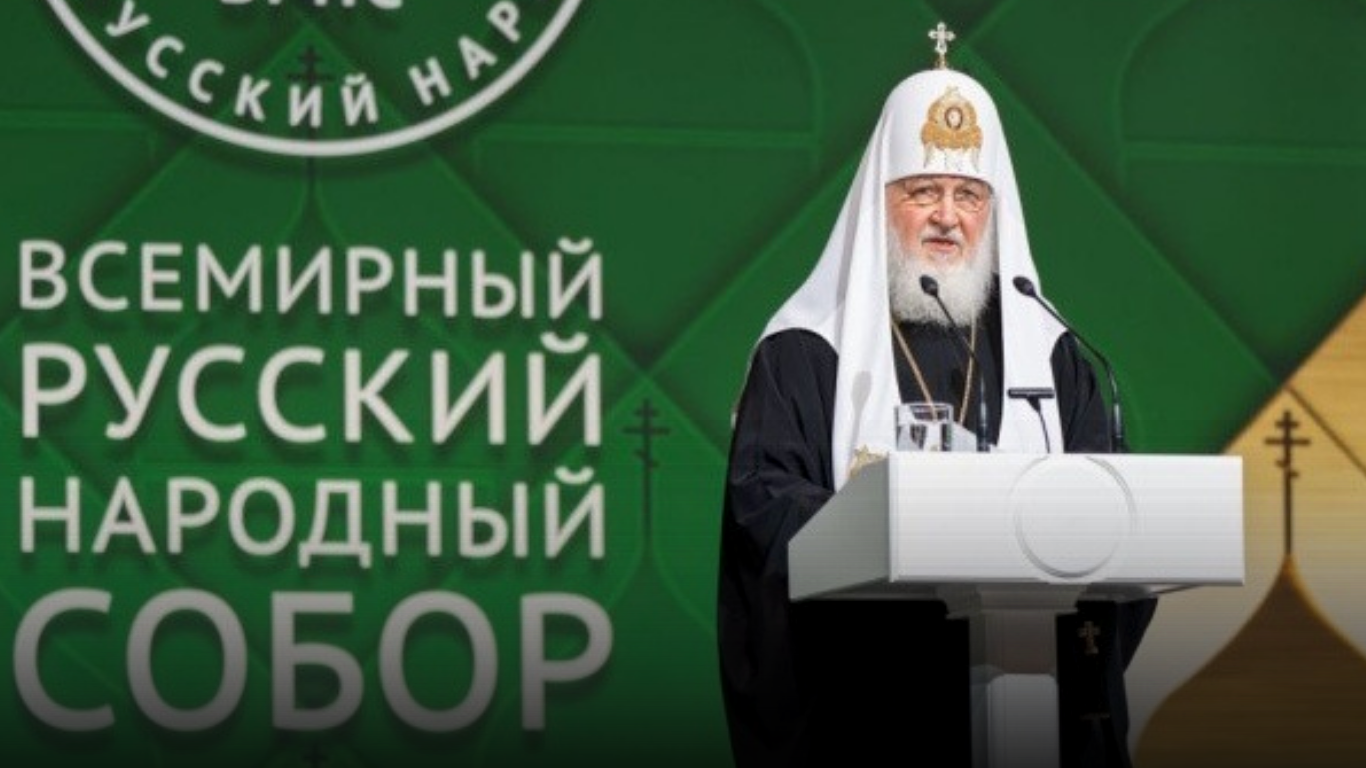
On December 15, 2025, a meeting of the World Russian People’s Council (WRPC) took place in Russia. Formally, the organization presents itself as a public platform; in practice, however, the WRPC functions as an instrument of institutional legitimation for key initiatives of Patriarch Kirill Gundyayev, framing them as collective decisions and resolutions.
During the meeting, plans for activities in 2026 were approved. These plans were prepared at the patriarchal center and unanimously endorsed by the participants.
One of the central topics of discussion was Russia’s war against Ukraine. It was effectively sacralized and presented as a “military and spiritual feat”, portrayed as a continuation of the Great Patriotic War:
“The military and spiritual feat of the defenders of the Fatherland. It is emphasized that victory in the Great Patriotic War became possible thanks to a return to Russia’s spiritual sources and historical identity. The theme of preserving the memory of the Great Victory, its significance — especially today, when the special military operation is underway — resounded in every address delivered at our council”, said Metropolitan Grigoriy Petrov of Chelyabinsk and Miass.
In addition, the meeting of the World Russian People’s Council included detailed discussions on the role of education in Russia — not merely as a tool for transmitting knowledge, but as a mechanism for the systematic formation of personnel deeply integrated into a church–state ideology. In particular, speakers called for cultivating among students a conscious commitment to traditional values and spiritual and moral guidelines. This, they argued, should ensure the training of specialists capable of simultaneously serving the interests of the state and sustaining the influence of the Russian Orthodox Church at the local level:
“Above all, this concerns the integration of traditional values into the education system and the training of personnel who are aware of their civilizational identity. The educational project is viewed as an instrument for ensuring spiritual security. Its goal is to educate not only highly qualified, but also spiritually rooted specialists who will become bearers of traditional values, will consciously work for the benefit of their small homeland, and will strengthen the personnel potential of the Russian Orthodox Church at the local level”, noted Vasiliy Losev, rector of St. Nicholas Cathedral in Pavshinskaya Poyma.
A central aspect of the discussion was the expansion of the WRPC’s influence beyond Russia. During the meeting, it was emphasized that the organization’s international activities should focus on protecting the interests of the Russian Orthodox Church and Orthodox communities in other countries, including through the use of diplomatic, humanitarian, and civic mechanisms of engagement:
“As for international activity and diplomacy, our task and our focus are the protection of the interests of the Russian Orthodox Church and of Orthodoxy as a whole. We are reflecting, searching for possible formats and instruments, including diplomatic ones, that could be used to protect Russian Orthodoxy. This concerns a wide range of countries — Moldavia, Lithuania, Latvia, and others”, stated Alexander Shchipkov, Doctor of Political Science.
Such statements illustrate a broader problem related to the role of the Russian Orthodox Church in contemporary Russian politics and its activity abroad. Despite the formally declared separation of church and state, the Russian Orthodox Church is in fact embedded within the power structure and operates in close coordination with the Kremlin, promoting its foreign policy and ideological agendas.
A key element of this strategy remains the concept of the “Russian World”, which the leadership of the Russian Orthodox Church has for many years promoted as a supranational “spiritual-civilizational space”. Patriarch Kirill Gundyayev has repeatedly stated that the Russian Orthodox Church views the “Russian World” as a distinct community extending beyond Russia’s state borders. As early as 2009, he asserted that the “Russian World” includes not only Russia, but also Ukraine, Belarus, Lithuania, Latvia, Estonia, Moldova, and other countries allegedly “bound by a shared spiritual and historical tradition”, thereby asserting the Church’s right to operate within this space as a single whole.
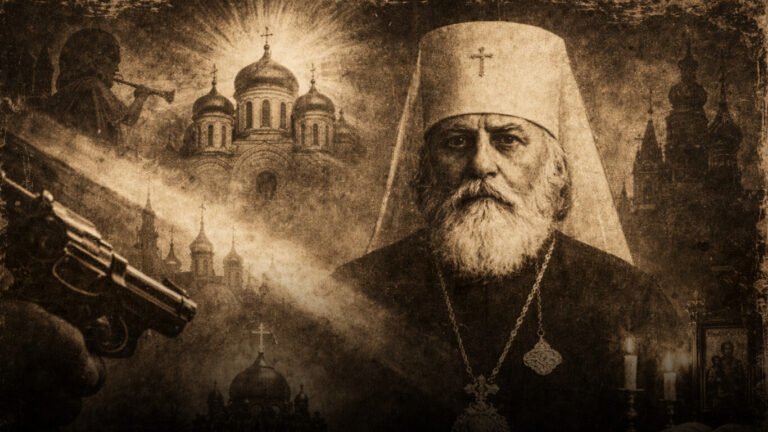
Other high-ranking representatives of the Russian Orthodox Church have also systematically employed the rhetoric of “protecting Orthodox believers” outside Russia, embedding it within the broader propagandistic agenda of the Kremlin. One of the principal conduits of the Church’s foreign policy line for many years was Metropolitan Ilarion Alfeyev, former head of the Moscow Patriarchate’s Department for External Church Relations, who until 2022 effectively performed the functions of a “church foreign minister”, engaging in informal diplomacy in the interests of the Russian authorities. After the start of the full-scale war against Ukraine, he was sent to Europe, where he continued to represent the interests of the Moscow Patriarchate — first in Hungary, then in the Czech Republic. In his public statements, Ilarion consistently justified the activity of the Russian Orthodox Church outside Russia through the rhetoric of “protecting Orthodoxy”, placing responsibility for wars unleashed by Russia against neighboring countries on “hostile forces” and “external interference”. This fully aligns with the narratives of Russian state propaganda and is used to legitimize political pressure under a religious guise.
The resolution approved by Patriarch Kirill Gundyayev and announced during the meeting of the World Russian People’s Council effectively formalizes the organization’s subordinate and non-autonomous status, transforming it from a nominally collegial forum into an executive body operating within directives issued by the patriarchal center. Regional branches, accordingly, are obliged not to develop their own agendas, but to implement decisions approved in Moscow, as follows directly from statements by the council’s leadership:
“It is very important that we begin to work in a systematic manner. […] All our work is conducted in line with the guidelines set by His Holiness Patriarch Kirill of Moscow and All Rus’”, noted Alexander Shchipkov.
Thus, the plans for 2026 adopted at the WRPC meeting and the rhetoric of “protecting Orthodox believers” beyond Russia demonstrate that the organization operates as a centralized and tightly controlled instrument under the leadership of Patriarch Kirill Gundyayev. Through the WRPC, he systematically advances the Kremlin’s aggressive foreign policy agenda, using religious structures to expand the influence of the Russian Orthodox Church abroad. Under the cover of “concern for Orthodox communities”, this strategy creates an infrastructure of external influence that may pose a potential threat to the democratic societies of European countries.