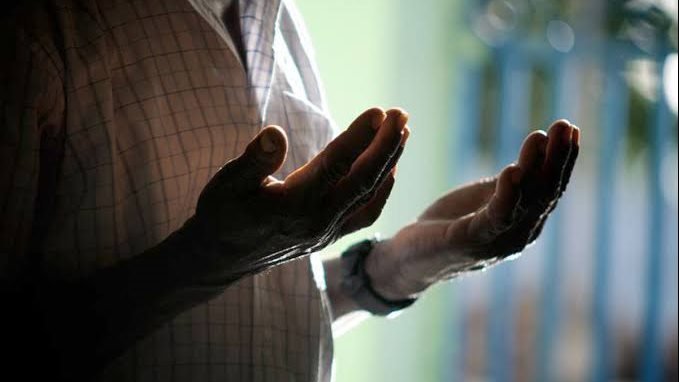
Employees of the probation service in Tashkent, Uzbekistan, have threatened to return prisoner of conscience Fazilkhodzha Arifkhodzhaev to prison for visiting a mosque.
They spotted him on his way home from the hospital at a mosque in Tashkent, where he was praying for his mother. Probation officers identified him through the mosque’s surveillance cameras, which are under state control, reports Forum 18.
Police arrested 45 year old Arifkhodzhaev, a Muslim known for criticizing the regime’s religious policy, in June 2021. At a closed court hearing in January 2022, the Olmazor District Criminal Court of Tashkent sentenced him to seven and a half years in a corrective labor camp. In December 2025 the authorities released him, while the court imposed restrictions on him. Arifkhodzhaev is forbidden to leave Tashkent, use the internet, or attend gatherings, including the mosque. He is allowed to leave home only for work, although he is currently unable to find a job.
After Arifkhodzhaev visited the mosque to pray for his sick mother, probation officers summoned him and showed him footage from the surveillance cameras.
The regime has long kept places of worship under surveillance. Since 2018 mosques have been required to pay for the installation of surveillance cameras, controlled by the regime, both inside and outside the buildings. At the beginning of 2022 the Ministry of Internal Affairs also required non Muslim communities to install cameras.
Representatives of Muslim and non Muslim religious communities in Uzbekistan said that some people have stopped attending services out of fear of being identified and subjected to repression by the state.
Uzbekistan ranks third in size among the five Central Asian states and has the largest population, about 35 million people. According to official statistics, more than 83 percent of the population are ethnic Uzbeks, mainly of Sunni background, about 9 percent belong to other Central Asian ethnic groups. Russians and other ethnic groups, mainly of the Orthodox Christian faith, make up about 7 percent.
Freedom of religion and belief remains severely restricted in Uzbekistan. An analysis of a survey conducted by Forum 18 documents the following violations. Imprisonment and torture of prisoners of conscience whose only crime is exercising freedom of religion and belief. A ban on educational and religious gatherings without state permission. Full state control over all manifestations of Islam. Censorship and destruction of religious literature.