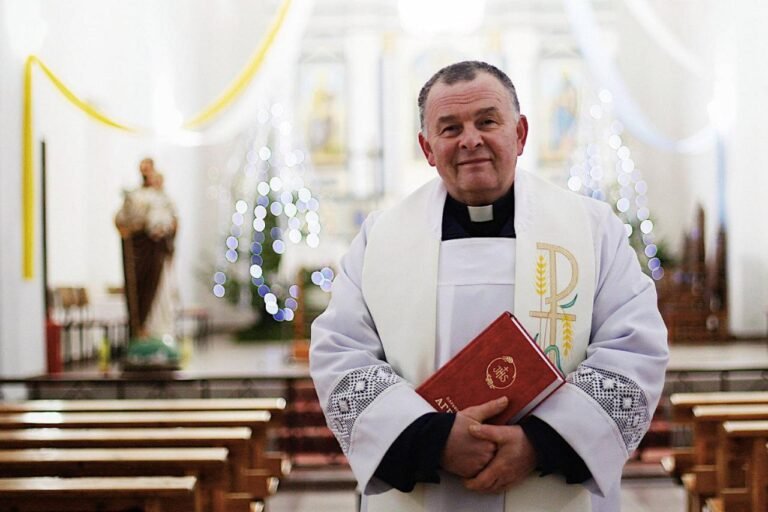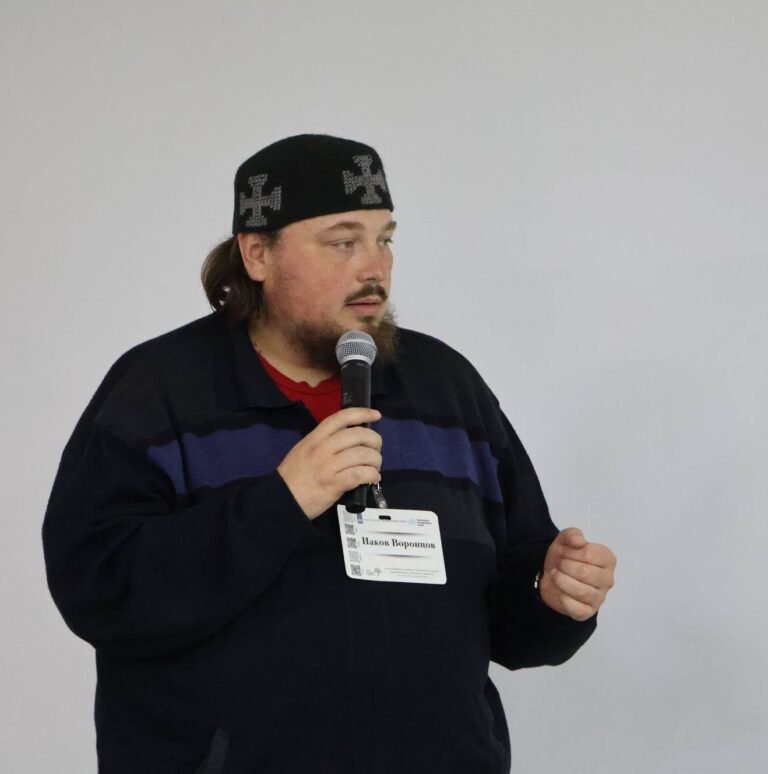
The former head of St Petersburg’s largest Orthodox youth association Kerigma, Father Grigory Okhanov, has been fined 30,000 rubles under the law on “discrediting the army.” The charge was triggered by his interviews with the independent media outlets Eyewitnesses (2022) and Not Moscow (2024).
In those interviews, Okhanov recalled that in the early 2010s he had embraced patriotic views, trusted in the “honesty of the authorities,” and justified the annexation of Crimea. However, he said it gradually became clear that “where everything seemed justified, it was in fact carried out through violence, lies and hypocrisy.” He stressed that violence contradicts Christian values of mercy and love, and noted that Western civilisation in many respects continues the Christian tradition.
A Denunciation and a Draft Notice
Criminal proceedings against Okhanov were launched following a denunciation by a private individual linked to the Russian Orthodox Church. On 25 September 2025, he was served with a mobilisation notice at Moscow Railway Station in St Petersburg — in front of his family.
Case files indicate that the alleged “offence” was recorded during a video viewing in the office of a prosecutor’s assistant, long after the original statements were made.
Systematic Repression of Conscientious Voices
Okhanov’s case is not isolated. Since 2022, dozens of clerics in Russia have faced punishment for speaking out against the war.
- In Kostroma, Father Ioann Burdin reminded parishioners in a sermon of the commandment “Thou shalt not kill.” He was fined 35,000 rubles.
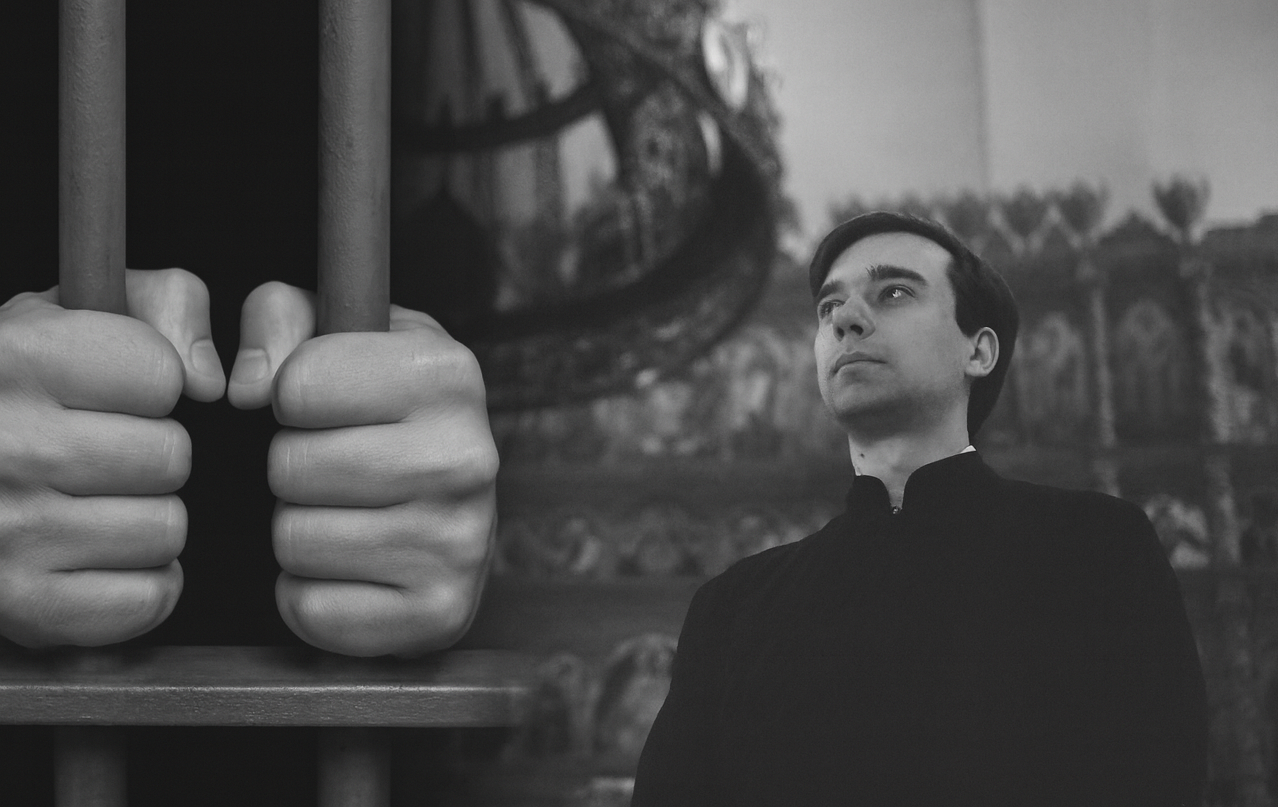
- In St Petersburg, Archpriest Ioann Kurmoyarov posted a video stating: “Murderers will not inherit the Kingdom of God.” He was sentenced to three years in prison.
- In Moscow in 2023, Deacon Sergei Mironosec was detained for social media posts in which he described the war as a “sin.”
Each case has followed the same pattern: denunciation, protocol, public hearing, and punishment.
The Church’s Position
The Russian Orthodox Church officially distances itself from clerics who have been prosecuted. In practice, this means endorsing the state’s position and refusing to defend those who publicly voice dissent.
As a result, even a sermon or theological reflection on Christian commandments in today’s Russia can be classified as a criminal or administrative offence. Priests who speak out for peace and condemn war and violence are increasingly branded as “enemies of the state.”