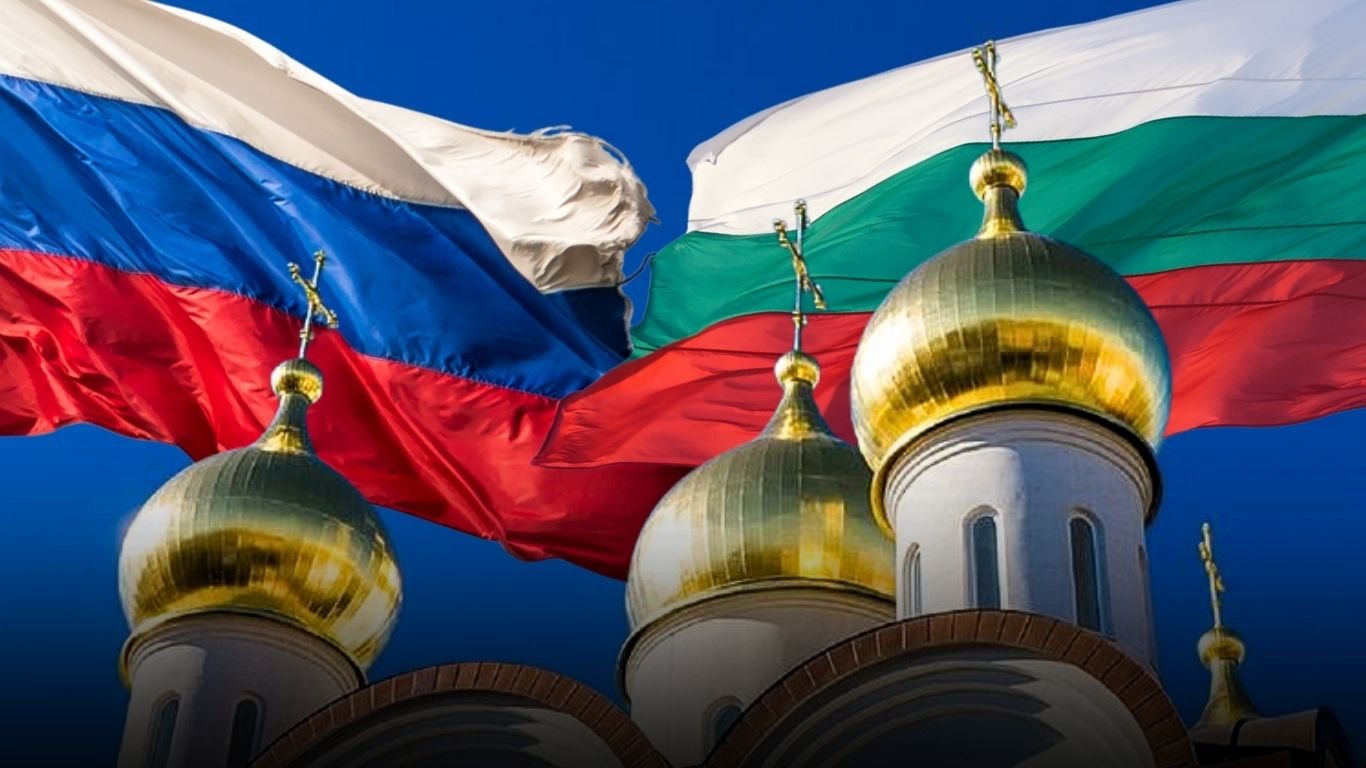
Moscow has long used the Bulgarian Orthodox Church, which maintains close ties with the Russian Orthodox Church, as an instrument of soft power to promote ideas of Slavic and Orthodox brotherhood.
This is discussed in a report by expert Desislava Zagorcheva published by Foreign Policy, writes Hristianstvo.bg.
According to the expert, for much of its modern history Sofia was Russia’s most loyal European ally, allowing Moscow to retain influence even after Bulgaria joined Western institutions, including NATO and the EU. Evidence supporting this assessment includes the involvement of dozens of Orthodox social media pages, groups, and channels in propaganda campaigns against the eurozone and the European currency. Bulgaria joined the eurozone on 1 January 2026.
However, the extent to which Bulgaria’s adoption of the euro represented a strategic blow to the Kremlin has largely gone unnoticed. After many years of sustained efforts to block Sofia’s entry into the eurozone, Moscow failed to prevent a decision that anchors Bulgaria more deeply and irreversibly in the European project. The currency transition not only demonstrated the limits of Russia’s hybrid tactics but also narrowed the influence it still retained in the country, the author writes.
“Russia has never fully accepted Bulgaria’s strategic reorientation. On the contrary, it continues to view the country as contested terrain, relying on historical, cultural, religious, and economic ties, including energy dependence, to keep it within what Moscow considers its sphere of influence. Part of the Kremlin’s influence extends through the Bulgarian Orthodox Church, which maintains close ties with the Russian Orthodox Church. Moscow has long used the latter as a soft power instrument to promote ideas of Slavic and Orthodox brotherhood. For much of modern history Bulgaria was Russia’s most loyal European ally, allowing Moscow to retain residual influence even after Sofia joined Western institutions, including NATO and the European Union,” Desislava Zagorcheva writes.
In the scholar’s view, eurozone enlargement is not a neutral economic process for the Kremlin. In Moscow, any deepening of EU integration is seen as limiting opportunities to exploit bilateral dependencies, apply selective pressure, create divisions within the bloc, and form grey zones of influence along the EU’s eastern flank. States that adopt the euro become more closely interconnected economically, financially, and politically, which reduces the scope for external manipulation. Although Bulgaria will remain vulnerable, after all Slovakia’s use of the euro did not prevent its government from drawing closer to the Kremlin in EU votes related to Russia, eurozone membership constrains the channels through which Moscow has historically sought to influence Euro-Atlantic institutions.
Analysts had sound reasons to doubt that Sofia would complete the final two stages of EU integration, namely accession to the Schengen Area and to the eurozone. Despite EU membership since 2007, Bulgaria continued to struggle with high inflation and corruption. Although Bulgaria and Croatia entered the European Exchange Rate Mechanism simultaneously in July 2020, a mandatory two-year transition period before adopting the euro, their trajectories soon diverged. Croatia largely stayed on schedule and adopted the euro in 2023. Bulgaria repeatedly postponed its target date, first to 2024 and then to 2025, before ultimately joining in 2026.
These delays were not merely technical, such as exceeding the EU inflation threshold. They were also driven by growing political and public concerns about deeper EU integration, resistance that was actively fuelled by Russia-linked influence operations and Bulgarian intermediaries assisting the Kremlin. As a result, Bulgaria’s prolonged path to the euro became a clear indicator of Russia’s ability to obstruct, though not ultimately prevent, EU integration.
On the eve of euro adoption, Moscow employed a familiar set of interference tools.
First, Russia-linked actors launched large-scale disinformation campaigns aimed at shaping public opinion against the euro. Russia used covert financial networks, spending tens of millions of euros on propaganda and interference in Bulgaria. Social media accounts linked to Russia or its Bulgarian proxies, along with sympathetic traditional media, spread alarmist and often outright false claims. These included assertions that the introduction of the euro would lead to uncontrollable inflation, confiscation of citizens’ savings, loss of national identity, and Bulgaria’s subjugation to dictates from Brussels. These narratives deepened social divisions and reduced support for the euro. A Eurobarometer survey at the end of 2025 showed that 49 percent of Bulgarians opposed the single currency, while only 42 percent supported it.
Second, openly pro-Russian forces in Bulgaria, above all the ultranationalist far-right party Vazrazhdane, amplified and legitimized these narratives. Vazrazhdane, which has an official cooperation agreement with President Vladimir Putin’s United Russia party, became the most visible domestic opponent of the euro. The party organized anti-euro rallies and protests, some featuring Russian flags. In February last year its members stormed the EU representation in Sofia, hurling fireworks, red paint, and Molotov cocktails at the building and setting the entrance door on fire. Party leaders repeatedly warned of an economic collapse akin to Greece during the debt crisis, ignoring eurozone reforms and Bulgaria’s different fiscal position. The party also called for a national referendum on the euro, a move rejected by parliament as incompatible with Bulgaria’s treaty obligations to the EU. Vazrazhdane lawmakers spread conspiracy theories claiming that Brussels allegedly planned to confiscate Bulgarians’ savings to finance military projects.
Third, these efforts formed part of a broader strategy of institutional erosion. By questioning the motives and competence of European institutions and Bulgaria’s own governing elites, pro-Russian campaigns sought to deepen cynicism, polarize society, and undermine trust in the democratic process. Bulgaria’s chronic political instability, marked by short-lived governments, fragmented coalitions, and seven snap parliamentary elections in four years, made the country particularly vulnerable to Russian interference. Persistent governance crises created fertile ground for Eurosceptic messaging and claims that EU integration was being imposed without popular consent.
Despite strong and sustained pressure, the pro-European parliamentary majority ultimately prevailed. Successive governments, including the strongly pro-European anti-corruption coalition We Continue the Change–Democratic Bulgaria, completed the necessary legal and technical steps for euro adoption. Key institutions withstood attempts to politicize or derail the process. Entry into the eurozone served as a reminder that hybrid interference, however powerful and disruptive, does not necessarily determine outcomes, especially where political will and institutional continuity are present.
This, however, is unlikely to mark the end of the confrontation. On the contrary, the Kremlin’s focus on Bulgaria may intensify in the coming months. Another round of snap parliamentary elections is expected later this year, once again opening opportunities for external influence and internal destabilization. At the same time, pro-Russian actors such as Vazrazhdane will seek to exploit any short-term difficulties of the euro transition, including price adjustments, administrative disruptions, and public confusion, to validate their earlier warnings and blame the EU.
In this sense, Bulgaria’s adoption of the euro is not merely a political success but a strategic test. Whether it strengthens public trust in European integration or becomes another battlefield for disinformation will depend on how effectively the Bulgarian government and EU institutions manage the transition and communicate its benefits. For now, 1 January marked a clear blow to Moscow’s ambitions to divide and weaken the EU. It is a signal that the EU’s attractive power remains significant despite all efforts to challenge it.