Historian Eduards Seliška on the Visit of Ecumenical Patriarch Bartholomew, Questions of Jurisdiction and the Future of Religious Dialogue in the Baltics
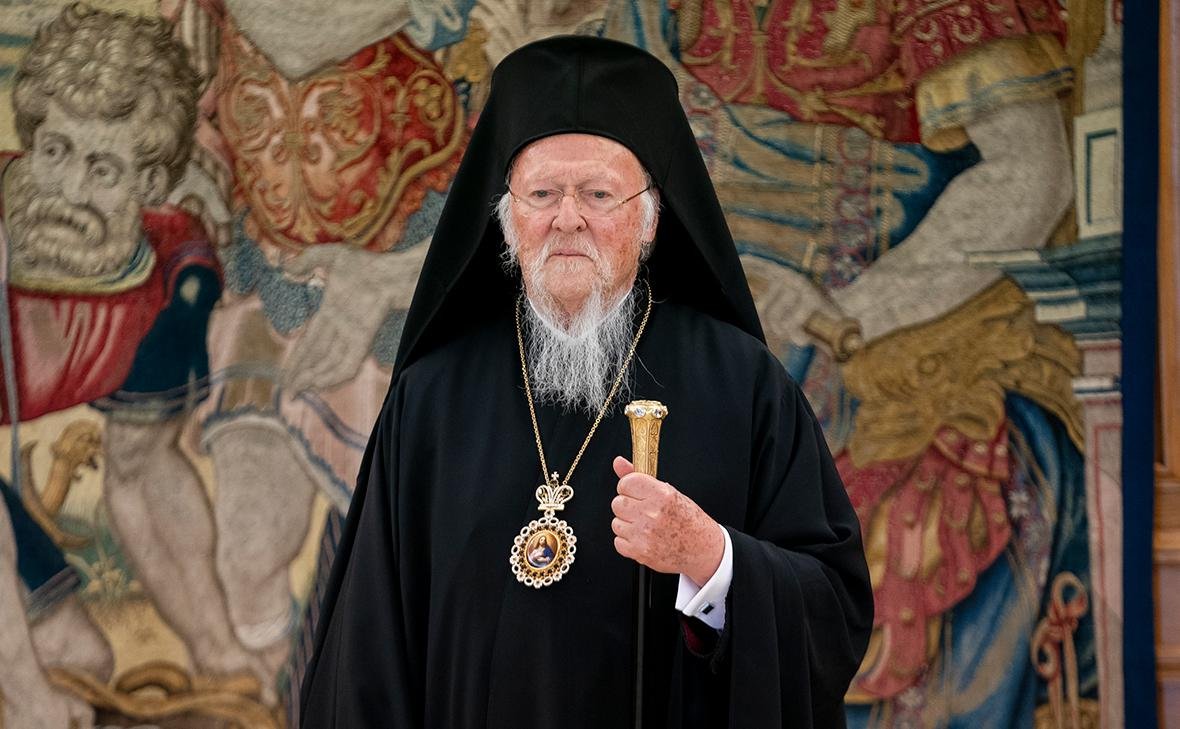
In the near future, Ecumenical Patriarch Bartholomew will visit Latvia. At first glance, this appears to be an exclusively ecclesiastical event, yet behind it lies a whole range of issues touching on historical memory, politics, interfaith dialogue and the very identity of Orthodoxy in Latvia. Latvian historian and theologian Eduards Seliška, lecturer at the University of Latvia and former employee of the Ministry of Foreign Affairs and the Ministry of Defence of Latvia, gave an exclusive interview to Libertas Fidei, speaking about the multifaceted importance of this visit and the prospects for the country’s religious life.
— Mr Seliška, what does the visit of Ecumenical Patriarch Bartholomew mean for Latvia?
— This visit is undoubtedly of great significance. Even if this may not be felt immediately, it matters for several reasons.
Firstly, in Latvia Orthodoxy is often perceived exclusively as a faith tied to Russia and the Moscow state. What is overlooked is that Orthodoxy has other roots: the legacy of Kyivan Rus and a much broader historical context. In academic circles this is obvious, but in the wider public perception it is not. Bartholomew’s arrival is a reminder of this.
Secondly, the visit raises the question: where does the Latvian Orthodox Church stand in this system, and where should it stand? Today it is subordinated to Moscow. But historically this was different: from 1936 to 1940 the Latvian Church was under Constantinople. This came shortly after the tragic death of Metropolitan John, killed in 1934, reportedly by NKVD agents.
After the Soviet occupation, the church was again placed under Moscow, where it has remained to this day. Since the 2000s, the question has been raised with increasing frequency: why does the Latvian Church still maintain such close ties to Moscow, especially given Russia’s hostile policy towards Latvia? For most Latvians the answer is clear: the situation must change.
Moscow’s presence in church life reinforces the false assumption that Orthodoxy and Moscow are one and the same. Especially when one considers today’s Russia with its political regime. Bartholomew’s visit may therefore reignite debate about the future of the Latvian Orthodox Church.
“Latvia sees the visit as an event of state significance”
— Was this visit initiated by the Patriarch himself or by Latvia? And how important is it that he will meet not only with clergy but also with the country’s leaders?
— Naturally, Latvia would not have been the first country Bartholomew chose for such a visit. But local circumstances have made it relevant.
The issue is primarily domestic: the status of the Latvian Orthodox Church and the debate surrounding its canonical allegiance. Against this backdrop, the arrival of the Ecumenical Patriarch seems a logical step.
It is also important that the programme includes meetings with the president, prime minister and speaker of parliament. This underlines that the visit is being treated as an event of state significance, not just an ecclesiastical one.
“The visit is politics, history and religion all at once”
— Why is Bartholomew coming to Latvia now, for the first time?
— In large part, the initiative came from the Latvian side. Politicians are keen to keep alive the debate over the status of the Orthodox Church in Latvia.
There is also a broader context. The visit is being seen as a gesture of solidarity with regional countries striving for independence from Moscow — both politically and spiritually.
In this sense, the event has several dimensions: historical, domestic political and geopolitical. It is both a sign of support and a reminder that Orthodoxy need not be tied to a single centre of power.
“The question of church jurisdiction remains open”
— The Latvian Orthodox Church’s canonical allegiance is still unresolved. Could Bartholomew’s visit help bring clarity?
— The question remains unsettled. As mentioned, between 1936 and 1940 the Latvian Orthodox Church was under Constantinople. After the Soviet occupation it returned under Moscow, and that remains the case today.
To understand the present situation one must also take into account the political dynamics among Latvia’s Russian-speaking population. There are different groups: staunch supporters of Moscow, those firmly opposed to the war and the regime, and a “middle” group trying to maintain a balance. All of them are in some way connected to Orthodoxy, and this shapes the church’s position.
In 2023 the Latvian parliament adopted a law recognising the Latvian Orthodox Church as independent from Moscow. But that was merely an administrative step. Canonical issues cannot be decided by parliament; they fall solely within the church’s competence.
This has created a paradox: from the state’s perspective the Latvian Orthodox Church is independent, but in canonical terms it remains under Moscow. Bartholomew’s visit may therefore be both a symbolic and practical step, encouraging the church to debate its own future.
“Ecumenical dialogue in Latvia has deep roots”
— Bartholomew is known for supporting religious freedom and interfaith dialogue. What might this mean for Latvia?
— Latvia has a strong tradition of ecumenical cooperation. It dates back to the late 1980s, when churches supported the struggle for restored independence. Lutherans, Catholics, Orthodox and Baptists worked together for a common cause.
Joint services on important occasions — such as Independence Day on 18 November — also show that dialogue is possible.
Bartholomew’s visit could breathe new life into this process. Today, with the war and Moscow’s aggressive rhetoric, it is especially important to preserve openness and the ability to engage in dialogue. The Patriarch’s example demonstrates that the church must be a voice of love for one’s neighbour, condemning aggression and sin, while remaining open to communication and mutual understanding.
“The result will appear over time”
— How could the visit affect religious life in Latvia in the long term?
— By itself, the visit is only the beginning. If followed by active work, the first results might be felt in 10 years.
This concerns both the development of interfaith dialogue and an internal rethinking of the Orthodox Church’s role. Latvia remains a country with deep social divisions, where misunderstandings of faith often reinforce political worldviews.
But for change to happen, it must start somewhere. This visit is a good beginning.
“The Baltics are a unique space for dialogue”
— Why is the Baltic region becoming important now for Orthodoxy and interfaith dialogue?
— The Baltics are unique. It is, in many ways, the last part of the post-Soviet space where genuine dialogue between Russians and other communities can still take place within a democratic state.
Russian is still widely understood here, and there is direct awareness of developments in Russia, since Latvia borders it and must contend with Moscow’s aggressive rhetoric and actions.
At the same time, Latvia has a democratic system, allowing such conversations to take place in a normal atmosphere. In other regions this is far harder: in Western Europe Russia feels too distant, while in Central Asia and the Caucasus other priorities and conflicts dominate.
This is why the Baltics are becoming a unique platform for discussing what Orthodoxy is and how it should develop. Bartholomew’s visit to Latvia carries significant potential: it demonstrates that Orthodoxy is not Moscow’s monopoly. It is the beginning of a longer journey — one that must be followed by serious work.