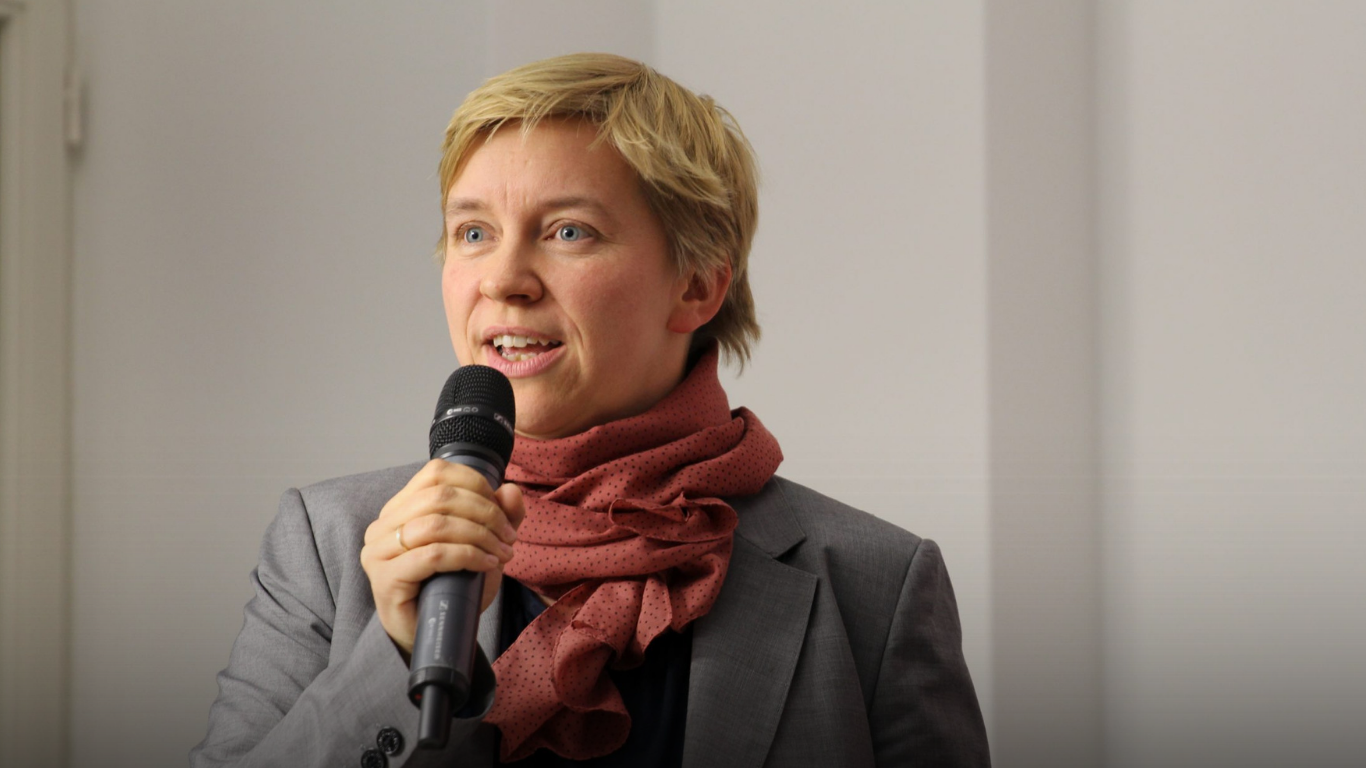
In Russia, priests are increasingly afraid not only of the state, but also of their own parishioners. Informing comes from within church communities, critical voices are persecuted, and those who attempt to defend people or maintain distance from official rhetoric are systematically replaced by supporters of the war. This was stated by Regina Elsner, Professor and Doctor of Theology, a researcher of Eastern Christianity and ecumenism at the University of Münster.
According to her, the Russian Orthodox Church has turned into one of the key institutions of mobilisation and propaganda. Elsner maintains ongoing contacts with theologians and priests in Russia and offers a comprehensive assessment of how religious structures are embedded in the logic of Russia’s war against Ukraine and its repressive policies.
Pressure on the Clergy and the Dismantling of “Pockets of Resistance”
As Regina Elsner notes, cases of pressure on clergy in Russia continue: some are forced to leave the country, others are banned from ministry. Publicly, there are fewer such stories, but this does not indicate any easing of the situation. On the contrary, within the church environment there is a growing understanding that any critical statement may have fatal consequences.
“Everyone understands this very well: the moment they open their mouths, they will simply cease to exist. We are dealing with a totalitarian system in which the mechanism of informing is actively used. The priests themselves say that the current situation differs from the Soviet one. In the USSR it was clear: if you went to church, the state registered you and knew who you were. Today everything is different — denunciations come from within the communities themselves, and a priest cannot feel safe even in front of his own flock,” Elsner emphasises.
As a result, critical voices within the church are growing ever quieter. Even those priests who internally disagree with what is happening often prefer to remain silent.
“We have seen this many times in recent years: priests who allowed themselves even minimal criticism or tried to articulate an alternative view were simply thrown out of their parishes. They were replaced by those who most actively support the war, Putin, and Patriarch Kirill. In this way, small ‘pockets of resistance’ are deliberately destroyed. That is why those who still remain try at any cost to avoid conflict,” the researcher explains.
According to assessments by Elsner’s interlocutors who are in Russia, around 70–80% of priests and bishops of the Russian Orthodox Church follow the line set by Vladimir Putin and Patriarch Kirill Gundyayev. Critics constitute a clear minority. They are joined by a group of those who are indifferent to what is happening or who attempt to fully depoliticise themselves. As a result, the number of people holding a conscious critical position is extremely small.
Outside Russia, in the foreign structures of the Russian Orthodox Church, there are somewhat more such voices; however, even there, according to Elsner, increasingly harsh personnel decisions are being taken.
Personnel Policy Abroad: A Course Toward Tightening Loyalty
As an illustrative example, Elsner cites a recent high-profile case in the Russian Orthodox Church Abroad. Metropolitan Nestor Sirotenko, who headed the Diocese of Korsun and Western Europe and held the post of Patriarchal Exarch of Western Europe, was removed from office under the pretext of participating in sports poker. The scandal received wide media coverage due to published photographs; however, Elsner stresses that the essence of the matter lies elsewhere.
“What matters is that this was a person who defended his priests. He did not demand that they pray for victory and did not impose military rhetoric on them. He was removed, put on ecclesiastical trial, and replaced by a figure who openly supports the war. Now this person will most likely promote Kremlin narratives even more actively in parishes in Germany and other countries under the Moscow Patriarchate. All that remains for us is to observe what this will lead to,” Elsner notes.
According to her, this case demonstrates a deliberate restructuring of foreign parishes toward stricter ideological loyalty.
The Russian Orthodox Church as an Instrument of Mobilisation and War Propaganda
Regina Elsner emphasises that the Russian Orthodox Church remains an important element of the state system of mobilisation and propaganda. Through church language and symbolism, ideological constructs are formed that present Russia’s war against Ukraine as forced, justified, and even “sacred”.
A key role in this process is played by Patriarch Kirill Gundyayev; however, the institution of the military clergy is no less significant. According to Elsner, in contemporary Russian reality the very concept of “military pastoral care” has largely lost its traditional meaning.
“Russians themselves do not speak of ‘military pastoral care’, but of ‘priests of war’. These military priests play a huge role in keeping people ‘in formation’ and in promoting the propaganda of a ‘sacred war’ and the idea of ‘atonement’ that allegedly awaits soldiers,” she explains.
In Regina Elsner’s assessment, the religious factor in Russia’s war against Ukraine is not secondary, but structural. A significant part of the Russian Orthodox Church is loyal to the state course and actively participates in the processes of mobilisation and the legitimisation of violence. Critical voices are marginalised and pushed out, and the space for alternative positions is rapidly shrinking.
The researcher emphasises that discussion of the religious dimension of Russia’s aggression against Ukraine is not an optional topic, but an urgent necessity. Without this discussion, neither responsible theological reflection on what is happening, nor an honest position on the part of church structures, nor a full public understanding of the role of religion in legitimising war and violence is possible.