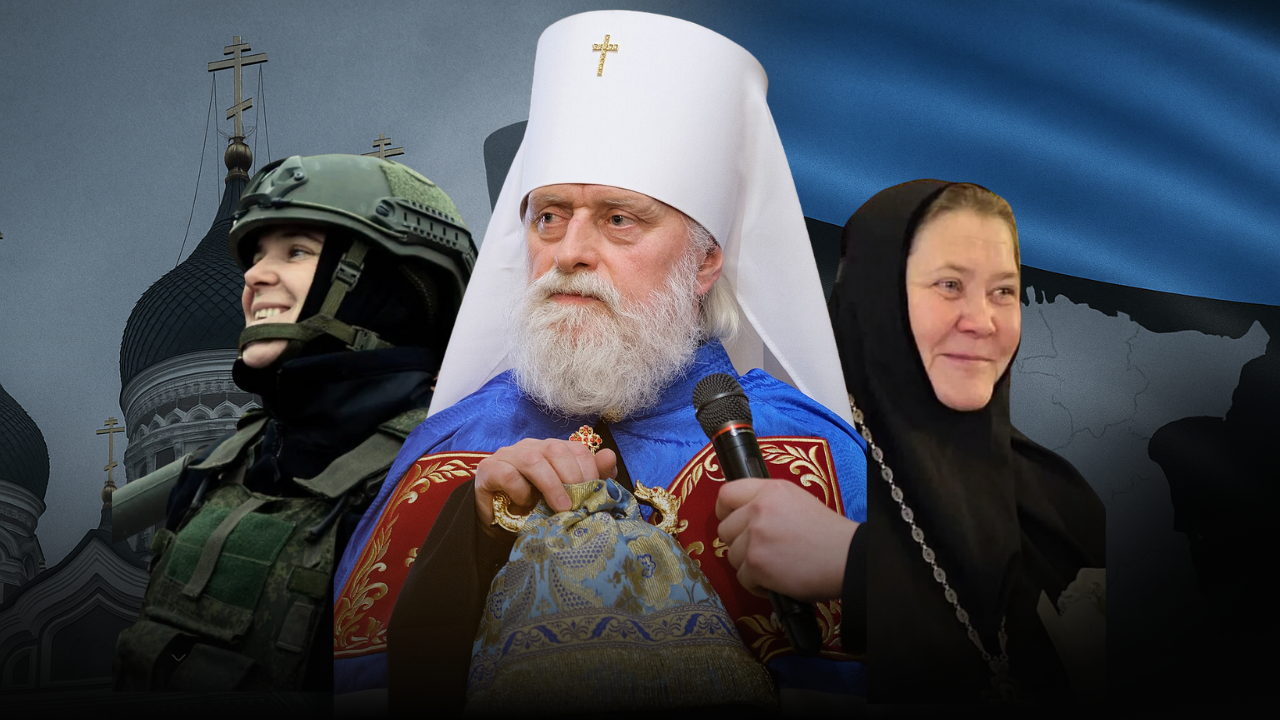
Estonia has increased scrutiny of the external activities of the Russian Orthodox Church (ROC) and clergy associated with it. The trigger has been investigative reports alleging that certain priests holding Estonian residence permits have supported the Russian army engaged in the war against Ukraine.
Key Facts
Between 2024 and 2025, Estonian authorities took a series of measures concerning representatives of the Moscow Patriarchate.
The Police and Border Guard Board (PPA) refused to extend the residence permit of Metropolitan Eugene (Valery Reshetnikov), head of the Estonian Orthodox Church of the Moscow Patriarchate, citing national security concerns. The decision noted that the hierarch’s public statements echoed those of Patriarch Kirill, who described the war as a “sacred mission.” Metropolitan Eugene left the country in February 2024 — a fact confirmed by both ERR and the Moscow Patriarchate.
In September 2024, the Ministry of the Interior sent a letter to the bishops of the Estonian Orthodox Church, warning that Patriarch Kirill’s statements could pose a threat to Estonia’s internal security. The ministry demanded a “clear position” from the church on the issue of subordination to Moscow.
In spring 2025, the Estonian parliament approved amendments obliging religious organizations linked to foreign structures to sever formal organizational ties if such ties are deemed a threat to the state. According to legal experts, the legislation is directly related to pro-Russian activity within the church environment and has become the subject of legal disputes.
Investigations and Key Figures
The Estonian daily Postimees published an investigation about two nuns who hold Estonian residence permits but are actively involved in activities in Russia.
According to the publication, Abbess Ekaterina Chaynikova of the Exaltation of the Cross Jerusalem Monastery in the Moscow region is regarded as one of the most influential ROC figures connected with the Narva diocese of the Estonian Orthodox Church. In Russia, Abbess Ekaterina coordinates the delivery of food, medicine, and fuel to Russian troops participating in the war against Ukraine.
Her assistant, nun Juvenalia, is also listed as part of the Narva diocese staff, according to Postimees. At the same time, she serves as treasurer of the same ROC monastery in the Moscow region and takes part in trips to the combat zone in Ukraine, delivering to Russian soldiers aid collected by the monastery — both humanitarian and military, including thermal imagers and communication devices.
Although open-source publications have documented these activities, both representatives of the ROC continue to hold residence permits in Estonia and to enjoy the social rights granted to legal residents.
Authorities’ Response and Security Rationale
According to Estonia’s Internal Security Service (KAPO), such cases demonstrate how Moscow uses religious structures to promote political narratives and legitimize military actions.
In its annual reports, the agency notes that the Kremlin employs “religious connections as an element of hybrid influence” — particularly in the Baltic states, where the Russian Orthodox Church maintains a presence.
Estonian security agencies emphasize the dependence of local dioceses on the external center in Moscow — a relationship that, according to authorities, constitutes a potential risk to national security and a threat to Estonia’s internal stability.
Consequences and Trends
The situation in Estonia reflects a broader European pattern: governments are tightening oversight of foreign-linked religious organizations when they become involved in political or military narratives.
The dependence and subordination of the Orthodox structure in Estonia to the Moscow Patriarchate is viewed by Estonian security bodies as a potential channel of influence from a state pursuing an aggressive military policy. Consequently, the activities of the Moscow Patriarchate are assessed by Estonian authorities not in a purely religious context but through the prism of potential subversive operations aligned with the Kremlin’s geopolitical interests.
At present, Estonia’s Supreme Court is reviewing legal challenges surrounding the 2025 Law on Religious Associations. According to experts, the outcome of this judicial process will define the new framework governing relations between the state and the church.