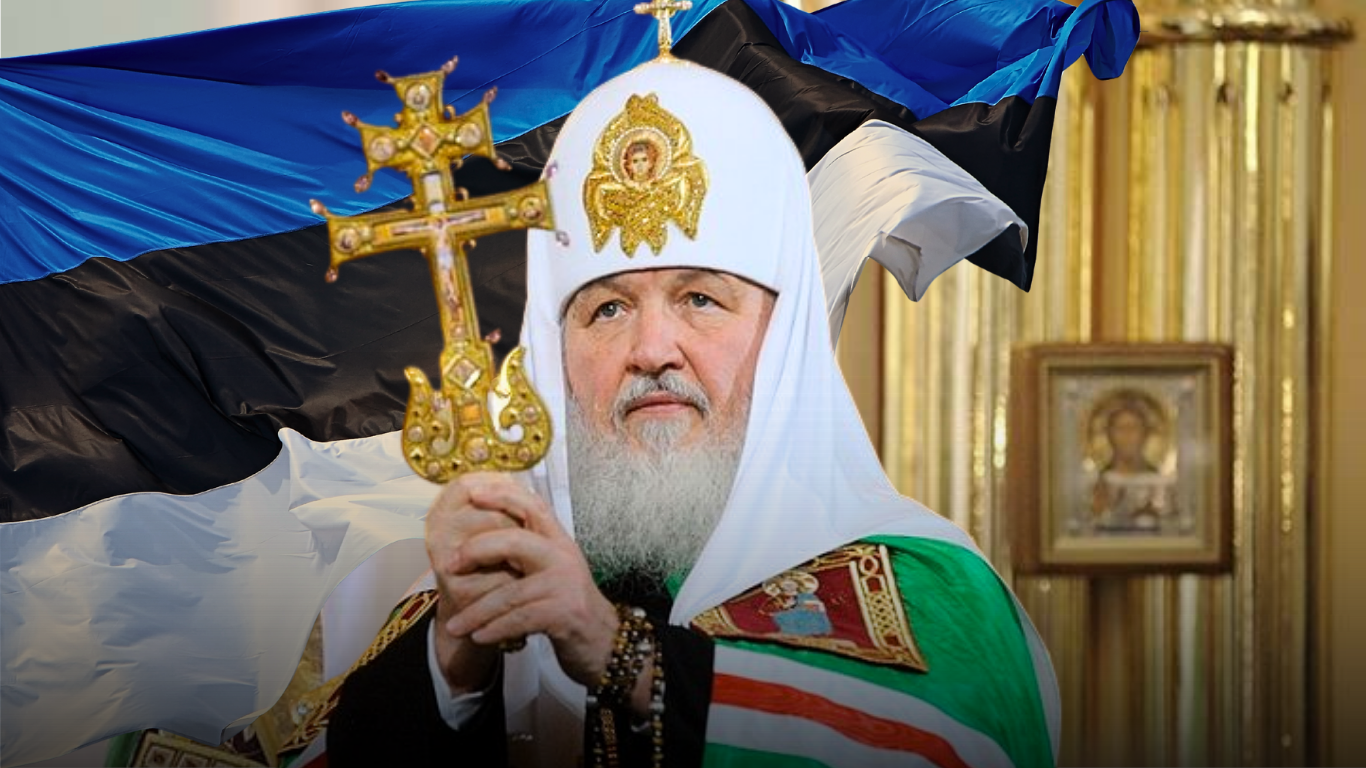
On 16 December, Patriarch Kirill Gundyayev of the Russian Orthodox Church addressed the annual diocesan assembly of Moscow clergy, where he commented on the situation surrounding the Estonian Orthodox Church of the Moscow Patriarchate. He stated that in a number of countries, including Estonia, an alleged struggle against the Russian Orthodox Church is continuing:
“The Holy Synod, meeting remotely in April of this year, adopted a statement concerning the actions of the Estonian parliament directed against the Estonian Orthodox Church. To our sorrow, in a number of countries people possessed by diabolical hatred toward Orthodoxy continue to fight against the Russian Orthodox Church. Let us pray for the granting of steadfastness and inner peace to all those who remain faithful to the canonical order and to ecclesiastical unity”, – Kirill Gundyayev said.
The patriarch’s statement was made against the backdrop of the position taken by the Estonian authorities and parliament, which have sought to distance themselves from the Russian Orthodox Church because of its ties to the Russian Federation and the public support expressed by the ROC leadership for Russia’s war against Ukraine. Estonia regards the Moscow Patriarchate as an element of Russian political and ideological influence and is calling on the Estonian Orthodox Church to reconsider its canonical dependence on Moscow. The Estonian authorities consider such distancing justified and necessary from the standpoint of national security, emphasizing that the measures being taken are not aimed at restricting believers’ freedom of religion, but at ensuring the autonomy of local Orthodox communities and preventing the interference of external political interests in the country’s religious life.
It should be recalled that Patriarch Kirill has publicly blessed Russia’s war against Ukraine, asserting that Russian soldiers who die at the front “wash away all their sins”. He has also sacralized Russia’s military aggression against Ukraine by calling it a “struggle for spiritual values” and a “defense of the Russian world”, thereby providing the Russian invasion with religious and ideological justification.