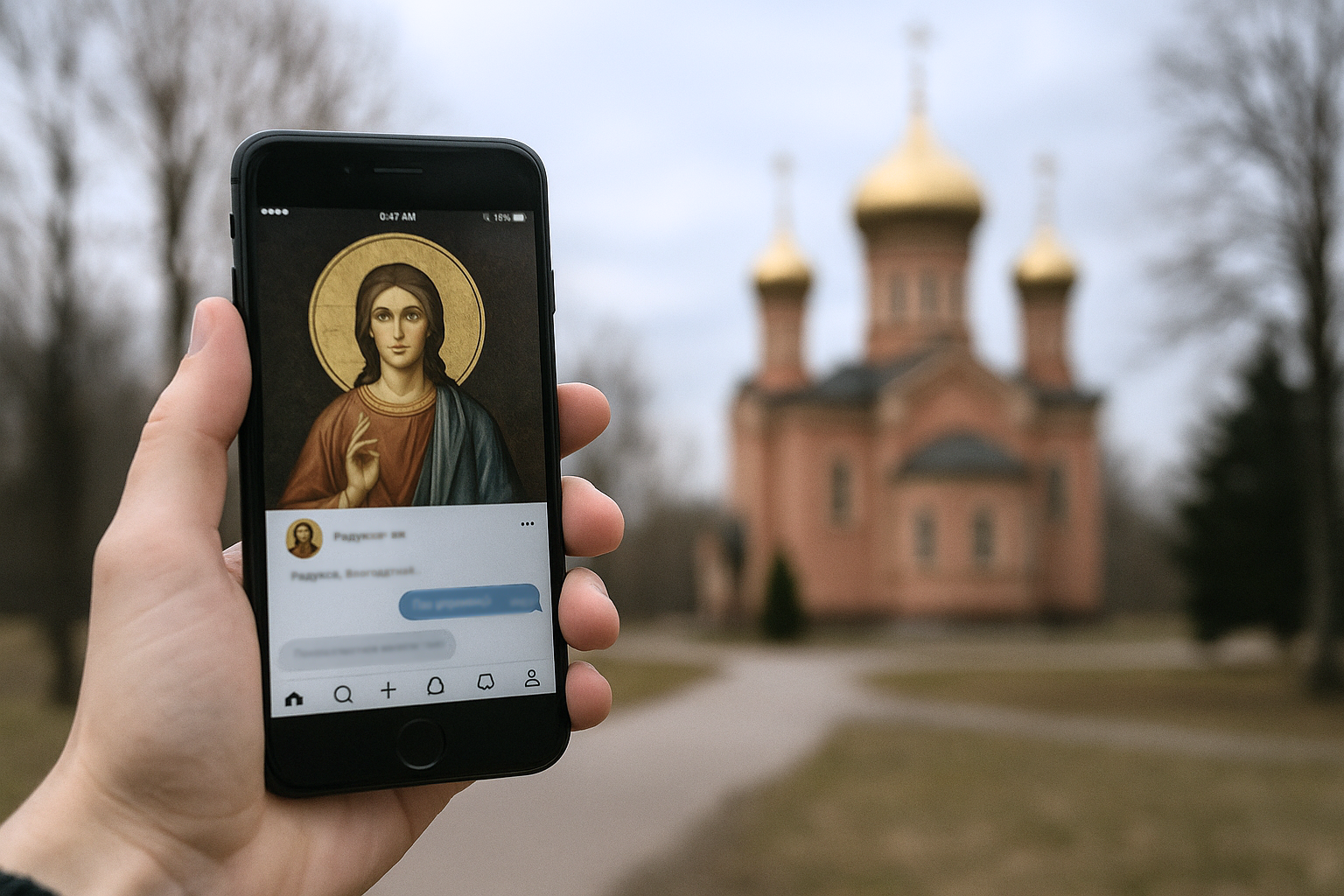
A new digital product has been introduced in Russia — the “Zosima” messenger, presented by its developers as an “Orthodox means of communication.” According to its creators, the service is intended to unite believers and bring the church closer to young people.
The application includes prayer books, a church calendar, and the possibility of communication within religious communities. Representatives of the Russian Orthodox Church actively support the project, pointing to the need for domestic platforms against the backdrop of restrictions on foreign services.
But “Zosima’s” privacy policy tells a different story. Registration requires authorization through the state portal Gosuslugi, automatically tying users to Russia’s system of government oversight. The app also requests a sweeping range of personal data — from passport details and home addresses to income information and military service status.
In practice, “Zosima” extends well beyond a religious tool. It becomes part of Russia’s surveillance infrastructure, with the church acting as a bridge between the state and society.
Experts highlight several key areas of integration:
- Ideological control — through propaganda materials and sermons distributed via the app;
- Digital surveillance — by collecting personal data and linking directly to government services;
- A “digital Orthodox space” — positioned as an alternative to mainstream social networks.
The Russian Orthodox Church has long since lost the status of being solely a religious institution and has in fact been integrated into the state hierarchy. The new messenger reinforces this symbiosis, turning religious discourse into a tool of internal authoritarian control in the context of war, sanctions, and Russia’s international isolation.
“Zosima” is thus emerging as another link in Russia’s developing system of digital authoritarianism — where the language of spirituality serves as a cover for expanding the machinery of state surveillance.