The Chisinau Court of Appeal has issued a ruling granting the Bessarabian Metropolis, which is independent of the Moscow Patriarchate, the right to challenge the exclusive prerogative of the Moldovan Metropolis of the Russian Orthodox Church to use more than 800 historical churches in Moldova.
This decision has dealt a blow to the position of the ROC in a country where Moscow’s influence has been rapidly diminishing amid Russia’s military aggression against Ukraine and Chisinau’s course towards EU integration.
A Moldovan court questions the rights of ROC structures to hundreds of churches
On 25 November, the Chisinau Court of Appeal examined a legal dispute between the Bessarabian Metropolis and the Moldovan Agency for Land Relations and Cadastre. The case concerned the property status of the Church of the Holy Archangels Michael and Gabriel, whose religious community had earlier voluntarily withdrawn from the Moldovan Metropolis of the ROC and joined the jurisdiction of the Bessarabian Metropolis. The priest of the new community appealed to the cadastre agency, demanding the annulment of the right of the Moldovan Metropolis of the ROC to use the church, arguing that in practice it now serves the religious needs of believers belonging to the Bessarabian Metropolis.
In the application submitted to the cadastre agency, the priest referred to a June 2023 ruling by the same Court of Appeal, which had declared invalid the 2003 gratuitous-use agreement concluded between the Ministry of Culture and the Moldovan Metropolis of the ROC. Under that agreement, the Moscow-affiliated structure held over 800 churches and monasteries with cultural-heritage status in perpetual use.
However, the cadastre agency refused to annul the entry in the real estate register, stating that doing so required the consent of the Moldovan Metropolis of the ROC. The Court of Appeal deemed this position unlawful and “absurd”: the court pointed out that any interested party may request the removal of a registry entry if it is based on a document that has been declared invalid or has lost its legal force.
Iulian Rusanovschi, a lawyer for the Bessarabian Metropolis, notes that the legal dispute over the right to use historical churches has lasted for more than 12 years, has passed through several stages, and has reached the Supreme Court of Justice eight times. Now the Bessarabian Metropolis has a judicial precedent enabling it to challenge the rights of the Moldovan Metropolis of the ROC to numerous religious buildings.
Who stands on each side of Moldova’s church dispute
To understand the significance of the court decision, it is important to know which religious structures are asserting property claims:
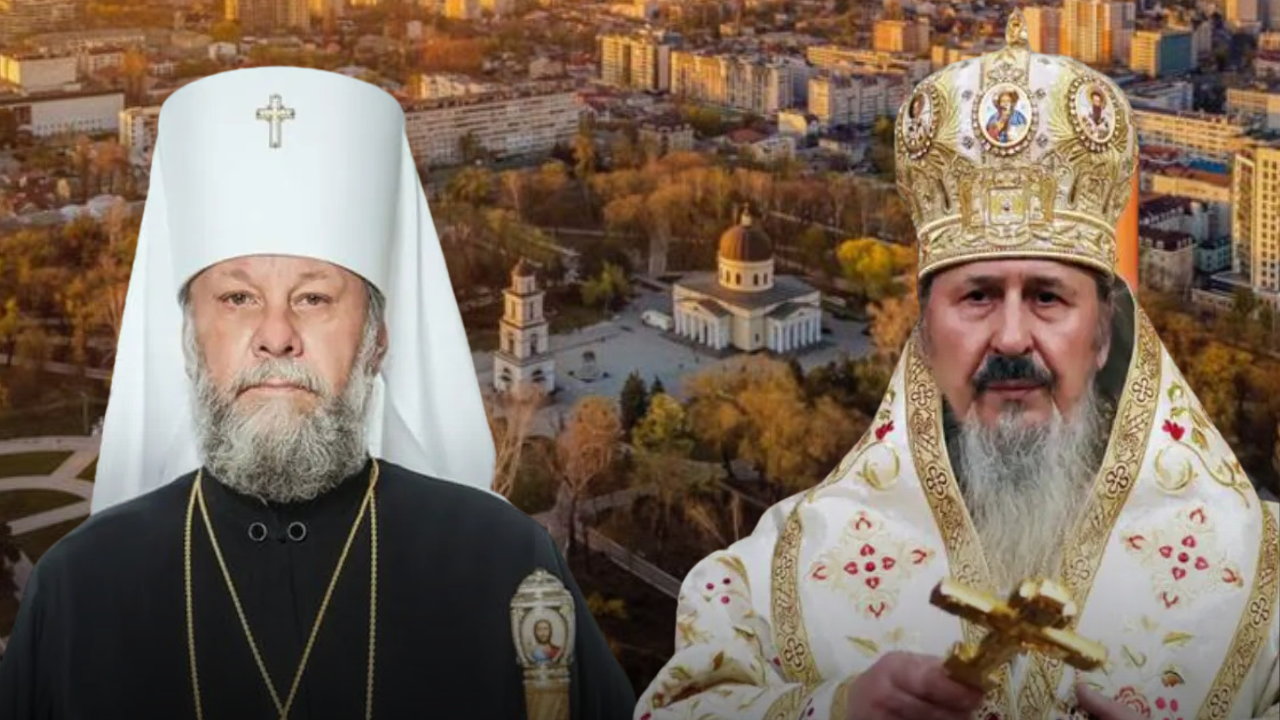
The Moldovan Metropolis of the ROC
(full name: the Metropolis of Chisinau and All Moldova of the Moscow Patriarchate):
- a structure of the Russian Orthodox Church, subordinate to Moscow Patriarch Kirill Gundyaev and formally endowed with autonomy;
- the largest Orthodox structure in the country by number of parishes, traditionally perceived by part of Moldovan society (including the pro-Russian, self-proclaimed “Transnistrian Moldavian Republic”) as a “national” Church;
- in public debate often described as a channel of Moscow’s influence in Moldova — because of its pro-Russian rhetoric on “traditional values” and its involvement in domestic politics in the Kremlin’s interests.
The Bessarabian Metropolis:
- an Orthodox structure independent of Moscow that does not yet have full autocephaly but canonically belongs to the Romanian Orthodox Church with broad autonomy; it is engaged in dialogue with the Ecumenical Patriarchate on obtaining autocephaly through canonical procedures;
- was legally recognised in Moldova following a European Court of Human Rights ruling in the case “Bessarabian Metropolis and Others v. Moldova,” in which refusal of registration was deemed a violation of freedom of religion;
- has grown significantly in recent years, strengthening its position through religious communities that have voluntarily transferred from the Moldovan Metropolis of the ROC.
Thus, the conflict concerns not only property rights to religious sites but also a deeper question: which model of historical and cultural identity — “Russian-Orthodox” or “European-Orthodox” — will be reflected in the key monuments of Moldova’s religious architecture.
How the political climate accelerated the shift away from ROC structures
The court decision in favour of the pro-European Bessarabian Metropolis is also a reflection of Moldovan society’s response to Russia’s military aggression against Ukraine.
It is evident that the Moldovan public and the authorities take into account the fact that the Russian Orthodox Church not only failed to distance itself from the war but in some cases effectively supported it: Patriarch Kirill, describing Russia’s invasion of Ukraine as a “holy war” and speaking of the “metaphysical meaning” of events, legitimised the aggression in religious terms. His statements were quoted negatively in international media and by human rights organisations.
Against this backdrop, the situation developed steadily and tensely. Dozens of religious communities in Moldova announced their transfer from the Moldovan Metropolis of the ROC to the Bessarabian Metropolis. The leadership of the Moldovan Metropolis of the ROC reacted harshly — defrocking and banning from ministry the priests who joined the Bessarabian Metropolis. Metropolitan Vladimir Cantarean of the Moscow Patriarchate publicly urged the transferred clergy to “repent and return to the bosom of the Church.”
Meanwhile, the Bessarabian Metropolis emphasised that it regarded the transferred priests as canonical clergy and fully legitimate ministers.
In parallel with the transfer of dozens of parishes from the jurisdiction of the Moldovan Metropolis of the ROC to the Bessarabian Metropolis, the country’s authorities began speaking increasingly openly. Government representatives linked the strengthening of the Bessarabian Metropolis and the decline in parishes under the Russian Orthodox Church to the nation’s political choice in favour of the European Union and its aim to distance itself from Russian influence.
Amid the 2024 presidential elections and the 2025 parliamentary elections, concern grew that church structures could be used as instruments of interference in the electoral process. Media reports and official statements indicated that some priests connected to Moscow engaged in pre-election campaigning, spreading anti-European messages and appeals targeting pro-European political forces.
This situation reinforced the perception of the church split and the shift of jurisdiction in Moldova not merely as a religious matter but as part of a geopolitical and socio-political conflict. The transfer of communities to the Bessarabian Metropolis is seen by many experts — especially in Moldova itself — as a civilisational choice: in favour of European integration and away from Russian influence.
A struggle for heritage: determining the fate of Moldova’s holy sites
Formally, the legal dispute concerns only the “right of use” of cultural heritage sites. But in practice it determines who will control the country’s historical religious infrastructure — and therefore influence a significant part of society.
The 2003 agreement granted the ROC structure major public and symbolic resources. De-facto control over key churches in Moldova allowed it to determine who may conduct services there and under what conditions, shaping significant symbolic capital. The Moldovan Metropolis of the Moscow Patriarchate was long perceived as the “natural” custodian of the nation’s historical shrines.
Now the Bessarabian Metropolis has the opportunity to seek a gradual revision of this arrangement. Communities that transfer to the Bessarabian Metropolis gain the chance to consolidate their right to use their churches.
Why the court ruling matters for Moldova — and for Europe
If the rulings of the Chişinău Court of Appeal are implemented consistently, Moldova will demonstrate its readiness to uphold the standards of the European Court of Human Rights in the field of freedom of religion, to manage state cultural heritage transparently, and to avoid de-facto allocating it to a single religious structure for political reasons.
For Europe, this is also an important indicator of the maturity of a country applying for EU membership. The management of cultural heritage and the provision of equal rights for religious communities are part of the EU’s dialogue with Moldova.
For the numerous Moldovan and Russian-speaking diasporas in EU countries, developments in Moldova send an important signal. The situation raises questions about whether it is possible to legally limit the political influence of organisations linked to an aggressor state while protecting freedom of religion — especially where communities consciously distance themselves from institutions that openly support aggression.
These questions are relevant not only to Chisinau but also to EU member states where parishes of the ROC and its affiliated structures operate. Europe’s decisions will determine whether religious associations become spaces where believers’ rights are reliably protected — or continue to serve as channels of external political influence.