This spring marks three years since the establishment of the Lithuanian Exarchate of the Ecumenical Patriarchate, an exarchate being similar to a separate national church but remaining a structure of the Constantinople Patriarchate, also known as the Ecumenical Patriarchate, which holds the first place of honor among Orthodox churches.
The story of its formation spread across European media. After Russia’s invasion of Ukraine, several Lithuanian priests of the Moscow Patriarchate called on church leadership to distance itself from Patriarch Kirill. When they failed to find support from the ruling bishop and were expelled from the Russian Orthodox Church, since the Lithuanian metropolitan chose to remain loyal to the Moscow throne, they appealed to Ecumenical Patriarch Bartholomew. It should be recalled that the Ecumenical Patriarch has the right to accept such complaints, which are known as appeals.
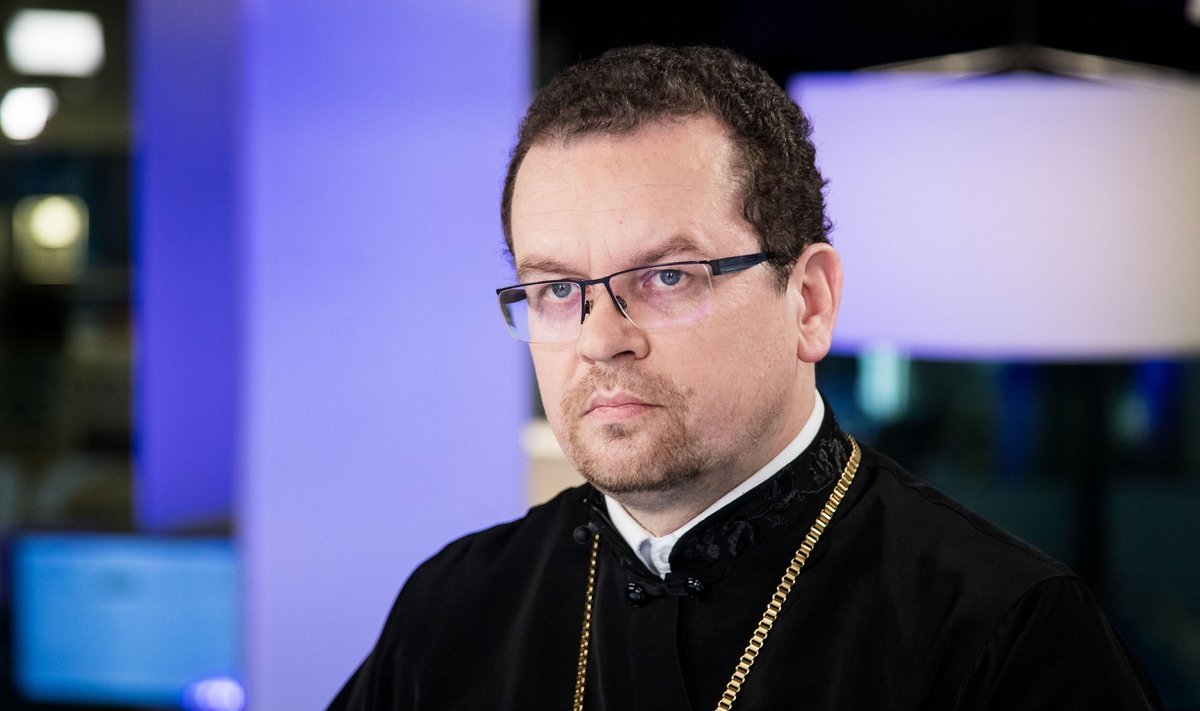
Constantinople accepted these appeals and restored the priests, expelled from the Russian Orthodox Church, to their clerical rank. Moreover, the Lithuanian authorities provided broad support for the project of an alternative to Moscow-aligned Orthodoxy. Patriarch Bartholomew arrived in Lithuania, held meetings with clergy, believers and officials, and launched the Exarchate of the Ecumenical Patriarchate. Three years is a time to take the first stock. In a conversation with Father Vitaliy the discussion turns to how the exarchate is organized today. In Lithuania the process of forming a national Orthodox church as an alternative to the Russian Orthodox Church received unexpectedly wide support. The chancellor notes that during the most difficult period, when priests expelled from the structures of the Lithuanian Russian Orthodox Church were deprived of the possibility to serve and were forced to earn a living through occasional jobs, they were helped with small donations not only by Orthodox believers but also by Lithuanian Catholics and Protestants. According to Father Vitaliy, a special place in the house church is occupied by a cross, a gift from one of the Lithuanians who deals in antiques. “When he learned that an exarchate was being created he was very happy, found us himself, called and offered this gift,” he says. In conversation with us Father Vitaliy speaks about himself, about the clergy and about how he sees the future of Orthodoxy in Lithuania.
– Father, Lithuania is a country that was the first to leave the Soviet Union, the first to refuse Russian gas and the first to push back against the Moscow Patriarchate. Tell us what you think is the most difficult, leaving the Union, giving up Russian gas or leaving spiritual dependence?
– Each of those who left had a different length of service in the Moscow Patriarchate of Lithuania. But each of us saw that the politicization of church life was becoming increasingly serious. I believed that something could be changed from within. Now I understand the naivety of my intentions. We tried to change things but these were tactical rather than strategic changes. The further it went the less we managed to achieve. After Russia’s invasion of Ukraine a movement of lay believers appeared that demanded an alternative to the Moscow Patriarchate. These demands came from national communities, Ukrainians, Greeks and Romanians. They even began to take steps themselves. We told our bishop Innokentiy that there was a movement away from Moscow and that it would be better for us to become what Orthodox believers expected from us. We proposed that we ourselves should go down the path toward spiritual independence. Unfortunately it did not work.
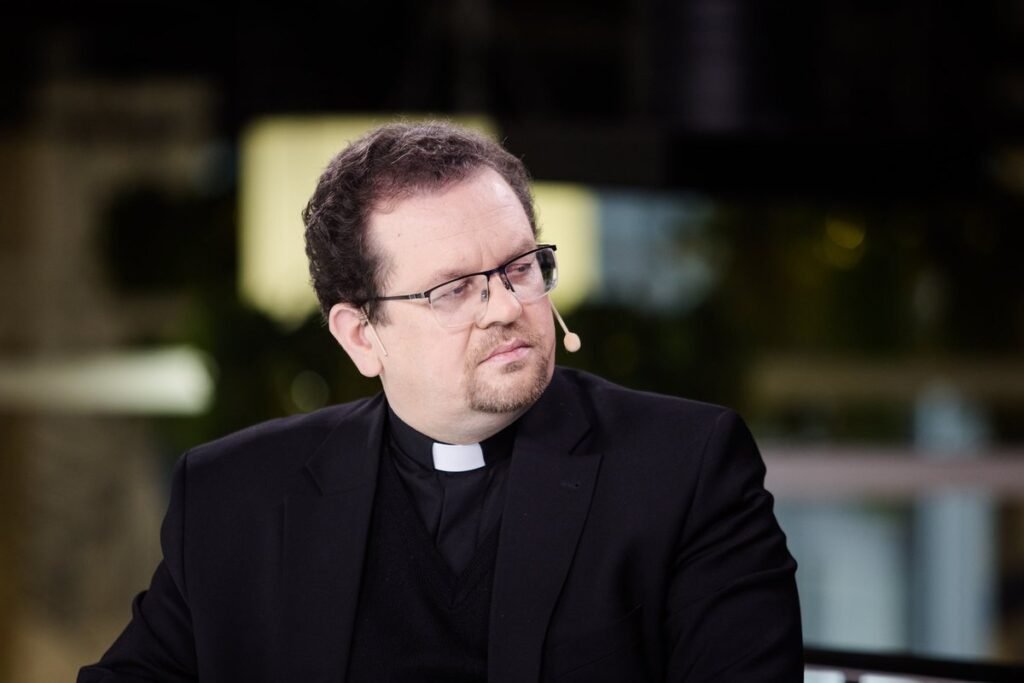
– So the Moscow Patriarchate in Lithuania, with greater or lesser openness, supported Putin and Kirill? These sentiments were dominant and your proposal was rejected?
– Yes. Formally a restrained document was published saying that we have a different opinion from Patriarch Kirill. But within the clergy the hierarchy said that this document was for external perception. If the government wants to hear this then let us issue a statement, but we know what is happening in Ukraine. That became a point of no return. We joined the movement of lay believers to create an alternative to the Russian Orthodox Church. These national communities in Lithuania wrote a letter to Constantinople. That was an argument for the Synod of Constantinople. Our priests in their interviews spoke about how difficult it was to wait for a decision on our appeal. It was not only that we had no income and were looking for temporary work. It was incredibly difficult that we could not offer either the Eucharist or a blessing to our parishioners who had left with us. By the way, the Moscow Patriarchate in Lithuania now receives more than eighty thousand euros a year in budgetary support, while we receive eighteen thousand a year.
– Father Vitaliy, you are flesh of the flesh of the Lithuanian people, who profess Catholicism. How did you become Orthodox?
– I was baptized in the Catholic Church but I was not raised in the faith. We celebrated major holidays but it was not deep church involvement. I met a person who showed me an example of Christian life. That person was Orthodox. I wanted to be part of a community where there were people like that. I was fourteen years old. At that time I did not know about the various patriarchates, I followed the Orthodox tradition. Everything we now know about the Moscow connection between power and religion was unknown to me then, though at that time it was not expressed so strongly.
– And how did Moscow’s influence manifest itself in Lithuania?
– For us it was not as straightforward as in Belarus and Ukraine, which Russia proclaims to be “brothers of the triune union”. First of all I lived through the period of the previous metropolitan Chrysostom, who had his own policy and his own opinion and maintained considerable autonomy from Moscow. People did not travel to him from Moscow and he did not travel there. There were no processions or other actions “for unity” or anything similar. The metropolitan kept himself isolated from the Moscow center and earned authority because of this. He also did not encourage the attitudes of people whom in Ukraine are called those waiting for Russia. Even now the hierarchy behaves cautiously, attracting Ukrainians. Moreover there was an order not to ask Ukrainian refugees whether they belong to the Orthodox Church of Ukraine or the Ukrainian Orthodox Church, but to give communion to everyone so that they would come. Patriarch Kirill, however, continues to be commemorated everywhere except at the Church of St Paraskeva, where Lithuanian intellectuals attend and where services are in Lithuanian. Lithuanian intellectuals say their ears hurt when they hear the commemoration of Kirill as the “great lord and father”.
– One of the ways the Russian Orthodox Church conducts propaganda is through manipulation of history, simply discarding or forgetting entire centuries. Does an Orthodox believer in Lithuania know that the Grand Duchy of Lithuania has a remarkable history of the development of Orthodoxy?
– Unfortunately this was news for everyone, even for parishioners. They did not even dare to think that Lithuania had once been part of the Kyiv Metropolis under the jurisdiction of the Constantinople Patriarchate. On most resources of the Moscow Patriarchate it is written that Orthodox believers in Lithuania have always been in the Russian Orthodox Church. The church is presented as Russian and the question of jurisdiction is said not to matter. When I show the service book of 1620 from the Holy Spirit Monastery in Vilnius and in it there is a prayer for the great lord, the Patriarch of Constantinople, people are astonished. That is why I tell my parishioners that we have restored the activity of the Constantinople Patriarchate. For people who lack historical knowledge or critical thinking this sounds strange.
– Are you also studying the history of how Soviet authorities repressed Orthodox priests who wanted Lithuania’s independence?
– It must be taken into account that Lithuania is a Catholic country. For most people Orthodoxy is the faith of Russians. I know Lithuanians who feel very close to our tradition but who said they cannot convert because if they become Orthodox they will become Russians. They simply confused the concepts. Therefore these facts are unknown. Orthodoxy in general was not of interest for a long time. There was a funny case. When I taught Orthodoxy at the Pedagogical University to future teachers of religion, who were mostly Catholics, I once said that today we celebrate the Nativity of the Mother of God. My students reacted like this. “You also venerate the Mother of God? Well done.” Sometimes I was asked as a lecturer what the difference is between Christianity and Orthodoxy. That is why we try to speak about ourselves as widely as possible.
Anna Jansone, Vilnius
The article is republished from the publication Delfi.