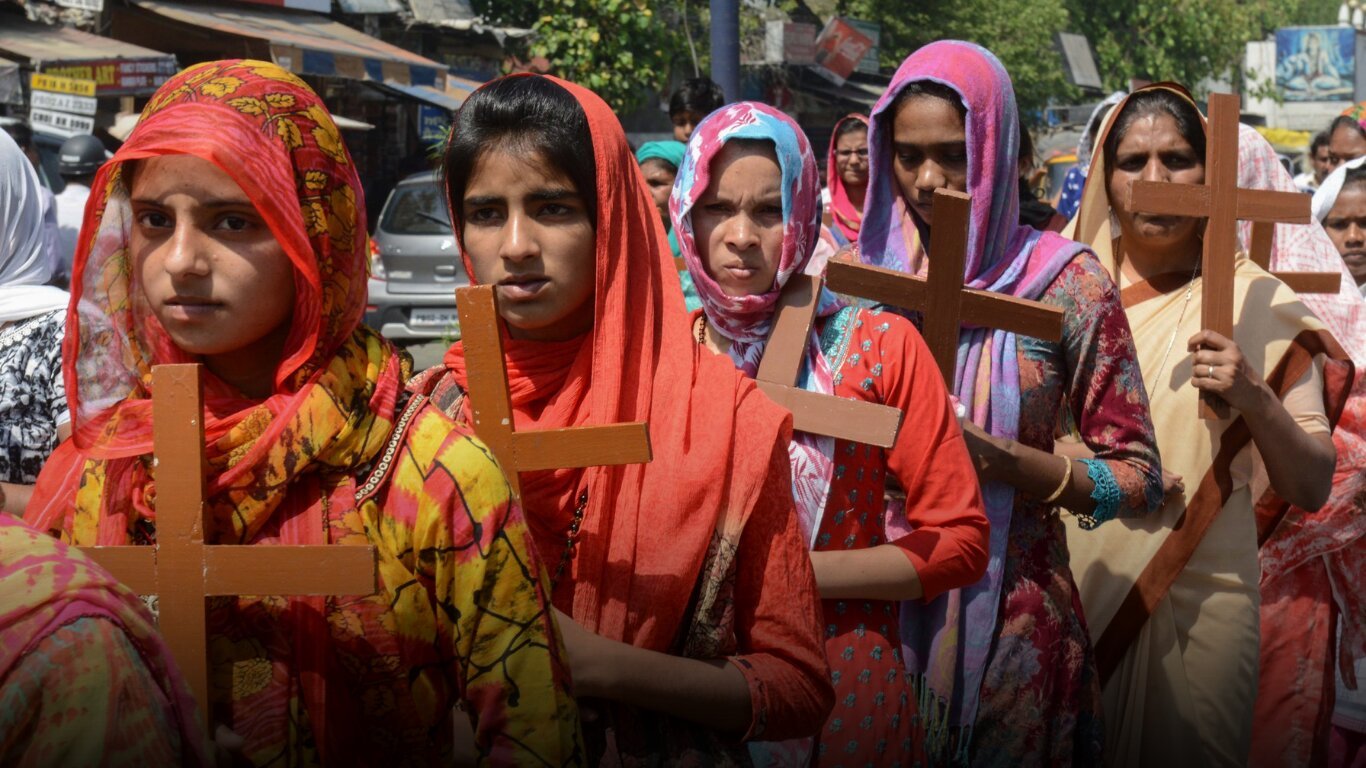
A court case is continuing in India that could determine the future of religious freedom in the country. The stakes are high, as the case could also serve as a precedent for other countries considering similar legislation.
This is written about by the founder of the Caleb Institute, Dr. Richard Howell, in an article published in The Christian Post.
The Supreme Court recently issued notices to 12 states in connection with a petition challenging the constitutionality of anti-conversion laws.
The petition, filed by the National Council of Churches in India (NCCI), argues that these laws encourage violence against religious minorities, especially Christians, and create an environment that obstructs the free practice of religion.
India’s religious diversity is one of its greatest strengths, but at the same time a source of tension. Although the Constitution of India guarantees the freedom to profess, practice, and propagate one’s religion, the reality on the ground often tells a different story. Twelve states have enacted anti-conversion laws aimed at curbing forced conversions, but these laws have been criticized for the potential marginalization and persecution of religious minorities, especially Christians.
Abuse of Anti-Conversion Laws. Incitement of Violence and Vigilantism
The core argument of the petitioners is that these laws encourage vigilantism by allowing individuals and groups to take the law into their own hands. Laws formally intended to prevent forced religious conversions have instead created an environment in which religious minorities, especially Christians, face harassment, intimidation, and violence. The laws fail to effectively distinguish between coercion and free choice, leading to the criminalization of voluntary conversion and the suppression of religious expression.
The consequences are severe. In states with anti-conversion laws, Christians face mob violence, accusations of forced conversion, and even arrests simply for practicing their faith. These acts of vigilantism are often carried out with the tacit approval, or at least the indifference, of local authorities. The National Commission for Religious Affairs asserts that such laws not only violate the constitutional right to freedom of religion but also create a toxic atmosphere in which religious minorities live in constant fear.
The Role of the Judiciary. Safeguarding Constitutional Rights
As the case is heard in India’s highest court, global attention is focused on the judiciary, which must ensure that the country’s constitutional commitments to religious freedom are upheld. India, the world’s largest democracy, is home to a rich diversity of religious communities, including Hindus, Muslims, Sikhs, Buddhists, and Christians. The country’s secular constitution guarantees freedom of religion, and any law that infringes upon this freedom must be subjected to strict scrutiny.
The Supreme Court has an opportunity to strike a balance between protecting public order and safeguarding fundamental individual rights. While the state may have a legitimate interest in preventing fraudulent or coercive conversions, it must not use that interest to justify laws that are applied disproportionately to religious minorities or that serve as a pretext for violence and discrimination.
In past rulings, the Supreme Court has affirmed the right to freedom of religion, as seen in the 1977 case “Reverend Stainislaus v. State of Madhya Pradesh,” which clarified that while individuals have the right to propagate their religion, they do not have the right to forcibly convert others. The judgment emphasized that freedom of religion must be balanced with public order and must not be used to justify social unrest. This precedent will play a decisive role in determining the outcome of the current case.
Global Implications
The case unfolding in India has far-reaching implications beyond the country’s borders. As an influential democracy and a leader in the global community, India sends a powerful signal to the world through its approach to religious freedom. If the Supreme Court rules in favor of anti-conversion laws, it could encourage other countries to adopt similar restrictive legislation, undermining religious freedom worldwide.