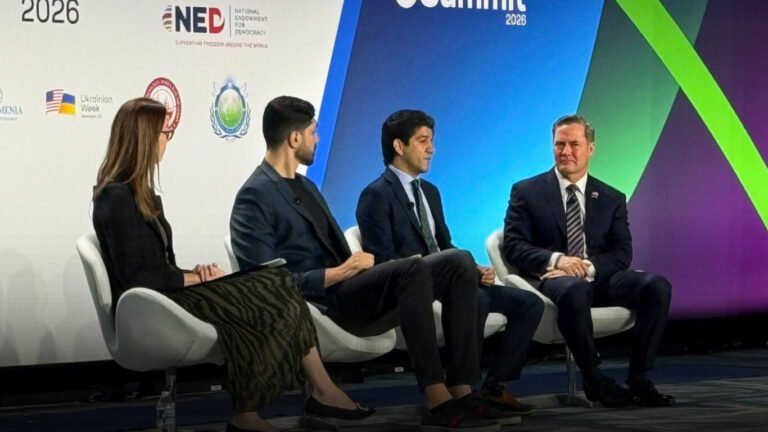
On 16 December 2025, scholars, theologians, public figures, and journalists from various countries convened at the international online conference “Faith and Freedom: Countering Moscow’s False Narratives” to discuss Russia’s use of religion as an instrument of hybrid strategy, as well as the extent of its integration into the socio-political space of Western countries.
Irish political analyst and journalist Mikhal O’Khyurli noted that Moscow deliberately shifts the West’s focus away from its own war crimes by substituting reality with a narrative of the alleged “persecution of Orthodox Christians”. According to him, this discourse has been successfully embedded in Western media and political circles precisely because it is presented not as propaganda, but as rhetoric framed around the “defense of religious freedom”.
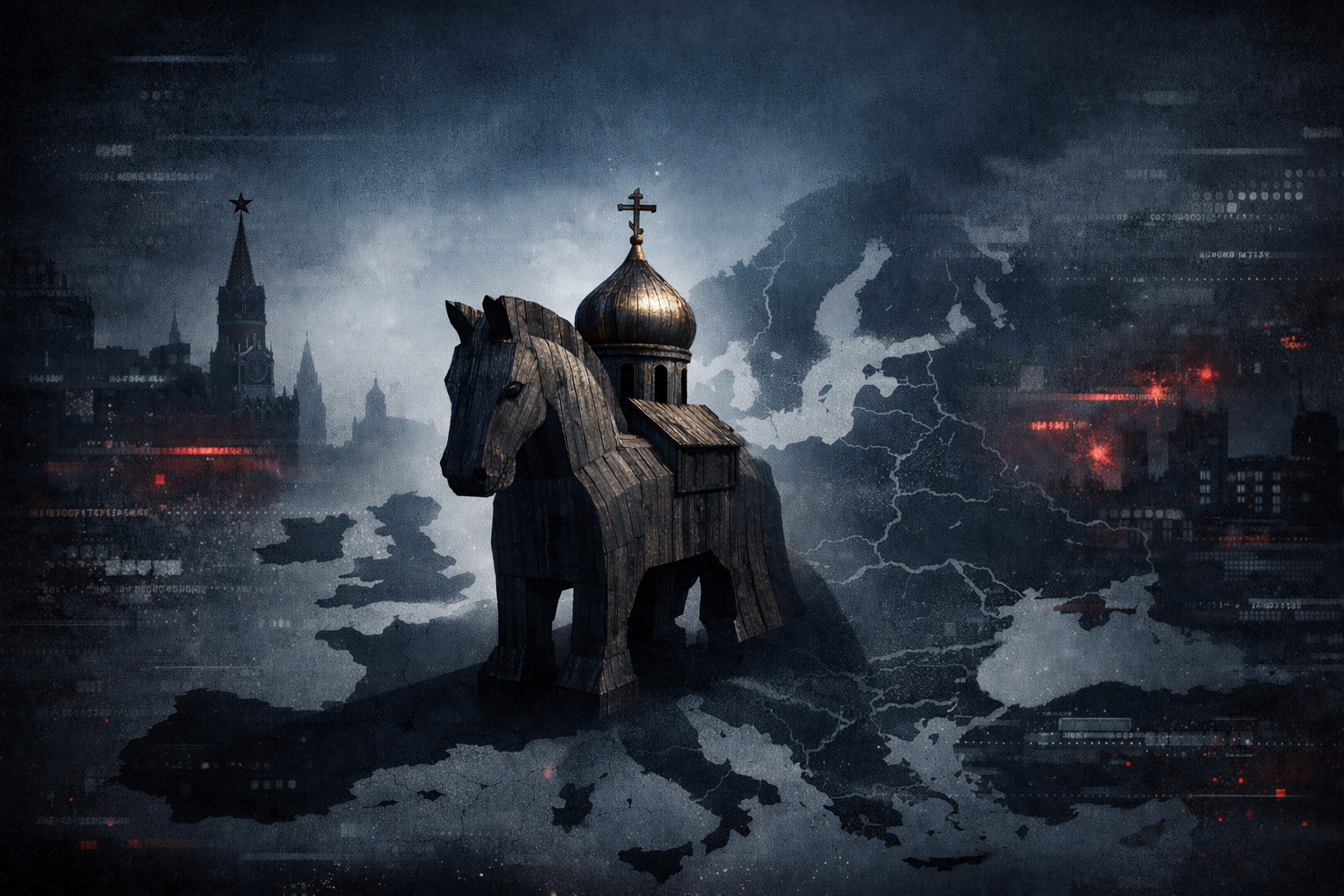
An American pastor from Pennsylvania, Roman Kapran, emphasized that the Russian Orthodox Church effectively functions as a “Trojan horse” of Russian diplomacy. He expressed concern about how poorly the West understands the logic behind the Kremlin’s actions. According to the pastor, Russia’s war against Ukraine is still often perceived as a local conflict, whereas Patriarch of the Russian Orthodox Church Kirill Gundyayev has openly described it as a “Sacred War against the collective West for the preservation of Holy Rus” Within this framework, the West is portrayed as “satanic” and subject to subjugation, while Moscow’s church diplomacy is aimed at dividing and weakening the international community.
It is precisely here, Kapran argued, that the core danger lies: the Russian Orthodox Church operates not as a religious actor, but as a diplomatic and ideological instrument embedded within the Western environment.
A separate segment of the discussion focused on the experience of the Russian Orthodox Church Outside Russia (ROCOR). American journalist and theologian Vassa Larin explained that for a long time ROCOR maintained relative autonomy and allowed criticism of both the Soviet and post-Soviet regimes. However, the so-called “reunification” with the Moscow Patriarchate in 2007 effectively placed the Church’s foreign episcopate in a position of dependence on the center in Moscow. From that moment on, criticism of the Russian authorities was supplanted by the synchronized reproduction of Kremlin propaganda narratives, and the structure itself became an active participant in campaigns against Ukraine and international military assistance to it, primarily from the United States.
Historian Yuriy Fel’shtinskiy recalled that the senior leadership of the Russian Orthodox Church during the Soviet period was closely linked to the security services, and that after the collapse of the USSR, control over the Church rapidly passed to the FSB. As a result, he argued, the Russian Orthodox Church operates in the West not as an independent religious institution, but as a trusted channel of Kremlin influence, one that is often treated with greater loyalty than official representatives of the Russian state.
Summing up the conference, participants stressed that the key threat lies not in the Russian Orthodox Church as such, nor in its spiritual institution, but in its deliberate institutionalization as an instrument of state policy. The integration of the Russian Orthodox Church into the system of foreign-policy and ideological influence enables the Kremlin to act indirectly within Western societies, disguising political objectives under the discourse of religious freedom and interfaith dialogue. As long as such a “Trojan horse” continues to function without adequate critical assessment and institutional countermeasures, Moscow’s hybrid strategy remains highly effective and poses a long-term threat to democratic societies.