Will the Russian Orthodox Church manage to preserve its ecclesiastical influence in Moldova by distorting the information space and reshaping the country’s political course?
Recent religious scandals show that the struggle for church space in the republic is only intensifying.
A BIT OF HISTORICAL CONTEXT
Before 1812, the Moscow Patriarchate did not exist in this territory. The ecclesiastical structure of the Principality of Moldavia was under the jurisdiction of the Constantinople Patriarchate.
After the Russo-Turkish War of 1812 and the annexation of Bessarabia to the Russian Empire, the situation changed. As happened in other regions of the empire, the Russian administration was followed by a church structure, the Russian Orthodox Church, which gradually established control over local church life.
In 1918, Bessarabia became part of Romania, and ecclesiastical jurisdiction passed to the Romanian Orthodox Church, which is in canonical communion with Constantinople.
However, in 1940, after the territory was annexed to the Soviet Union, the church situation changed again. The map was redrawn, and the region came under the jurisdiction of the Russian Orthodox Church.
After the collapse of the Soviet Union and the proclamation of Moldova’s independence in 1991, the church question once again acquired political significance.
Russia, having provoked an armed conflict in the country, with the same pretext for deploying its military, the protection of the “Russian-speaking population”, created separatist enclaves in Moldova, Transnistria and Gagauzia. Over three decades, Moscow informally appointed leaders there and supported them financially, maintaining its influence in the region. It also placed its bet on the church structure of the Moscow Patriarchate, the Metropolis of Chișinău and All Moldova.
However, the Russian Orthodox Church did not remain the only Orthodox church in Moldova. In 1991, part of the clergy established a district, a representation of the Romanian Church, the Metropolis of Bessarabia. Due to sabotage by pro-Russian forces and the Moldovan Metropolis under the jurisdiction of the Russian Orthodox Church, the Metropolis of Bessarabia had to go through a complicated path to registration.
Only in 2004, after many years of legal obstacles and a final decision by the European Court of Human Rights, did the Orthodox Church of Bessarabia receive official registration, and the Supreme Court of the Republic of Moldova recognized it as the “spiritual, canonical, historical successor” of the Metropolitan See of Bessarabia that existed until 1944.
Although the Russian Orthodox Church in Moldova attempted to challenge its status, Moldova’s political elites and journalists supported the church that was not connected to Moscow. It continued to develop.
It was this church that repeatedly appealed to the faithful of Moldova to join its metropolis, returning to their roots, the Romanian Church, unity with the mother church, services in the Romanian language, a non-Moscow tradition, and non-political Orthodoxy. This appeal found a response.
After the start of Russia’s war against Ukraine, the transfer of parishes from the jurisdiction of the Moscow Patriarchate to the Metropolis of Bessarabia increased noticeably.
In 2024 alone, according to various estimates, more than 60 parishes left the structure of the Russian Orthodox Church.
Currently, the Metropolis of Bessarabia has around 300 parishes, while approximately one thousand remain within the structure of the Moscow Patriarchate.
This process has caused tension. The leadership of the metropolis linked to Moscow defrocked 11 priests who decided to move to the Romanian jurisdiction.
In 2023, a letter from Metropolitan Vladimir of Chișinău, Vladimir Cantarian, to the head of the Russian Orthodox Church, Kirill Gundyaev, appeared in the media. It noted that the Moldovan metropolis had found itself on the periphery of Moldovan society due to its connection with the Moscow Patriarchate. “This is a direct consequence of our connection as a church structure with the promotion of pro-Russian interests in the Republic of Moldova. This, in turn, is due to the metropolis belonging to the Moscow Patriarchate, which is perceived in Moldovan society as a stronghold of the Kremlin and a supporter of the Russian invasion of Ukraine. For the Orthodox Church of Moldova, such a connection is tantamount to our disappearance from the religious and public scene of the country due to the persistent rejection by our fellow citizens of Russia’s aggressive interference in the affairs of both a neighboring and friendly state, Ukraine, and our own,” Metropolitan Vladimir writes about the reasons for the difficulties.
All this confrontation between the Orthodox leadership of the Moscow jurisdiction and the church of the Romanian Patriarchate has been in the focus of journalists’ attention.
The Moldovan Metropolis under the Moscow jurisdiction publicly complained that the Metropolis of Bessarabia and the Romanian Church enjoy the favor of the authorities, and that a number of church buildings in use by the “canonical church”, the Chișinău-Moldova Metropolis, had been transferred to the ownership of the “schismatic organization Metropolis of Bessarabia.”
The letter from the Moscow-aligned Moldovan Metropolis even contained a complaint that the Romanian authorities had initiated a bill under which, starting in 2024, the Metropolis of Bessarabia would receive 2 million euros per year from the budget of the neighboring state, and every Moldovan priest who transferred to the “schismatics” would be guaranteed a monthly salary of 450 to 600 euros. A compensation payment of 2,000 euros for the act of “betrayal of the Orthodox Church of Moldova” would also be provided, officials of the Moscow jurisdiction in Moldova claimed.
In response, the Romanian Orthodox Church issued its own release stating that it is an autocephalous national church with the status of a Patriarchate. It has a centuries-old canonical presence in the Bessarabian region, and the Romanian Patriarchate is the direct successor of the Moldavian Metropolis established in 1401 for the Romanian territory between the Carpathians and the Dniester and beyond.
“The structure of Russian church occupation, represented by Metropolitan Vladimir and his synod, has no canonical continuity with the old Moldavian Metropolis,” Bucharest responded. “The Metropolis of Bessarabia demonstrates that it is a force that can no longer be stopped, registering an increasing number of applications for admission from clergy and communities that have broken free from the canonical captivity of the Moscow Patriarchate.”
INTERFERENCE IN ELECTIONS: A REUTERS INVESTIGATION
Meanwhile, Moldovan society began to lose interest in pro-Russian administrators and sought to make its own geopolitical choice by voting for pro-European politicians.
In the latest parliamentary elections, the political force of pro-European President Maia Sandu faced massive Russian disinformation and assistance from the Moscow Patriarchate.
The influence of the Moscow Patriarchate on the recent elections in Moldova became a topic for leading global media outlets.
In the autumn of 2025, the international agency Reuters published an investigation into a large-scale influence campaign linked to structures of the Russian Orthodox Church.
According to journalists, hundreds of Orthodox priests from Moldova were invited on paid trips to Russia, so-called pilgrimages to the shrines of the Russian Orthodox Church.
There, part of the clergy received bank cards with money transfers and instructions on participating in an information campaign. Priests were offered to create parish channels on social media and distribute messages against Moldova’s European integration and against the pro-Western course of the authorities.
As a result, around 90 interconnected Telegram channels appeared, spreading nearly identical messages criticizing the European Union and supporting pro-Russian narratives.
Some participants reported to journalists that after returning they received about 1,200 dollars, which significantly exceeds the average monthly salary in the country.
Moldovan authorities and security experts believe that the religious authority of priests was used to influence public opinion in a country where more than 90 percent of the population identifies as Orthodox.
The investigation became one of the most striking pieces of evidence of how religious structures can be used as an instrument of political influence.
A MODEL MOSCOW SCANDAL CASE IN MOLDOVA
However, the electoral setback did not stop Moscow in its desire to control the religious situation in Moldova. It resorted to a tactic tested in Ukraine, to create a demonstrative scandal, giving it maximum resonance and vivid visual impact.
Eight years ago, the parish of the Church of the Dormition of the Most Holy Theotokos in the village of Dereneu, Călărași district, announced its transition to the Metropolis of Bessarabia.
According to the Metropolis of Bessarabia, more than 700 parishioners decided at a general meeting to transfer to its jurisdiction.
However, several supporters of another church structure entered the church and broke open its doors.
This was followed by years of litigation.
In June 2025, the Supreme Court of Moldova finally rejected the appeal of the metropolis linked to the Moscow Patriarchate and confirmed the right to use the church for the Metropolis of Bessarabia.
For the national church structure, this decision became an important precedent. The statement by the Metropolis of Bessarabia noted that the court had thus confirmed the right of a religious community to freely determine its church affiliation.
“The decision of the Supreme Court is not just a procedural issue. It is a legal, moral, and historical validation of the right of a religious community to freely and dignifiedly profess its faith. It is a sign that the Moldovan state is beginning to assume responsibility for upholding the law despite political pressure, ideological interests, and external church influence.
Moreover, this case creates a precedent in which national courts act correctly and independently, without taking into account unlawful agreements of the past between the Ministry of Culture and the church structure of the Moscow Patriarchate, which, although annulled by court decisions, continue to be used unlawfully in other similar cases. The Dereneu decision clearly shows that such documents cannot justify interference in the life and freedom of religious communities under the jurisdiction of the Metropolis of Bessarabia,” the Metropolis of Bessarabia said in a statement on June 14, 2025.
But Moscow decided to continue the fight.
If we draw an analogy with Ukraine, the Russian Orthodox Church acted according to the same scenario and sought to demonstrate that an easy transition to the Romanian Church would not be possible. If you want to leave, there will be a scandal. That is Moscow’s logic. And here is how it illustrated it in Dereneu.
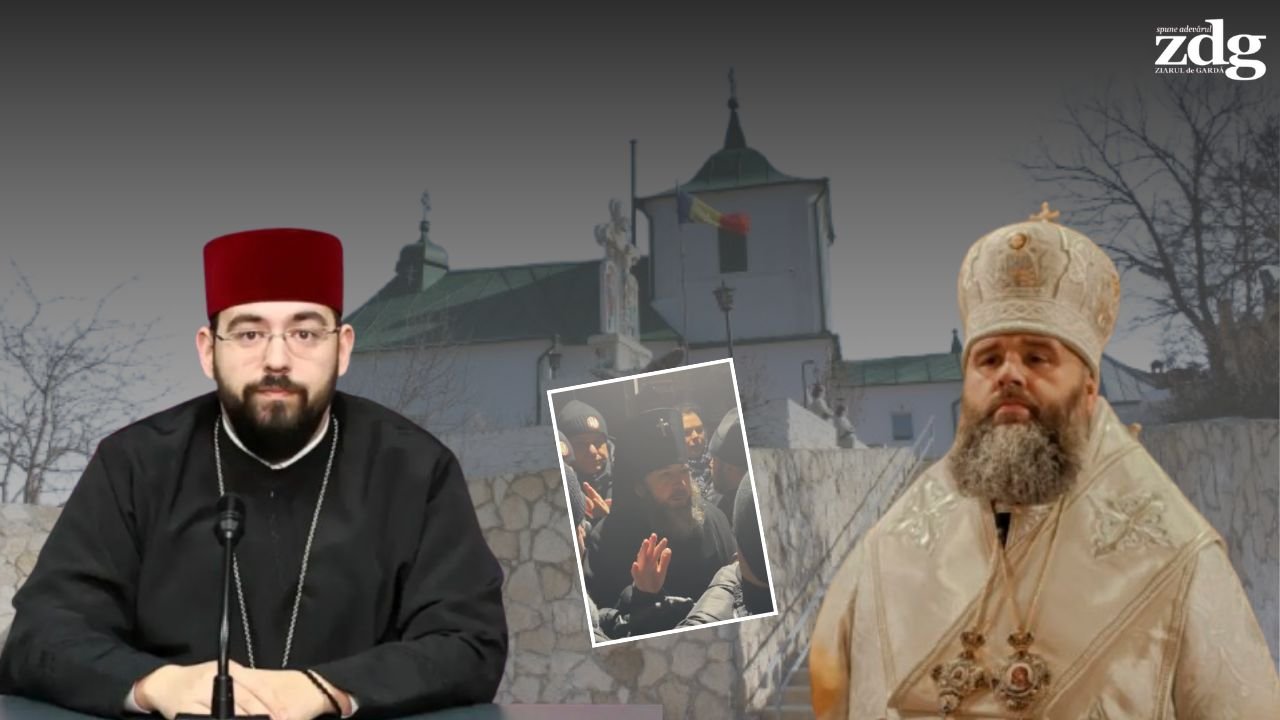
At the beginning of 2026, a priest of the Moldovan church under the jurisdiction of the Moscow Patriarchate locked himself inside the church with his wife and three minor children. Archbishop Petru of Ungheni and Nisporeni, representing the same Moscow Patriarchate metropolis, knelt and conducted a liturgy in the churchyard in front of pro-Russian media.
In an official statement, the police classified what was happening as “forms of provocation aimed at creating division in society using religion.”
A journalist from one of Moldova’s most authoritative publications, Alina Radu, wrote: “Clergy linked to Moscow brought people from Chișinău, physically well-prepared, who broke through the police cordon and seized the church. Igor Dodon, a Kremlin-backed figure, repeatedly came to Dereneu together with other politicians from the Party of Socialists, and among the crowd were also people from the Shor group who had previously traveled to Moscow for funding and instructions…
This is not the first time that Moscow’s people do as they please in Moldovan churches… After the start of Russia’s war against Ukraine, the neighboring state restricted the activities of priests linked to the Russian Patriarchate, including because the Moscow Patriarchate supports the war, consecrates tanks, encourages Putin in these crimes, and declares that this aggressive and deadly war is a ‘holy war.’
It is obvious that the Orthodox community of Moldova should long ago have asked questions about the goals of this metropolis in the country and about how communities and churches in Moldovan villages are controlled by Moscow’s people. I fear that Moscow will not stop unless it is stopped.”
The situation around Dereneu is just one episode in a broader process in which Moscow organizes scandals around parish transfers.
In some localities, church conflicts escalate into direct clashes.
This happened, for example, in 2025 in the village of Grinăuți. There, the parish priest attempted to transfer the parish to the jurisdiction of the Romanian Church, but provocateurs again tried to give the situation maximum scandalous visibility.
“They cut the locks, broke into the church, and subjected Father Constantin to violence, pushing him, pulling his hair, and throwing him down the church steps. These actions once again demonstrate what the so-called metropolis preaches, violence, lies, and hostility. We witnessed how far aggression can go under the guise of Orthodoxy,” the press service of the Metropolis of Bessarabia stated.
MOSCOW RAISES THE STAKES
Against this background, a recent episode is also indicative. On March 12, Metropolitan Vladimir of Chișinău and All Moldova, Vladimir Cantarian, took part in a meeting of the Synod of the Russian Orthodox Church in Moscow.
This demonstrates that the Moscow Patriarchate continues to view the Moldovan church space as part of its canonical and political orbit.
For the Kremlin, the church has traditionally been one of the instruments of soft power in the post-Soviet space. Through parish networks, clergy, and religious media, cultural and political ties with societies of neighboring countries are formed.
On the one hand, the Moscow Patriarchate still controls the majority of parishes and has a developed infrastructure.
On the other hand, the Metropolis of Bessarabia, connected with the Romanian Church, is gradually expanding its presence.
The transfer of parishes, legal disputes over churches, conflicts between parishioners, and accusations of political interference show that this is not merely an internal church discussion. Russia intends to block Moldova’s course toward the European Union.
Moscow does not intend to voluntarily relinquish its influence over Moldova and is ready to use all levers here, both military presence and religion.
At the same time, an opposite trend is also strengthening, the gradual redistribution of the country’s religious space.
There is also an interesting point. The number of holders of Romanian citizenship among priests under the Moscow Patriarchate has exceeded 80 percent.
This was publicly stated by the Metropolis of Bessarabia, which presumably receives this data from the Romanian Church.
In other words, clergy of the Moscow Patriarchate seek to integrate the faithful into Russia by tying them to Russian narratives, while they themselves obtain European Union passports, thus privately integrating into Europe.
They attempt to steer the faithful away from Moldova’s European course, as required by the Russian Orthodox Church, while opening full access to it for themselves.
We see that Moldovan Orthodoxy has entered a period of profound change. The national church has every chance to become the dominant structure capable of resisting the instrumentalization of religion and external influence by foreign authoritarian regimes on Moldova’s future.
Anna Yansone for LF