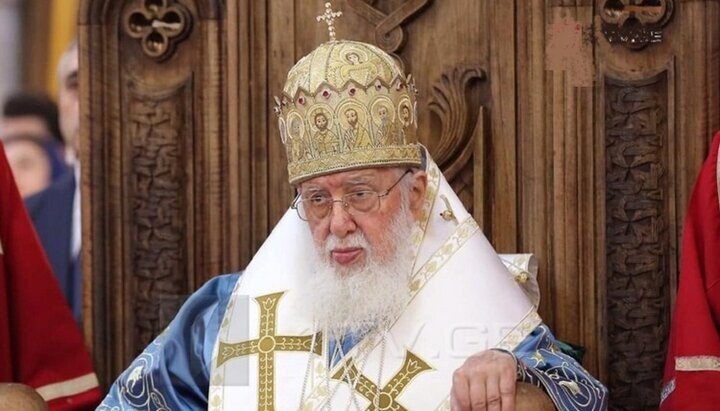
Georgia bids farewell to its patriarch. What will the Orthodox Church of this country be like without Ilia II?
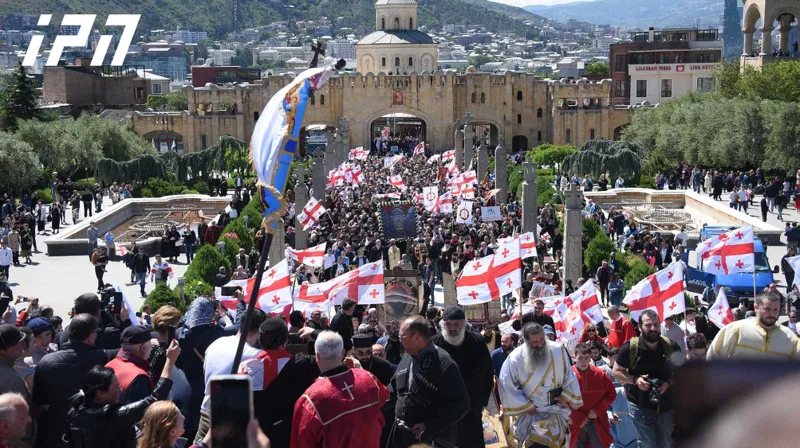
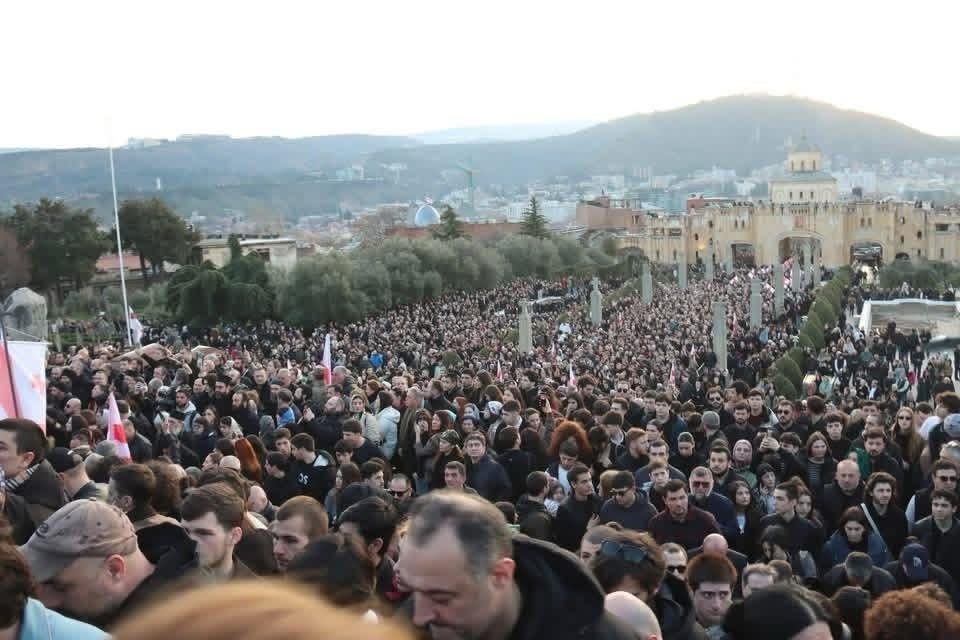
These days, lines of hundreds of thousands of people are forming outside the Holy Trinity Cathedral in Tbilisi. They have come to say goodbye to the man who for nearly half a century was the spiritual leader of the nation.
Those who have not been in the Georgian capital for a long time and observe what is happening through photographs are struck not only by the scale of the farewell, but also by the cathedral itself, majestic, luminous, almost symbolic. This church was built under Ilia II and became the embodiment of Georgia’s ecclesiastical revival.
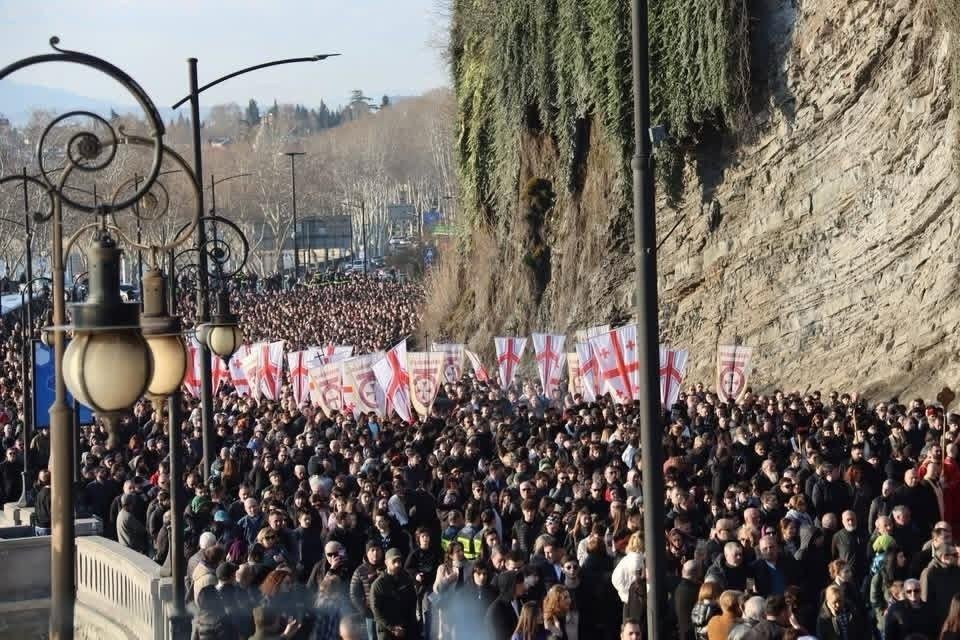
But it is not only about that. During the years of Ilia II’s service, hundreds of churches were restored and built, both ancient and new. The Church returned to public life, taking one of the central places in it.
Ilia II became a unique figure, his level of public trust reached 90%. For any public figure, this is an almost unattainable показатель.
The patriarch’s first adult godson
When speaking about Ilia II’s popularity, people most often recall his unusual initiative. He promised to personally baptize every third child in a Georgian family.
This idea became not only symbolic but also demographic. Thousands of families decided to have a third child, knowing that the patriarch himself would become the godfather.
Notably, the first and most famous godson in post-Soviet Georgia was Eduard Shevardnadze, one of the leaders of the independent country.
It was under him that an agreement was signed securing the special status of the Georgian Orthodox Church. The state recognized its ownership of churches and monasteries and ensured financial support.
From that moment, the Church became not only a spiritual force but also an institutional one.
A cautious alliance with власть
Ilia II built relations with the authorities carefully, without abrupt moves but also without complete distance.
Conflicts did arise, however.
During the presidency of Mikheil Saakashvili, a law was adopted that equalized the rights of all religious denominations. This undermined the de facto monopoly of the Georgian Orthodox Church.
The patriarch strongly opposed it, seeing in it a threat not only to the Church’s position but also to national identity.
The confrontation intensified against the backdrop of the Armenian issue, demands to recognize the status of the Armenian Church and return churches.
Society found itself divided. One part supported Saakashvili’s reforms, the other supported the patriarch.
A year later, Saakashvili lost the elections. Ilia II’s positions, on the contrary, strengthened.
At the same time, they maintained their relationship. Saakashvili continued to support the Church, and the patriarch, in turn, called on him to end his hunger strike when he found himself in a crisis situation.
The Church and politics
Subsequent authorities tried to maintain an alliance with the Church.
The Georgian Dream party активно used rhetoric of protecting traditional values and faith. The Patriarchate formally maintained neutrality, but made statements that were perceived as indirect support for the authorities.
On the eve of elections, it declared that it was not a political party, however it would support a choice that would bring peace to the country and strengthen Christian values.
These words were voiced against the backdrop of the transfer of land plots to the Church at a symbolic price and were perceived as a signal.
After the elections, the results of which were disputed by the opposition, Ilia II congratulated Georgian Dream on its victory, expressing hope for dialogue and the country’s development.
Even in 2024, state funding of the Patriarchate increased to tens of millions of lari, formally for educational programs, but in practice it looked like an element of political interaction.
A cautious position on Russia
On the issue of the Russian occupation of Abkhazia and South Ossetia, Ilia II maintained a restrained position.
He spoke of the tragedy of lost territories, of the suffering of the people, of divided families. He emphasized that these lands are part of Georgia.
But he did so in a soft manner, avoiding harsh political rhetoric.
This caution drew mixed reactions, from understanding to criticism.
2016, a missed chance?
A key moment that is still discussed within church circles was the Georgian Church’s refusal to participate in the Pan-Orthodox Council of 2016.
According to theologian Mirian Gamrekelashvili, this was a chance to distance itself from Moscow’s influence.
The Georgian delegation had already been formed, tickets had been purchased. But at the last moment participation was canceled, after the refusal of the Russian Orthodox Church.
“This was our last chance,” he says.
From that moment, according to critics, tendencies toward isolation and orientation toward a “Russian model” strengthened within the Church, where the Church is closely linked with the state.
Although isolation had begun earlier. In 1997, the Georgian Church withdrew from the World Council of Churches, largely under pressure from conservative circles.
This became a symbolic turning point, from openness to self-isolation.
The shadow of the Soviet past
Journalist Nukzar Suardidze explains the ambiguity of the Church’s position by historical legacy.
According to him, in Soviet times the clergy was controlled by state structures, from the NKVD to the KGB. These mechanisms did not disappear, but transformed.
Hence the caution, evasiveness, reluctance to take a firm position.
This is especially noticeable in the issue of Abkhazia. Formally, the Church considers it its own, but de facto has no influence there.
And this duality, as critics believe, is exploited by Russia, which at every independent step by Georgians says it recognizes the “autocephaly” of Abkhazia, thereby legitimizing annexation and granting it status.
After Ilia
Today, Georgia sincerely mourns its patriarch. He did much for his country and his Church.
But questions remain.
What would have happened if the Church had truly broken away from Moscow, had stood alongside its people at moments of historical choice, during the recent protests? Could it have influenced public sentiment?
Would it have changed the course of events?
There will no longer be an answer.
And perhaps it will have to be sought by those who come after Ilia II.
Anna Jansone for LF