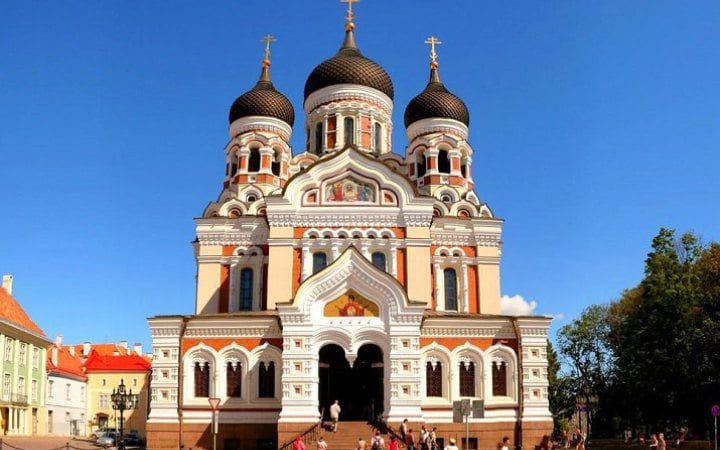
The Estonian Orthodox Christian Church (Moscow Patriarchate) disagrees with the conclusions of the Security Police (KaPo) that it poses a threat to the constitutional order. The Church asserts that its activities are independent of the Moscow Patriarchate.
This is stated in an address by the Estonian Orthodox Christian Church, in which it criticizes the contents of KaPo’s annual report, Postimees reports.
The authors of the address disagree with the claim that the activities of the Estonian Orthodox Christian Church are directed and coordinated by the administration of the Moscow Patriarchate on behalf of Patriarch Kirill.
“Our internal life, administrative decisions, and pastoral work are carried out independently, without any external guidance or coordination from the structures of the Russian Orthodox Church,” the text states.
As reported by LF, the Estonian Security Police (KaPo), in its latest annual report, named clergy and individuals associated with the Russian Orthodox Church whose activities were deemed a threat to national security. Due to their support for Russian aggression against Ukraine and the promotion of the Kremlin’s foreign policy, these individuals were barred from entering Estonia and the Schengen area.
Earlier, we reported that the Estonian Orthodox Christian Church (Moscow Patriarchate), although attempting to present itself as independent, continues to be governed by the Russian Orthodox Church. This is stated in the annual report of the Security Police (KaPo).
As reported by LF, the Supreme Court of Estonia, in an open hearing on 3 February, considered a petition by President Alar Karis to declare amendments to the Churches and Congregations Act unconstitutional. The Church of the Moscow Patriarchate believes the document is directed against it, while parliament cites national security considerations.
Earlier, Patriarch of the Russian Orthodox Church Kirill Gundyayev stated that in a number of countries, including Estonia, there is allegedly an ongoing campaign against the Russian Orthodox Church.
Although the Russian Orthodox Church in its documents regards Estonia as part of its canonical territory, from the perspective of Orthodox canon law this is not the case. This is stated by church historian Priit Rohtmets and specialist in Orthodox canon law David Heit-Stade.