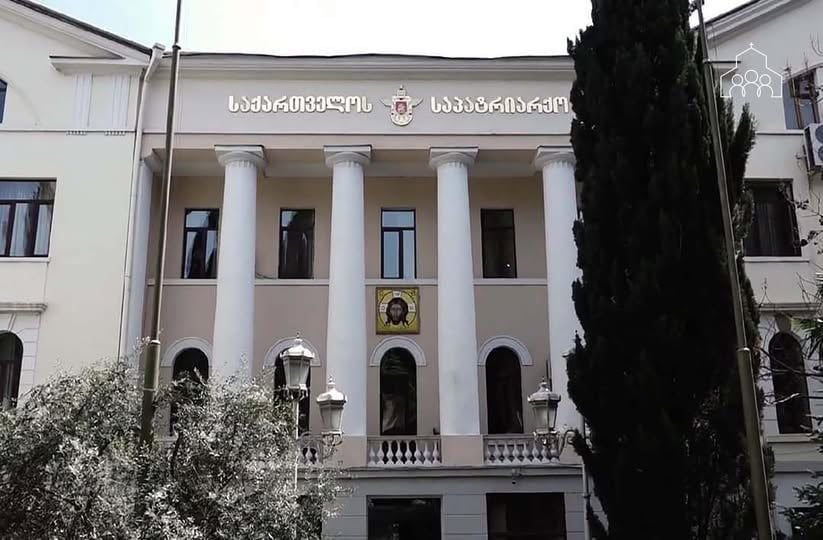
A meeting of the Holy Synod of the Georgian Orthodox Church will take place in Tbilisi on April 28, at which three candidates for the throne of the Catholicos Patriarch will be presented.
This was reported by the Georgian Patriarchate.
It is expected that the Holy Synod will determine three candidates at its meeting. These candidates will then be presented to an expanded Council, which will elect the new Patriarch.
As previously reported by LF, the Synod of the Georgian Orthodox Church has not resolved key issues ahead of the patriarchal election. In particular, the hierarchs did not clarify the main criteria for selecting the next primate, leaving open questions about age limits and educational requirements.
There is also ongoing uncertainty about how the Church will interpret the legally established age limit for candidates, which states that the Patriarch must be “no younger than 40 and no older than 70.”
The ambiguity of these provisions may directly affect the eligibility of at least two widely discussed contenders.
Metropolitan Isaia of the Nikozia and Tskhinvali Diocese has drawn attention due to the absence of publicly documented formal theological education. However, church rules also require that hierarchs, including bishops and metropolitans, possess “appropriate theological education,” which suggests that his qualifications were deemed sufficient when he was appointed bishop in 1995 and later elevated to metropolitan in 2006.
Meanwhile, Metropolitan Daniel of Chiatura and Sachkhere is approaching the legal age limit. He will turn 71 on May 29, shortly after the latest possible date for the election of a new Patriarch, raising questions about whether the age restriction will be interpreted strictly during the election or more flexibly.
Both figures are considered potential rivals to Metropolitan Shio Mujiri, who has served as locum tenens since 2017 and is regarded as one of the leading contenders for the throne.
According to the Church statute of 1995, the election must take place no earlier than 40 days and no later than two months after the Patriarch’s death, with May 17 as the latest possible date.
The expanded Council will include both clergy and laity, although only members of the Holy Synod are eligible to stand as candidates and to vote. To be elected, a candidate must receive more than half of the votes, at least 20 out of 39. If no candidate reaches this threshold, a second round of voting is held.
As is known, on March 17 Patriarch of Georgia Ilia II, born Iraklii Georgievich Gudushauri Shiolashvili, died in hospital at the age of 93. Ilia II, one of the most influential religious figures in Georgia, had held the post of Catholicos Patriarch since 1977. His patriarchate was the longest in the history of the Georgian Orthodox Church.
As reported by LF, Russia’s Foreign Intelligence Service issued a sharp statement addressed to Ecumenical Patriarch Bartholomew I, accusing him of attempting to destabilize the situation within the Georgian Orthodox Church following the death of Catholicos Patriarch Ilia II.
Earlier, in an exclusive interview with LF, Nugzar Suaridze, a Georgian independent investigative journalist, spoke about the influence of Russians on the Georgian clergy and whether the Church of Georgia is capable of, or willing to, overcome it.
For more on what the Georgian Orthodox Church will be like without Ilia II, read the article on LF.