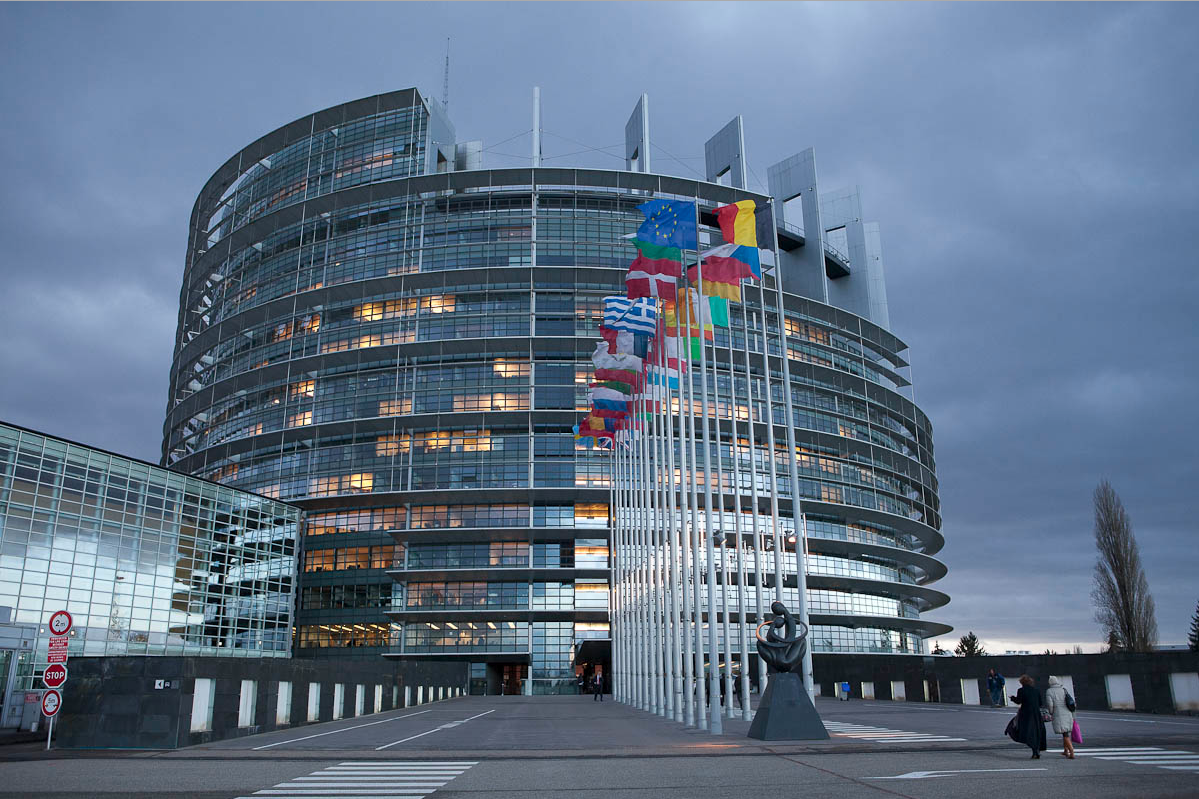
The draft of the forthcoming European Parliament resolution on transnational repression has passed committee voting and will be submitted to the plenary chamber in June.
At the beginning of May, the European Parliament’s Committee on Foreign Affairs (AFET) voted on a draft resolution unprecedented in the clarity and severity of its assessments regarding how authoritarian states on the territory of the European Union, specifically the Russian Federation, and structures linked to them persecute, intimidate, monitor dissidents, opposition figures, journalists, human rights defenders, activists, and diaspora communities beyond their own borders.
We should explain to readers that the approval of a foreign policy resolution draft at a meeting of such a committee has a very high likelihood of passing in the plenary chamber of the European Parliament. If the resolution receives a positive vote and is adopted, the European Parliament will in effect state its political assessment of the events and phenomena concerned, which always serves as a serious signal to all parties mentioned in it.
What is addressed in draft resolution 2025/2179 (INI), “Countering Transnational Repression – Towards an EU Strategy to Protect Europe’s Sovereignty and Democratic Values.”
HOW THE INTERTWINING OF RUSSIAN SPECIAL SERVICES AND THE HIERARCHY OF THE RUSSIAN ORTHODOX CHURCH ENTERED A NEW PHASE UNDER PUTIN
Amendment 205 states that the Russian Federation used its intelligence services, including the Federal Security Service (FSB), the successor to the KGB, and the Main Intelligence Directorate (GRU), to coordinate with structures linked to the Russian Orthodox Church, particularly the Moscow Patriarchate, in carrying out activities equivalent to transnational repression, including surveillance, recruitment, influence operations, and other hybrid methods directed against dissidents, opposition figures in exile, and diaspora communities abroad.
The text emphasizes that the historical intertwining of Soviet state security services and the hierarchy of the Russian Orthodox Church, including documented cases of clergy cooperation with the KGB during the Soviet period, evolved under President Vladimir Putin into a renewed rapprochement between state authority and church structures. At the same time, the Church acts as an instrument of soft power, ideological influence, and narrative projection within the framework of the so called “Russkiy Mir” concept.
The amendment asserts that this structure, referring to the Russian Orthodox Church, made it possible to instrumentalize religious networks and church diplomacy in order to advance Russia’s geopolitical objectives, justify external interference in the affairs of other countries, and strengthen influence in neighboring regions, especially in the Western Balkans, Eastern Europe, the South Caucasus, and certain European Union member states and diaspora communities.
ON ELEMENTS OF RUSSIA’S INFLUENCE ECOSYSTEM ABROAD: THE RUSSIAN ORTHODOX CHURCH AND ROSSOTRUDNICHESTVO
Amendment 284 emphasizes that after the collapse of the Soviet Union, the Russian Federation gradually strengthened state influence over official cultural and religious institutions operating abroad, including the Russian Orthodox Church and Russian language media, as well as state affiliated cultural organizations.
This objective was served by the reunification of the Russian Orthodox Church with the Russian Orthodox Church Outside Russia in 2006, as well as by the creation in 2008 of the organization Rossotrudnichestvo, formally the Federal Agency for the Commonwealth of Independent States, Compatriots Living Abroad, and International Humanitarian Cooperation, which was tasked with coordinating interaction with Russian speaking communities abroad.
The authors of the amendment stress that these structures form part of a broader state ecosystem capable of shaping Russian ideological narratives, supporting influence networks, and monitoring diaspora communities outside the territory of the Russian Federation.
In addition, the text notes that in the occupied territories of Ukraine, including Crimea and the eastern regions of the country, Russia is carrying out repression against religious figures, including Ukrainian evangelical leaders, Protestant pastors, Greek Catholic clergy, and Orthodox priests.
The authors write about campaigns of pressure against religious activists in exile and the use of “extremism” designations to restrict and delegitimize independent religious communities.
WHAT WILL THE RESOLUTION CHANGE FOR PERSECUTORS AND FOR VICTIMS OF PERSECUTION?
The text contains a call for the European Union to integrate into its institutional structures specialized instruments for countering Russian transnational repression, including sophisticated mechanisms of influence and coercion operating through state linked cultural and religious networks, including those connected to the Russian Orthodox Church.
Members of the European Parliament who worked on the text of the resolution say that its adoption will make it possible to introduce common definitions of transnational repression into the European Union’s information and legal framework, launch monitoring of precedents, provide better protection for victims, combat digital surveillance, improve coordination among European Union institutions and member states, and establish a framework for sanctions and criminal prosecution of those responsible.
The adoption of the resolution would allow transnational repression to be recognized not as isolated incidents, but as a systemic strategy employed by authoritarian regimes against diasporas, opposition figures, journalists, human rights defenders, and critics of the regime residing in Europe.
If the document is adopted, the issue will move from the sphere of protecting activists’ rights into the sphere of European security and sovereignty.
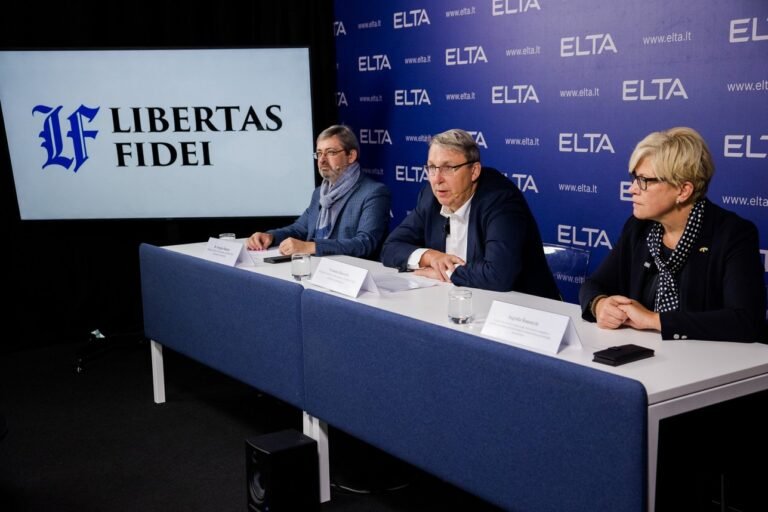
The Center for the Study of Religious Freedom “Libertas Fidei” is closely following the discussion of this initiative and will provide updates on the adoption of the document by the European Parliament.
Anna Yansone