The activities and rhetoric of the Russian Orthodox Church are provoking outrage among thousands of social media users in Russia.
This is according to Lyubov Tsybulska, an expert on strategic communications and hybrid threats in Ukraine and director of Join Ukraine, in an article for ZN.ua.
According to her, since 2022 Join Ukraine has been studying public sentiment across Russia’s regions, annually coding millions of posts and comments on VKontakte and Telegram. During 2025, researchers separately analyzed thousands of posts about the Russian Orthodox Church, its role in the war, its alliance with the authorities, and the rhetoric of the clergy. These posts contain sarcasm, distrust, and a sense that the Church has become just another bureaucratic office, only with a censer.
Moreover, the war is not the main topic. Russians on social media often react more actively to schools, money, or absurd statements. Yet it is the war that most clearly demonstrates how far the Russian Orthodox Church has moved away from its role as a spiritual institution.
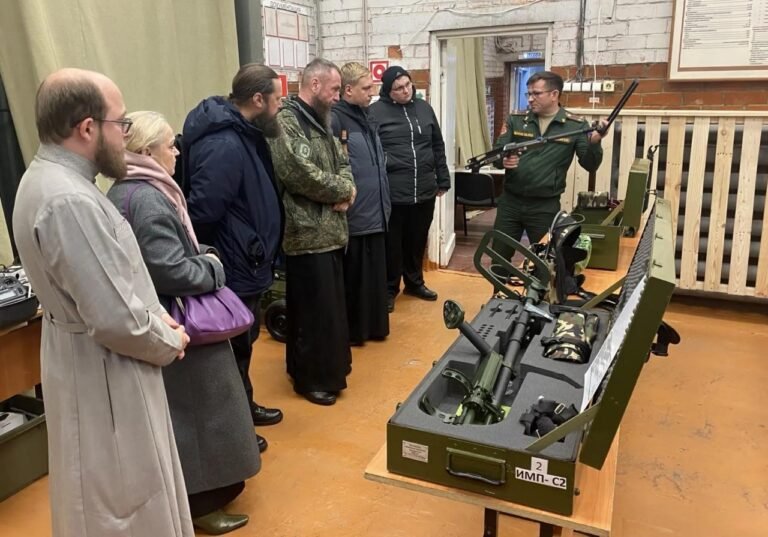
“When clergy explain frontline risks as punishment for swearing, commentators reduce the message to a simple formula: killing is permissible, as long as there is no profanity. When stories emerge about an icon that ‘saved a soldier,’ the reaction is skepticism or jokes. Behind these responses lies a more serious grievance: the Church speaks about war from a safe distance while asking others to regard it as a moral authority,” the expert says.
According to her, the Church seeks to shift responsibility for military actions onto ordinary citizens rather than those who make decisions.
“Church figures link military events to sins, abortions, ‘improper’ behavior, or a lack of obedience. This is convenient for the state, because responsibility can be shifted downward onto citizens rather than those who make decisions. An institution that blesses the military machine simultaneously claims the role of moral arbiter within Russia,” the article states.
Schools are another persistent source of irritation. Beginning on September 1, 2026, Russian schools will start introducing a subject called “Spiritual and Moral Culture of Russia.” Its curriculum includes not only “traditional values” but also the study of heroes of the “Special Military Operation.” The war is already being incorporated into a moral and educational framework for children.
The study found that commentators are irritated by stories about tithes, donations of property, the construction of churches in contested urban areas, expensive restoration projects, and church ceremonies attended by local officials.
Absurd statements form a separate genre that attracts the widest attention. Social media users favor short formulas that readily turn into memes. Among the viral examples are claims that pets “will not go to heaven,” that vitamins are “nonsense,” that extraterrestrials may be angels, and that Russians received bad officials because of the people’s sins.
“But behind the absurdity lies a deeper crisis of authority. Commentators mock not only specific phrases but also the Russian Orthodox Church’s claim to speak on behalf of a higher truth on any subject. When an institution associated with the authorities, the war, and the school system simultaneously produces statements about the sinfulness of illness, tattoos, education, or female independence, its words begin to be met with hostility,” the publication states.
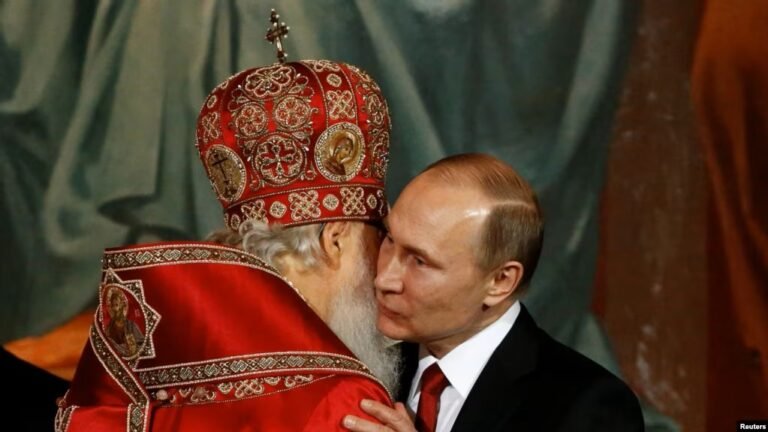
Earlier, we reported that the head of the Russian Federation, Vladimir Putin, praised the efforts of Patriarch Kirill of Moscow aimed at supporting participants in the “special military operation.”
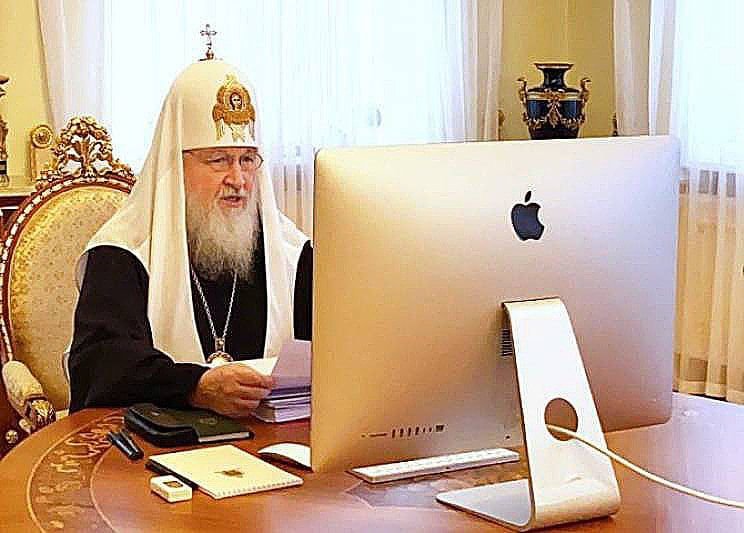
According to LF, in November 2025 Patriarch Kirill Gundyayev stated that military heroism is “inseparable” from spiritual heroism and that participation in war may be regarded as a form of Christian service. This attempt to justify war through spiritual rhetoric provoked an immediate and sharp reaction within church circles.
According to Dr. Regina Elsner, a researcher of Eastern Christianity and ecumenism at the University of Münster, the Russian Orthodox Church has become one of the key institutions of mobilization and propaganda.
Read more about the lack of religious freedom and the instrumentalization of religion in totalitarian regimes, and about those who left Russia to escape repression, in LF’s feature article.