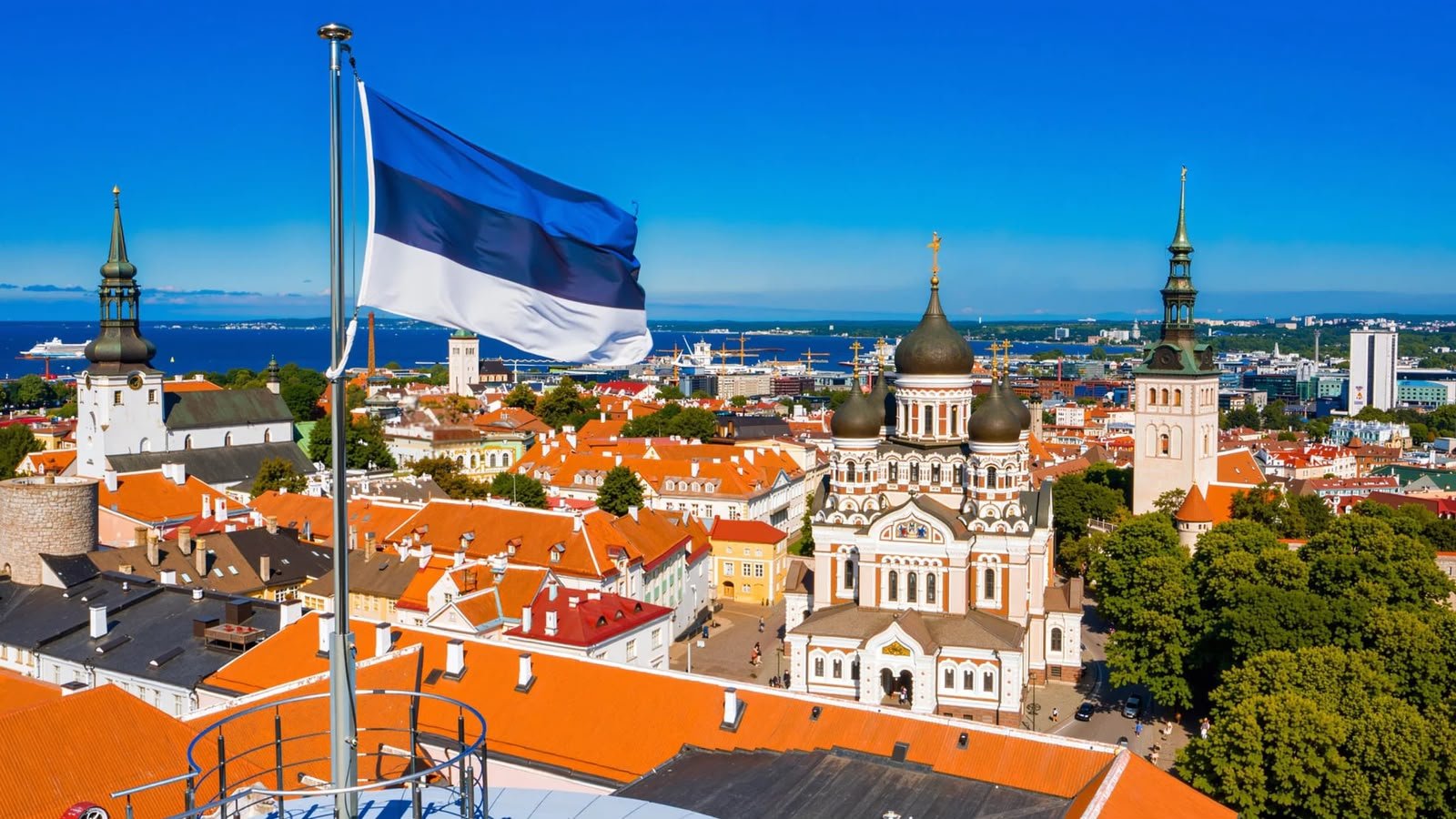
The revised Churches and Congregations Act, adopted by the Riigikogu in the autumn of 2025, does not conflict with the Constitution of Estonia.
This decision was issued by the Supreme Court in Tallinn, according to ERR.
The law primarily concerns the Estonian Christian Orthodox Church, formerly the Estonian Orthodox Church of the Moscow Patriarchate, which will be required to separate from the Russian Orthodox Church.
In its ruling, the Supreme Court noted that the adopted amendments can be interpreted in a manner that does not result in the arbitrary termination of the activities of religious associations and therefore does not violate freedom of religion or freedom of association.
According to the report, six of the seventeen judges, including Supreme Court Chief Justice Villu Kõve, issued a dissenting opinion, arguing that the contested law does not comply with the principle of legal certainty, which is of fundamental importance for safeguarding constitutional rights.
The Court emphasised that state security is a significant constitutional value that can justify many restrictions. However, it must not become a cover for arbitrary state action.
During discussions of the contested bill and the subsequent court proceedings, the ties of the Estonian Christian Orthodox Church and the Pühtitsa Monastery to the Russian Orthodox Church were cited as examples demonstrating the law’s necessity.
As is known, Estonian President Alar Karis declined to promulgate the revised Churches and Congregations Act adopted by the Riigikogu in April 2025. In June of the same year, Parliament passed the law again in an amended form, but the President once more refused to promulgate it and proposed that the Riigikogu reconsider the legislation and bring it into conformity with the Constitution.
However, the Riigikogu chose not to introduce further amendments and adopted the law unchanged. As a result, on 3 October 2025, Karis submitted a petition to the Supreme Court requesting that the law be declared unconstitutional.
As LF previously reported, on 3 February the Supreme Court of Estonia considered, in an open hearing, President Alar Karis’s petition seeking a ruling that the amendments to the Churches and Congregations Act were unconstitutional. The Church of the Moscow Patriarchate maintains that the legislation is directed against it, while Parliament cites national security concerns.
As is also known, the annual report of Estonia’s Internal Security Service (KaPo) states that the Estonian Christian Orthodox Church, which is subordinate to the Moscow Patriarchate, although attempting to present itself as independent, continues to be governed by the Russian Orthodox Church. While the Church changed its name last year, only cosmetic amendments were made to its statutes in order to create the appearance of independence from the Moscow Patriarch, who continues to justify Russia’s aggressive war against Ukraine using Christian rhetoric.
As LF previously reported, the Internal Security Service identified clergy members and individuals connected with the Russian Orthodox Church whose activities were deemed to pose a threat to national security. Because of their support for Russian aggression against Ukraine and their promotion of the Kremlin’s foreign policy agenda, these individuals were barred from entering Estonia and the Schengen Area.
Earlier, Patriarch Kirill Gundyayev of the Russian Orthodox Church claimed that a campaign against the Russian Orthodox Church was allegedly continuing in several countries, including Estonia.
Although the Russian Orthodox Church regards Estonia as part of its canonical territory in its official documents, this is not the case from the perspective of Orthodox canon law. This view is shared by church historian Priit Rohtmets and specialist in Orthodox canon law David Hiet-Stade.