Following the State Court’s ruling, the Estonian Orthodox Christian Church (EOCC) no longer has the room for manoeuvre it once had. The Churches and Congregations Act requires religious organisations to sever administrative and economic ties with their foreign centres. Cosmetic changes, such as adding a few more provisions to church statutes, are no longer sufficient.
This was stated by Estonian Interior Minister Igor Taro, as quoted by Postimees.
According to the Interior Minister, such reshuffling will not help. There must be a complete break in administrative ties in practice. “There must be no connections with an organisation or with leaders who support military aggression.”
The minister says that cosmetic changes, such as inserting several additional provisions into statutes, are no longer enough.
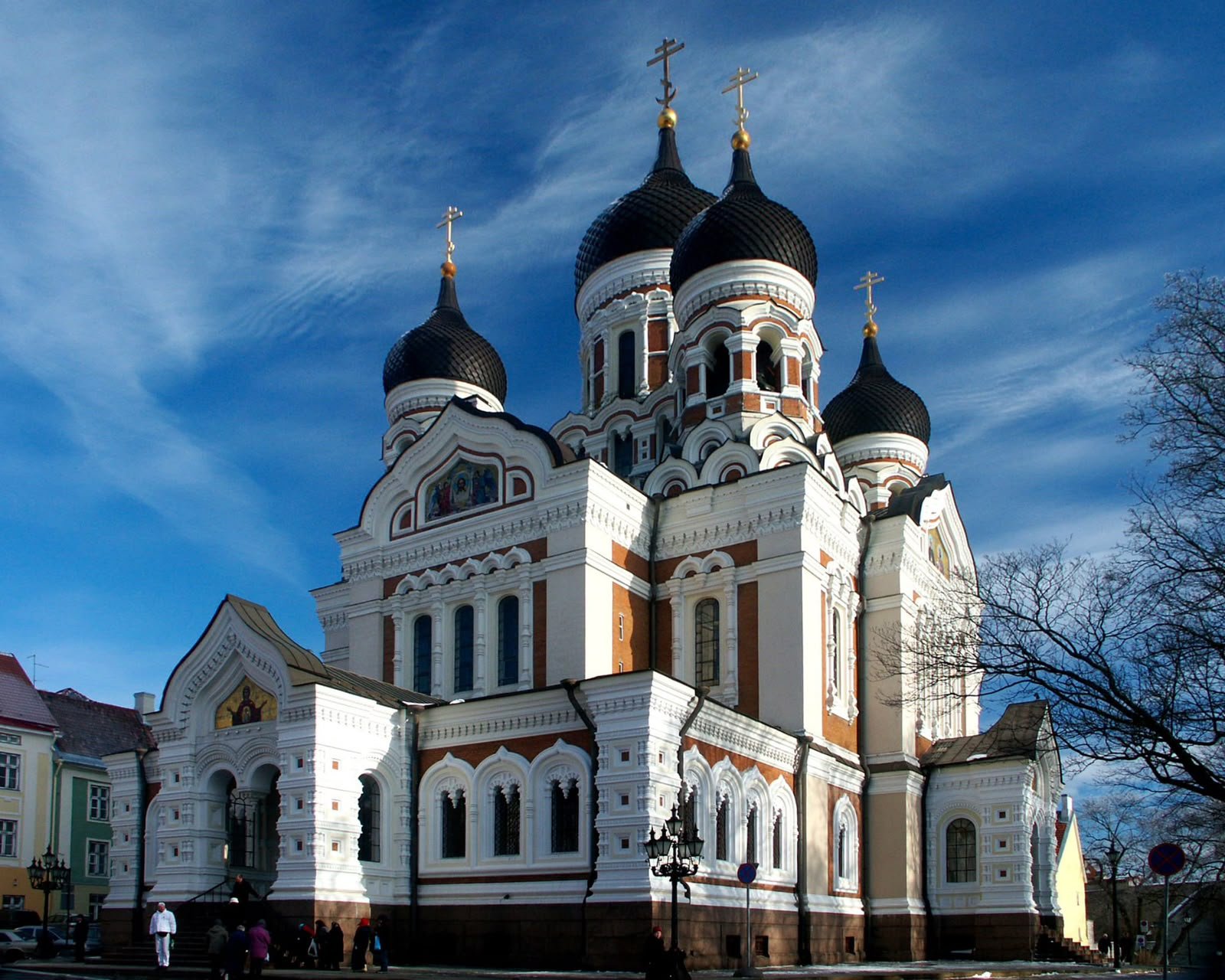
“There was a period in the history of the Republic of Estonia when the Orthodox Church here existed without any canonical ties to Moscow. The monastery in Kuremäe functioned, and the congregation at the Aleksandr Nevski Cathedral functioned as well. The Orthodox Church flourished, and there were no problems,” the Interior Minister recalled.
The minister believes that the law can serve as a legal instrument enabling believers to free themselves from a forced connection to a church structure that openly supports war and killing. “It seems to me that this law actually liberates them from that connection,” Taro said.
Taro confirmed that options exist but declined to name them publicly. According to the minister, he does not want to give grounds for accusations that the state is forcibly directing congregations toward a particular church.
The law gives religious organisations six months to bring their statutes, governing bodies, and activities into compliance with the new requirements. For the Ministry of the Interior, this means that active negotiations will begin with the church centre, the monastery, and local congregations.
As LF reported, a court in Estonia found the new version of the Churches and Congregations Act, adopted by the Riigikogu in the autumn of 2025, to be constitutional. The ruling was issued by the State Court in Tallinn. The law primarily concerns the Estonian Orthodox Christian Church, formerly the Estonian Orthodox Church of the Moscow Patriarchate, which will be required to separate from the Russian Orthodox Church.
As is known, Estonian President Alar Karis did not promulgate the new version of the Churches and Congregations Act adopted by the Riigikogu in April 2025. In June of the same year, parliament adopted the law again in an amended form, but the president once more declined to promulgate it and proposed that the Riigikogu reconsider the legislation and bring it into conformity with the Constitution.
However, the Riigikogu made no further amendments and adopted the law unchanged, after which Karis petitioned the State Court on 3 October 2025 to declare the law unconstitutional.
As LF reported, the State Court of Estonia held a public hearing on 3 February to consider President Alar Karis’s petition seeking a declaration that the amendments to the Churches and Congregations Act were contrary to the Constitution. The Moscow Patriarchate Church maintains that the legislation is directed against it, while parliament cites national security considerations.
As is known, the annual report of Estonia’s Internal Security Service (KaPo) states that the Estonian Orthodox Christian Church, which is subordinate to the Moscow Patriarchate, continues to be governed by the Russian Orthodox Church despite attempts to present itself as independent. Although the church changed its name last year, only cosmetic amendments were made to its statutes to create the appearance of independence from the Moscow Patriarch, who continues to use Christian rhetoric to justify Russia’s aggressive war against Ukraine.
As LF reported, the Internal Security Service named clergy and individuals associated with the Russian Orthodox Church whose activities were deemed a threat to national security. Because of their support for Russian aggression against Ukraine and the promotion of Kremlin foreign policy, these individuals were barred from entering Estonia and the Schengen Area.
Earlier, Patriarch Kirill Gundyayev of the Russian Orthodox Church claimed that a campaign against the Russian Orthodox Church was continuing in a number of countries, including Estonia.
Although the Russian Orthodox Church considers Estonia part of its canonical territory in its official documents, this is not the case from the perspective of Orthodox canon law. This is according to church historian Priit Rohtmets and specialist in Orthodox canon law David Hyt-Štade.