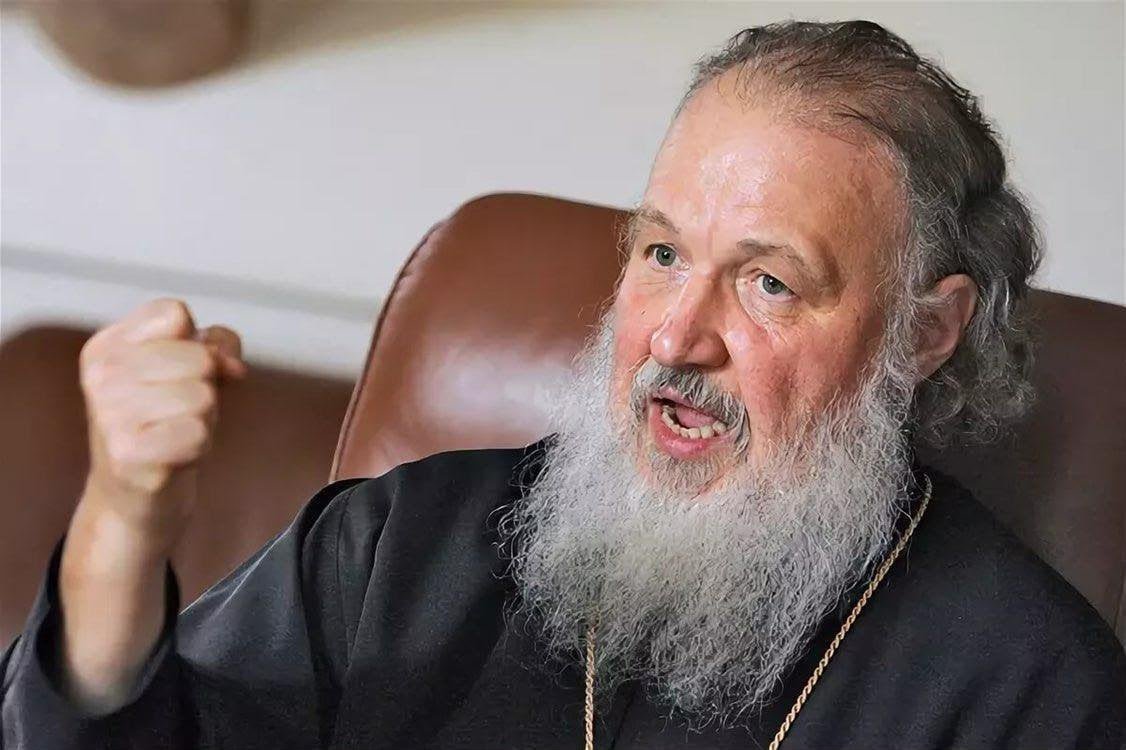
During a visit to Belarus, speaking in Brest, Moscow Patriarch Kirill called on the Orthodox clergy of Russia and Belarus to work toward strengthening the faith for the purpose of the “defense of the Fatherland,” while employing a slogan commonly associated with members of the repressive security apparatus.
This was reported by the publication Nasha Niva.
“Addressing our episcopate and clergy, not only those present here but the entire episcopate and clergy, I would like to say once again and yet again: ‘Keep working, brothers!’” Kirill declared.
“Our future, both as a people and as a church, largely depends on how the consciousness of the younger generation is shaped and on how devoted it is to the Motherland and the Church,” the patriarch stated.
Patriarch Kirill’s visit to Brest was timed to coincide with the 85th anniversary of the beginning of the “Great Patriotic War.” During the night of June 22, Kirill visited the Brest Fortress, where he conducted a memorial litany and joined the traditional commemorative rally-requiem.
The deliberately chosen phrase “Keep working, brothers!” is widely used in Russia and Belarus primarily in militaristic and repressive contexts.
It first appeared in July 2016 in the Russian Republic of Dagestan and is associated with the death of junior police lieutenant Magomed Nurbagandov. When Islamist militants captured him and demanded that he address his colleagues and urge them to leave the security services, Nurbagandov looked into the camera and said, “Keep working, brothers!”, after which he was shot dead.
The phrase was subsequently amplified and popularized by pro-Kremlin propagandists and evolved into a widely recognized ideological slogan. It became an unofficial motto of Russian security structures, including the National Guard, OMON riot police, special forces, and the police, and is frequently displayed on posters, banners, and uniform patches. Russian military bloggers, propagandists, and supporters of war and repression use these words to encourage and express solidarity with security personnel.
In the contemporary context, the use of this phrase is widely perceived as an integral element of military propaganda and militarism. It is often employed to endorse harsh actions by security forces as well as military crimes.