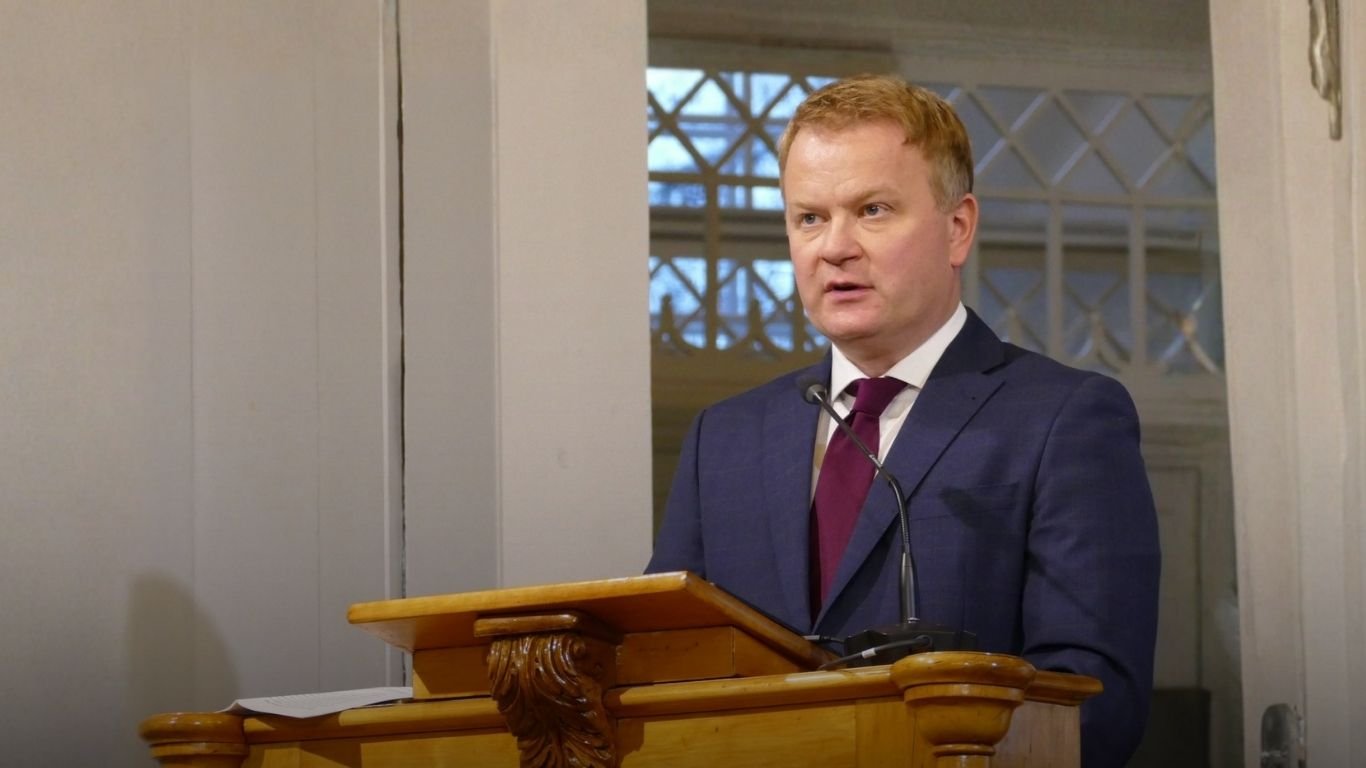
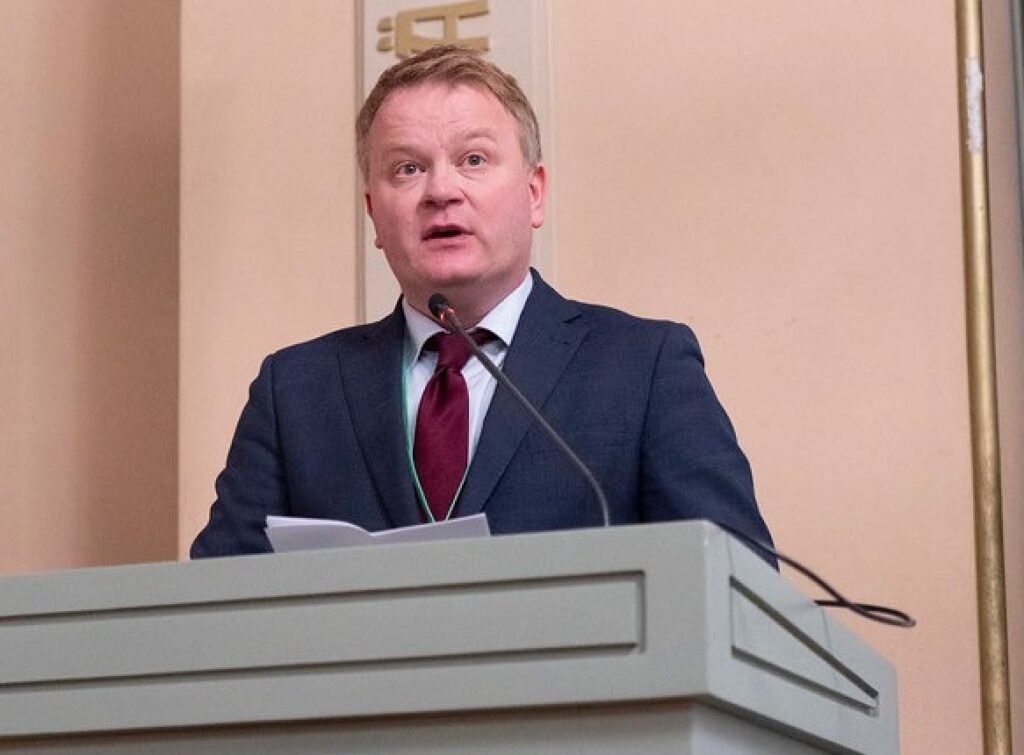
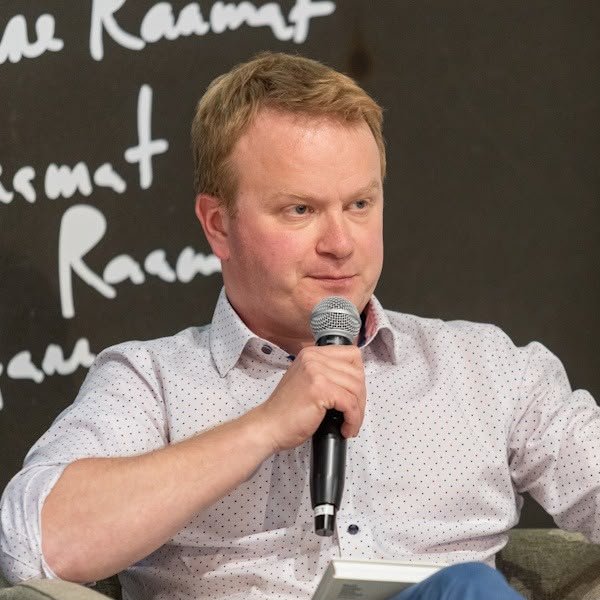
An interview with Priit Rohtmets, Associate Professor at the University of Tartu.
Priit Rohtmets provides an indepth exclusive analysis of the most significant developments affecting the Church across the Baltic region.
The interview was prompted by the latest ruling of the Supreme Court of Estonia, which serves as both the country’s highest court of cassation and its constitutional court.
The court brought to a close the lengthy legal review of the law restricting the ties of Estonian churches with foreign organizations, in particular the Moscow Patriarchate. It ruled that the amendments to the Churches and Congregations Act are consistent with the Constitution. In practice, the decision requires local structures affiliated with the Russian Orthodox Church to end their subordinate relationship with the Moscow Patriarchate, which is based in Russia, and with Patriarch Kirill.
This is the first time that measures restricting the influence of the Russian Orthodox Church have been adopted anywhere in the post-Soviet space. The question now is what comes next. That is where our conversation began.
THE LEGAL DISPUTE IS NOT OVER, BUT THE STATE’S POSITION REMAINS UNCHANGED. FREEDOM OF RELIGION CANNOT SERVE AS A COVER FOR THREATS TO NATIONAL SECURITY
In your opinion, what are the most likely consequences of the new law? Could it lead to a genuine change in the position of Orthodox communities in Estonia?
This will depend very much on the steps taken by the Estonian Christian Orthodox Church (formerly the Estonian Orthodox Church of the Moscow Patriarchate).
Throughout the entire process, the Estonian state has consistently emphasised that it does not regulate the content of religious belief or conviction. Rather, its task is to create a legal framework in which fundamental rights, including freedom of religion, are protected, and in which there is no risk that religious organisations are used by hostile states or extremist organisations operating abroad.
The amendments to the Churches and Congergations Act stipulate that any religious association or congregation whose statutes, governing bodies, or activities do not comply with the requirements of the law must bring them into conformity and submit an application to register the changes in the non-profit organisations and foundations register within six months of the law entering into force.
The amendments also extend to the governing bodies of religious associations and the service of clergy. They stipulate that clergy and members of governing boards cannot be persons whose residence permit has been revoked on security grounds, or to whom a residence permit has been refused or not extended within the last ten years, or to whom a visa has been refused within the last five years.
According to representatives of the state, the aim is to separate the Estonian church that belongs to the Russian Orthodox Church administratively from Moscow. This means removing references to the Russian Orthodox Church from the statutes, but also discontinuing references to the Tomos granted by Patriarch Alexy II in 1993, since that document likewise defines the Church’s administrative relationship with the Moscow Patriarchate.
The Ministry of the Interior has explained that the transitional period for voluntary compliance with the new requirements regarding prohibited affiliations and governing bodies lasts until 28 December 2026. This transition period has been set to allow time for possible organisational changes.
The Ministry of the Interior will implement the new requirements in several stages:
- informing and advising religious associations during the voluntary compliance period;
- after 28.12.2026, assessment of circumstances, collection of evidence, and presentation to the affected person within administrative proceedings, ensuring the right to be heard;
- depending on the outcome of the proceedings, the Minister of the Interior will decide whether to close the procedure (if the violation has been remedied) or to request the court to initiate compulsory dissolution of the religious association.
As the Head of the Supreme Court pointed out, the constitutional review of the amendments does not bring the matter to an end. The Church can, and most likely will, challenge the demand to cut ties with the Russian Orthodox Church before the courts. It may dispute both the state’s assessment that it represents a security risk and the scope of the administrative ties that it is required to sever. So, although the legislative amendments are certainly not the beginning of this process, neither are they its conclusion. A considerable part of the legal dispute still lies ahead. The state’s position, however, has remained consistent: freedom of religion cannot serve as a cover for promoting political positions that threaten Estonia’s national security.
HOW THE BALTIC STATES ADDRESSED THE ISSUE OF DEPENDENCE ON THE MOSCOW PATRIARCHATE
How unique is the situation in Estonia compared with the other Baltic states? What are its main distinguishing features?
In one respect, all three Baltic states are similar: in all of them, the Russian Orthodox Church has maintained jurisdiction since either the Russian Empire or the Soviet period. At the same time, each country’s historical experience is somewhat different, and this has led to different developments in recent decades, especially since 2022.
The key historical difference lies in the 1920s and 1930s. During that period, the Orthodox Churches in Estonia and Latvia, as well as the Orthodox Church in Finland, decided to leave the Russian Orthodox Church and seek ecclesiastical autonomy or independence. Because these Churches were relatively small, the Ecumenical Patriarchate granted autonomy to the Churches of Estonia and Finland in 1923 and to the Church in Latvia in 1936. In Lithuania, however, Orthodox Christians remained within the jurisdiction of the Russian Orthodox Church.
In 1940, when the Soviet Union occupied the Baltic states, the Russian Orthodox Church sought to reintegrate the Estonian and Latvian Churches into its jurisdiction by force and in violation of their statutes. Under occupation conditions, Church leaders had no real alternative but to accept this arrangement, and it remained in place throughout the Soviet period. The autonomous Churches were reduced to dioceses, and a certain special status has survived within the Russian Orthodox Church’s system to this day. The Estonian and Latvian Orthodox Churches that belong to the Russian Orthodox Chruch are not autonomous Churches in according to the Constitution of the Russian Orthodox Church, but self-governing Churches, which still clearly indicates their administrative inclusion within the Russian Orthodox Church.
Historically, it is also important to note that the leaders of both Churches, Metropolitan Augustin (Petersons) in Latvia and Metropolitan Alexander (Paulus) in Estonia, fled their countries in 1944. In exile, the Estonian Church leadership was able to continue the existence of the autonomous Orthodox Church of Estonia, which was also recognised by the Ecumenical Patriarchate.
This made it possible for Patriarch Bartholomew to confirm in 1996 that the Tomos of 1923 remained valid. As a result, two Orthodox Churches have existed in Estonia for decades: the Estonian Christian Orthodox Church (formerly the Estonian Orthodox Church of the Moscow Patriarchate), and the autonomous Orthodox Church of Estonia under the Ecumenical Patriarchate. The Estonian Orthodox Church of the Moscow Patriarchate was registered only in 2002, after a long debate over its history and legal continuity. It was confirmed that it was not the legal successor of the pre-WWII Orthodox Church of Estonia.
In Latvia, some voices have shown interest in a return to the jurisdiction of the Ecumenical Patriarchate. However, the Latvian Church has chosen a different path: it has followed a model similar to that of 1921–1936, when it declared itself independent not through a Tomos from the Ecumenical Patriarchate (as is normally the case in the establishment of autocephalous Churches (including the Orthodox Church of Ukraine in 2019, and historically even the Russian Orthodox Church in the 16th century)), but through amendments to its own statutes.
In Latvia, each major church has its own law regulating its activities, and following Russia’s war against Ukraine in 2022, legislative amendments were introduced to sever ties with the Russian Orthodox Church. As a result, both the legal framework and the Church’s statutes were changed.
The Latvian state appears satisfied with this arrangement, although in canonical terms the Church remains in a somewhat ambiguous position: some Churches (such as the Russian Orthodox Church) still regard it as part of their jurisdiction, while others take a wait-and-see approach regarding its full recognition. Since the Latvian Church is not particularly active in wider Orthodox relations, this issue has not become prominent within the Orthodox world.
The Lithuanian case, as you well know, differs from both Estonia and Latvia. After the full-scale invasion of Ukraine in 2022, a number of clergy could no longer remain within the Lithuanian structures of the Russian Orthodox Church. In August 2022, Metropolitan Innokentiy removed several priests from ministry. The clergy in question subsequently turned to the Ecumenical Patriarchate, which received them into its canonical jurisdiction. As a result, an Exarchate of the Ecumenical Patriarchate was established in Lithuania. So like in Estonia, there are now two parallel jurisdictions in Lithuania.
It should also be emphasised that the state plays an important role in organising religious life in all these countries.
There is no state Church in the Baltic states or in Ukraine, as is also the case in most Central and Western European countries. Nevertheless, the state has a role in shaping the legal framework for religious life. This framework is generally supportive of religious organisations while ensuring the free exercise of religious belief.
At the same time, Christian Church itself has historically involved a closer relationship between Church and state. This is particularly evident in Eastern Christianity, which developed for centuries within the context of the Roman and later Byzantine Empires. The Roman Catholic Church, by contrast, has historically developed a more independent institutional position in relation to the state.
Orthodox tradition generally presupposes some form of cooperation between Church and state, whether in the classical concept of symphonia or in modern secular forms of partnership.
This also applies to the granting of autocephaly. Since the 19th century, whenever the Ecumenical Patriarchate has issued a Tomos of autocephaly, to Serbia, Romania, Greece, and later Poland, Albania, Czechoslovakia, and Ukraine, this has taken place in contexts where an established state already existed. For the Ecumenical Patriarchate, state support has been an important factor in ensuring that new Churches emerge in a stable political environment.
The Russian Orthodox Church, despite its own long historical relationship with state power, often characterises the emergence of new Churches on its former territory as a political rather than ecclesiastical process. This reflects an attempt to separate secular and ecclesiastical authority, which is a distinction that is not really characteristic of Orthodox tradition. In fact, every major stage in the development of Orthodoxy, including the emergence of the Russian Orthodox Church in the 15th–16th centuries, took place in a political context.
Therefore, there is nothing unusual in the fact that state involvement in religious affairs has played a role in the Baltic states and in Ukraine in recent decades. What matters is that this must always be done in full respect of freedom of religion.
Situation in Estonia compared to Lithuania: propaganda behind closed doors?
Propaganda in Estonia is more refined, because priests understand that the church is under attack because it has promoted and belonged to the Russian world. After 2022 they deny it. Instead they say they only serve their flock and emphasise war is evil, without saying why war started.
Secondly they emphasise that the Russian Orthodox Church is indigenous church in Estonia, although more than 100 years ago Estonian Orthodox believers left Russian Orthodox Church. They emphasise distant history and even speak about 1000 years of Orthodoxy in Estonia in 1030.
HOW THE ONLY INITIATIVE BY AN ESTONIAN PARISH TO GAIN INDEPENDENCE FROM MOSCOW WAS REJECTED BY ITS BISHOP
Since the start of Russia’s full-scale invasion of Ukraine, state policy toward the Moscow Patriarchate has changed significantly. To what extent did the factor of Ukraine influence this decision?
In the Estonian context, Russia’s war in Ukraine has certainly made the contradictions surrounding the Estonian branch of the Russian Orthodox Church more visible.
However, the Russian Orthodox Church in Estonia has been viewed as a potential security concern long before the full-scale invasion. At least since 2010, during the so-called “East Money” scandal, questions were already raised in Estonian society about financial and political influence involving Russian actors. One aspect of that scandal involved the use of Orthodox church-related projects as a cover for political funding channels.
One of the key figures in this context was Vladimir Yakunin, former head of Russian Railways and leader of the Russian World Foundation. He had personal ties to Estonia, having spent part of his childhood in Pärnu.
Through such networks, publications were financed that promoted interpretations of history in which Orthodoxy in Estonia was framed through the concept of the “Russian World”. Some narratives claimed historical Russian ownership of areas in eastern Estonia, including references to Alexander Nevsky’s warriors. In a similar symbolic register, the Pühtitsa Convent has been described in terms of a supposed “blood bond” with Russian history, which is a notion that has no basis in Orthodox theology.
The Russian war in Ukraine therefore did not create the issue, but it made it much more visible. It highlighted that the Estonian Christian Orthodox Church (formerly the Estonian Orthodox Church of the Moscow Patriarchate) does not simply reflect the historical memory of Estonian society, but often reproduces a broader narrative in which Estonia is part of the “Russian World”. In this sense, religion itself is not the primary issue. Rather, religious language is being used as a vehicle for cultural and political identity formation.
The war also made clearer the positions of the Russian Orthodox Church and Patriarch Kirill. As a result, what had previously been a matter discussed mainly among experts became a public issue. In this situation, the state concluded that it could no longer ignore the problem.
In your view, to what extent is it justified to regard canonical ties with the Moscow Patriarchate as a matter of national security?
There are several aspects to this question.
First, if we speak about the amendments to Estonian law, their aim is not to interfere with church teaching or the practice of faith. The amendments focus on administrative ties, which are expressed both in personnel decisions of the church operating in Estonia and in administrative dependence. For example, all decisions of the church council (full board) only enter into force after approval in Moscow.
The second issue concerns Orthodox canon law more generally, namely what “canonical ties” actually mean in the Orthodox context. There is sometimes an impression that this refers to a purely spiritual or mystical bond. In reality, however, it is an administrative relationship.
The Orthodox Church is a worldwide Church that operates according to a shared canonical tradition across different regions. Local Churches are administratively self-governing, but all follow a common tradition and church order. The organisation of a local Church cannot be in contradiction with the general canonical tradition of the Orthodox Church.
In this context, it is important to emphasise that, in terms of Orthodox church order, changing ecclesiastical jurisdiction (for example in Estonia) from the Russian Orthodox Church to another local Orthodox Church represents a change in administrative relationship, not a change in doctrine or in the practice of faith. This is also evident from the fact that liturgical life, including services in Church Slavonic, can continue in different Orthodox jurisdictions, including in the Orthodox Church of Estonia.
For this reason, it cannot be argued that the Churches and Congregations Act interferes with doctrinal relations or limits theological connections between Churches. No doctrine changes as a result of such a change. According to Orthodox canon law, belonging to a local Church (for example Greek, Serbian, Romanian, etc.) is an administrative form of self-identification, while belonging to the worldwide Orthodox Church is a doctrinal and sacramental reality.
Thus, the ecclesiastical structure in Estonia that belongs to Moscow is administratively part of the Russian Orthodox Church. The term “canonical subordination” in this context refers to administrative dependence, as it is stated in the constitution and tomos of the Estonian Christian Orthodox Church, but also in the constitution of the Russian Orthodox Church.
If the local Church were to leave the ROC, this would not change its doctrine or its participation in the sacramental life of the worldwide Orthodox Church. The canonical bond with the broader Orthodox communion would remain. However, leaving one local Church may involve a transitional period of institutional uncertainty.
For the administrative reorganisation of the Russian tradition parishes, Metropolitan Stephanos of the autonomous Orthodox Church of Estonia (under the Ecumenical Patriarchate) has proposed grouping these parishes into a vicariate within the Orthodox Church of Estonia, so that they would remain part of the worldwide Orthodox communion.
Finally, regarding the question itself: if we understand canonical dependence as administrative dependence, then such dependence can indeed become a matter of national security, because through administrative mechanisms a Church may represent positions that can pose risks to the security of the state.
How are the state’s demands perceived within the Estonian Orthodox Christian Church itself? Are there different groups or viewpoints among the clergy?
When the full-scale war began in 2022, there were people in the Moscow Patriarchate jurisdiction who openly opposed the war and called on Patriarch Kirill to condemn the war. For this purpose, even one public appeal was written in Estonia. There were no clergy among them.
As time goes on, fewer and fewer differences in the Russian Orthodox community in Estonia reach the public. It is difficult to say how many there are at all. Attitudes toward Patriarch Kirill’s politics may even differ, but the church is kept together.
What should be emphasised is that Estonia is a secularised country and many people see Orthodoxy precisely as part of cultural identity – specifically part of Russian cultural identity. This became clear when a study appeared a few weeks ago showing that 2/3 of those who consider themselves Orthodox do not actually belong to any Orthodox church.
Those people who consider themselves Orthodox, but do not actually attend church and may not even be aware of what is happening in the church, of course do not speak out. The group that is actively connected to the church is much smaller, and they are behind their priests and bishops.
One exception appeared in Tallinn, where there is the only Estonian-language school operating under the Moscow Patriarchate’s ecclesiastical supervision. This school strengthens the local Moscow Patriarchate parish in Nõmme, but also vice versa. In any case, this parish was the only one that thought that the Moscow-subordinate church structure in Estonia could become independent, and that in the future an autocephalous Orthodox church could be formed in Estonia on the basis of two Orthodox communities.
Bishop Daniel, who is one of the few Estonian-speaking priests in the Estonian Christian Orthodox Church and became a bishop during the full-scale war so that the church would have an Estonian-speaking spokesperson, quickly rejected this parish position, saying that the voting results were almost equal etc. So, broadly speaking, fractures within the Russian Orthodox Church community do not really appear publicly.
HOW NUNS FROM THE MOSCOW PATRIARCHATE’S STRUCTURE IN ESTONIA CARRIED OUT AN “INFORMATION OPERATION” AGAINST THE COUNTRY’S PARLIAMENT
The Pühtitsa Convent has found itself at the center of public attention. Why has it become the symbol of the current conflict? How does its position differ from that of ordinary parishes?
Pühtitsa’s emergence was not immediate, but starting from 2024, when the state tried to negotiate with Russian Orthodox Church parishes so that they would cut their ties with the Russian Orthodox Church. This was also the time when the then Moscow Patriarchate’s Estonian Orthodox Church took lawyers who have actively defended the church’s rights also in public. Estonia is a democratic country and this is of course their right.
Since 2024, the nuns have increasingly been in the foreground, because nuns probably also evoke sympathy. In connection with this, all kinds of rumours have been spread, for example that trucks will soon come and the nuns will be expelled from the convent.
Great attention was also received by how the nuns went in February 2025 in cold weather to hand over a petition to the Estonian parliament. At first there was dissatisfaction that why the Speaker of Parliament did not receive them, but as later became clear, they had not notified their arrival, and a meeting with the Speaker of Parliament was simply not possible just by entering the parliament building. In Estonian public discourse this was interpreted as an information operation to influence public opinion so that sympathy would arise toward the nuns.
Pühtitsa Convent and the Alexander Nevsky Cathedral in Tallinn, located directly opposite the parliament building and both erected during the Russification period of Tsar Alexander III, are stauropegial, meaning directly subordinate to Patriarch Kirill. It is also noteworthy that in the statute of the Alexander Nevsky Cathedral there is a clause that it is the official representation of the Moscow Patriarchate in Estonia. So, opposite the Estonian parliament is the official representation of the Russian Orthodox Church.
The leadership of the convent argues that it cannot unilaterally renounce its stauropegial status. How convincing is this argument from the perspective of Orthodox canonical tradition?
In the history of the Orthodox Church, separation has always occurred; new churches have also been formed through separation, where separation has preceded approval.
In 1923, when the Orthodox Church in Estonia left the Moscow Patriarchate, the convent also moved into another church jurisdiction. So this has already happened in the history of this convent, including without asking Moscow.
How significant is the influence of the Moscow Patriarchate on the everyday life of parishes in Estonia?
The Russian Orthodox Church is one whole and the church is a hierarchical organisation. Hierarchy also means that each parish member does not have an overview of how decisions in the church are made and what the influence of the Russian Orthodox Church’s central bodies is on local churches operating in Estonia. These decisions are made by clergy and representatives of leading parishioners.
The second and more important aspect is religious-cultural work. Outside Russia, the Russian Orthodox Church is in a difficult situation, because the Church supports the destruction of an entire Ukrainian people, and the West has condemned it. This also means that information channels, communication, and activities in public, which previously took place between Russia and Russian Orthodox Church communities outside Russia, have changed.
This is something that must be acknowledged. At the same time it must be acknowledged that this war is about preserving Russia as an empire, which includes narratives of history and culture. This presentation has intensified during the war, and the Russian Orthodox Church participates in it fully. This is also done outside Russia, often without a political message.
The identity of the Russian Orthodox Church is imperial and people at parish level live on the basis of the same narratives that the Russian Orthodox Church as a whole presents, with small local differences of course.
Which scenarios do you consider the most likely over the next few years, maintaining the current situation, gradual autonomisation of the local Church, or a complete break with the Moscow Patriarchate?
A complete separation is probably the last step that a church subordinate to Moscow is ready to take. Before that, all court possibilities will likely be used. It is likely hoped that the war will end and the situation will normalise.
There is also a small possibility that some parishes move to the Orthodox Church of Estonia, because with the amendments to the Churches and Congregations Act parishes have the right to do this without the consent of the church central administration.
From the 1990s, when the Russian Orthodox Church was unregistered, there is also experience of operating without registration at all. Continuing as ordinary non-profit associations may also be possible, but then the question still arises whether, if the church’s internal order is still based on the 1993 Tomos and the actual administrative link with the Russian Orthodox Church remains, how can this organisation continue and whether it will be registered as such.
THE ESTONIAN AND FINNISH CHURCHES RECEIVED AUTONOMY IN THE SAME YEAR. WHY DID MOSCOW RECOGNIZE ONLY ONE OF THEM?
Recently, at a conference of the Moscow Patriarchate in Lithuania, a bishop from Estonia delivered a speech. Bishop Daniel described the transfer of the Estonian Church to the jurisdiction of the Ecumenical Patriarchate in 1923 as a questionable and almost illegitimate decision, without taking into account the political context of Estonia’s independence.
This is the interpretation of the Russian Orthodox Church, which Bishop Daniel represents. According to Orthodox canon law, political borders coincide with church borders. In the early 1920s, the local Estonian and Finnish Orthodox communities made, by democratic large majority vote, a decision that it must become ecclesiastically independent. The decision of the Ecumenical Patriarchate to grant autonomy, which was broader than the previous structure under Moscow with one bishop, was acceptable both for Estonian and Finnish Orthodox believers.
The autonomy of the Finnish Church is recognised by the Russian Orthodox Church, even though it was achieved at the same time as the Estonian one in 1923. The non-recognition of the Estonian Church autonomy is connected to the events of 1940, when Estonia was occupied and the Russian Orthodox Church returned to Estonia.
HOW THE MOSCOW PATRIARCHATE’S HISTORIOGRAPHY JUSTIFIES THE SOVIET OCCUPATION OF ESTONIA
The events of 1940 to 1945 in Estonia are described as the “reunification” of the Estonian diocese of the Ecumenical Patriarchate with the Russian Orthodox Church, while ignoring the fact that Estonia was under Soviet occupation.
The EOC-MP has an ambiguous understanding about the independence of the Republic of Estonia. When describing the events of 1940 or 1944–1945, they usually use the phrase that we can call it as we like, occupation or forced reunification, but the truth is that the Soviet Union liberated Estonia and the whole of Europe from fascism. So in analysing 1944–1945, they do not very actively connect church activity with political reality, and at the same time they support the Soviet interpretation of the Second World War, which focuses on liberation of Europe, but not on occupation of Central and Eastern Europe.
For 1940, the Russian Orthodox Church historiography ignores completely the fact that, besides occupation, decisions concerning the Orthodox Church of Estonia were also made by breaking the order of the Church, while trying to present everything as if it was done according to local church law.This shows that the local church legal order was well known for the representatives of the Russian Orthodox Church and by using force it was tried to bend it in a favourable direction.
THE ESTONIAN FOREIGN INTELLIGENCE SERVICE DESCRIBED THE MOSCOW PATRIARCHATE’S STATEMENTS ON UKRAINE AS AN INFORMATION OPERATION
The current conflict with society is explained as result of a “propaganda campaign” rather than reaction to Russia’s invasion of Ukraine and to Patriarch Kirill’s position, who has called the war “holy.”
Here it is worth remembering how this process in Estonian society actually started in 2022. It is true that it started with a propaganda campaign, but not a campaign in Estonian media or statements of Estonian state representatives. It started with a special issue of the official publication of the Estonian Orthodox Church of the Moscow Patriarchate in January 2022, that focused on the ecclesiastical situation of Ukraine. This was also linked to the situation of Orthodoxy in Estonia. The message was clear: as Ukraine is part of the Russian Orthodox Church, so is Estonia part of the Russian Orthodox Church.
The Estonian Foreign Intelligence Service called this in its 2023 annual report an information operation. From there, questions started in Estonian public about how exactly the Estonian Orthodox Church of the Moscow Patriarchate sees the war. Although the Church officially signed in March 2022 the statement of the Estonian Council of Churches condemning the war, this was followed by statements of church leader Yevgeny, where he said he does not know who started the war and that after 50 years documents may appear that Ukraine wanted to attack Russia first. He also defended Patriarch Kirill when Kirill said that Russian soldiers who die in war go to heaven, saying that Kirill was misunderstood and that he only cares about human souls.
HOW THE FORMER HEAD OF THE MOSCOW PATRIARCHATE IN ESTONIA WANTED TO PRAY WITH A PERSON CONVICTED OF TREASON
The decision not to renew the visa of Yevgeny (Reshetnikov), former head of the Estonian Orthodox Church of the Moscow Patriarchate, is presented as injustice. However, it is not mentioned that the bishop approved joint prayer services with Russians or that he was subject of Internal Security Service report.
This happened in addition to all his other statements. Indeed, before 2023 parliamentary elections and around the first anniversary of full-scale war, he wanted to organise prayer for peace together with political movement Koos (Together). Reactions from Estonian politicians were very strong, therefore Yevgeny withdrew. Leader of Koos movement Aivo Peterson was convicted in December 2025 for treason, and another leader Oleg Ivanov fled to Russia.
The actions of Estonian authorities are portrayed as root cause of conflict rather than response to foreign policy and ideological challenges.
As said, this process started before full-scale war in 2022 with activities of Estonian Orthodox Church of Moscow Patriarchate to shape its community opinion to justify Russian aggression. Russian Orthodox Church’s past is linked not only to Ukrainian Orthodoxy but to Ukraine in general.
The bishop’s speech reproduced subtle form of Russian narrative in which language of history, canonical legitimacy and “defence of faith” is used to advance Moscow political position.
This is what we see consistently in Russian Orthodox Church: both religious freedom and Western democratic society are used to present their narratives. This is sometimes done more directly and aggressively, but since 2022 more in way that emphasises right of their community to practice their faith.
It is worth remembering that at same time in Russia religious organisations are persecuted and called extremist. Separate problem is clergy in Russia who have courage to pray for peace or not to pray for victory. In this situation it is somewhat ironic that freedom is spoken about in democratic societies.
ESTONIA’S EXPERIENCE IN ADDRESSING THE CHURCH ISSUE COULD SERVE AS A MODEL FOR OTHER EU COUNTRIES
To what extent could Estonia’s experience become model for other European countries where Moscow Patriarchate structures operate?
This can be an example, because what is happening in Estonia is also observed in other European societies.
Problem is not only one religious organisation, but broader in modern society, where influence operations can threaten both internal security and state independence.
European states are democratic states where religious freedom is respected. This means that any process that ensures security and may interfere with collective religious freedom (personal religious freedom cannot be restricted by states under any circumstances) must be publicly observable, proportional, legally challengeable in court and finally implemented within reasonable time.
If we look at these developments in broader context, does current crisis indicate gradual reassessment of Moscow Patriarchate role in Europe, or is it only reaction to war circumstances?
I think there are quite big differences between Western Europe, Central Europe and Eastern Europe, because immediate perception of threat is different. In Western Europe Russian Orthodox Church communities are small and Russia is still often seen as distant, somewhat mystical civilisation.
At same time last four and half years have weakened this image, and historians and theologians can do more to explain how Russian Orthodox Church self-image has always been imperial. Current emphasis on Russian world and 1000-year Russian civilisation has first been church political programme and then Russian state programme. This is sometimes not known in Western European societies.
Western European experience differs from Eastern Europe also in that Western Europe sees protection of fundamental freedoms as something that ensures democratic order. In Central and Eastern Europe there is an additional level between freedoms and democratic order, that is fear of losing independence.
Eastern European experience is that protection of freedoms depends directly on state independence. If we were occupied by Soviet Union, freedoms were not respected. This means we first protect state independence, therefore security issues are more sharply perceived.
Another point is who is the threat: in Eastern Europe threat is seen external, in Western Europe internal. International law also treats threat to religious freedom mainly as internal issue. Here however threat to internal religious freedom comes from foreign state.
WHY THE SO-CALLED SYMBOLIC TIE TO MOSCOW IS IN FACT AN ADMINISTRATIVE ONE, AND HOW THE RUSSIAN ORTHODOX CHURCH INFLUENCES THE APPOINTMENT OF BISHOPS AND THE TRAINING OF CLERGY
To what extent do canonical dependence and actual dependence coincide? Can Church maintain canonical ties with Moscow while being fully independent in practice?
If we define canonical dependence as administrative dependence on religious organisation in foreign state, then this dependence is direct. In doctrine and faith practice influence is not so large, because Orthodox practice differs, but Orthodox Church has same doctrine globally. With administrative ties neither church in Estonia nor Lithuania can be fully independent from Moscow.
A view is expressed that Moscow now preserves influence not through direct control but symbolic and canonical ties. To what extent is this supported?
It must be understood that Moscow interprets canonical ties as purely religious. This means there is historical and religious connection with Mother Russia. Nothing else. It is usually emphasised that in governmental matters local Estonian church is independent. But statute and Tomos say something else, and even last metropolitan election (Yevgeny became leader in 2018), when candidate was proposed by Moscow Patriarchate, shows Patriarchate directs church activity. In the elections, the candidate was proposed by Moscow, but additionally, according to constitution of the Estonian Christian Orthodox Church Moscow must also confirm the candidacy, and after local council has elected the candidate as a Metropolitan, the results of the election must again be confirmed by Moscow.
Without breaking administrative relations it is not realistic that anything changes in the Estonian Christian Orthodox Church.
Another question is priests: practically all priests are educated in Russia and many are from Russia. In this situation it is difficult to speak about local church. For comparison, Orthodox Church in Estonia trains clergy in St Platon Seminary in Estonia.
THE RUSSIAN ORTHODOX CHURCH CANNOT CHANGE WITHOUT RETHINKING ITS OWN HISTORY
If Church removes all references to Moscow Patriarchate but keeps communion and informal ties, is problem solved?
It is certainly a deeper problem, but from democratic state perspective only administrative ties can be addressed, because that is where direct risk comes from. I believe that as war continues we will see changes also in Russian Orthodox Church itself, and this may affect local church in Estonia. In this respect scholars and public figures should pay attention that the idea of Russian world is not compatible with Orthodox Christianity, and speak about imperial self-image of Russian Church.
We could speak more openly about future. For some reason many expect Russia will change itself, but history shows it cannot do this alone, because it is bound to imperial victories. One cannot repeat that Russia is special civilisation where power must be strong. As in case of National Socialist Germany, world must offer alternative narratives, about history and future, and apply external pressure so that when turning point in Russia comes (and I believe it will come), these narratives exist. This also concerns Russian Orthodox Church and its ability to let go of imperial identity.
Anna Jansone