A network of Russian churches across Europe is adapting its activities to the circumstances of individual countries and attempting to present itself as Ukrainian religious communities in order to influence Ukrainian refugees.
This is stated in the study The Russian Orthodox Church in Europe, Infrastructure of Russian Influence, prepared by the Institute of National Resilience and Security, Korrespondent reports.
Russian Orthodoxy in Europe is represented by three main jurisdictions, the Russian Orthodox Church, the Russian Orthodox Church Outside Russia, and the Ukrainian Orthodox Church of the Moscow Patriarchate.
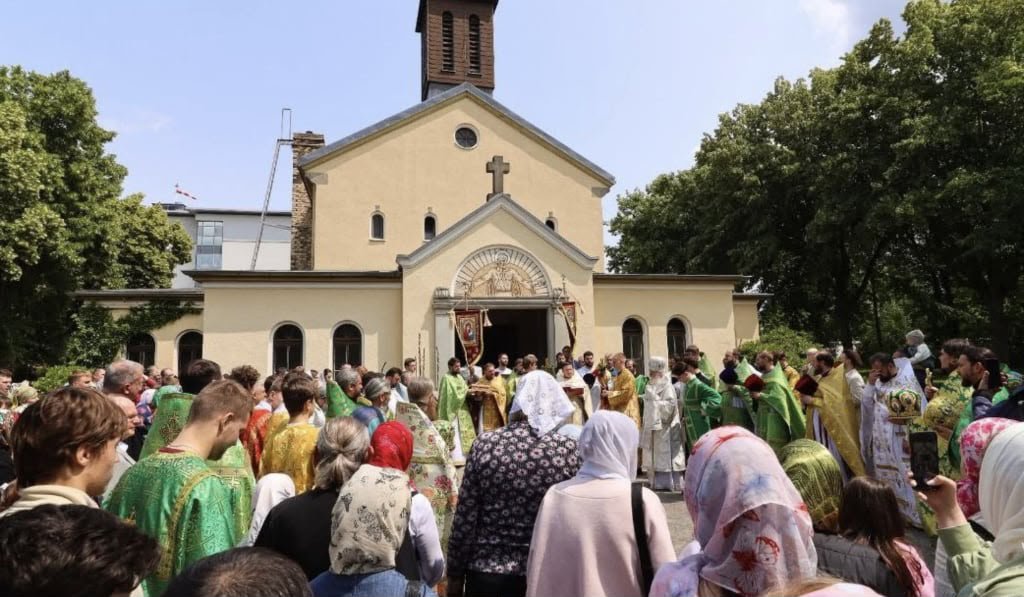
Overall, this network includes up to 630 parishes and, according to researchers’ estimates, brings together between 1 and 1.2 million believers.
The largest number of these structures operates in Germany, with about 130 parishes. Poland has significantly fewer, with up to 15.
Moscow adapts its strategy to the conditions of each country, using direct expansion, penetration into local elites, disguising itself as Ukrainian organizations, or filling social niches that remain insufficiently served.
To attract Ukrainian refugees, Russian church networks use children’s centers, psychological support activities, and humanitarian assistance. In some cases, according to analysts, they conduct services in Ukrainian, use Ukrainian names, and display Ukrainian symbols.
According to the researchers, the activities of the Russian church network may be financed from a variety of sources, including the Russian state budget, state-owned corporations of the Russian Federation, certain European programs, and private sponsors.
As LF previously reported, at the beginning of May the European Parliament’s Committee on Foreign Affairs (AFET) approved a draft resolution that was unprecedented in the clarity and severity of its assessments. The resolution addresses how authoritarian states on the territory of the European Union, referring to the Russian Federation, and organizations associated with them persecute, intimidate, monitor dissidents, opposition figures, journalists, human rights defenders, activists, and diaspora communities beyond their national borders.
Earlier, we reported that analysts described the documents of the Parliamentary Assembly of the Council of Europe and the European Parliament concerning the Russian Orthodox Church as Europe’s great awakening to the influence of the Russian Church on European societies.