The Russian Orthodox Church has commented on the Estonian authorities’ initiative to terminate the agreement granting free use of Alexander Nevsky Cathedral in Tallinn. Archpriest Nikolay Balashov, an adviser to Patriarch Kirill of Moscow and All Rus’, said that such actions “trample on freedom of religion and are associated with the position of the Nazis and Soviet atheist ideologues.”
This was reported by Baltija.
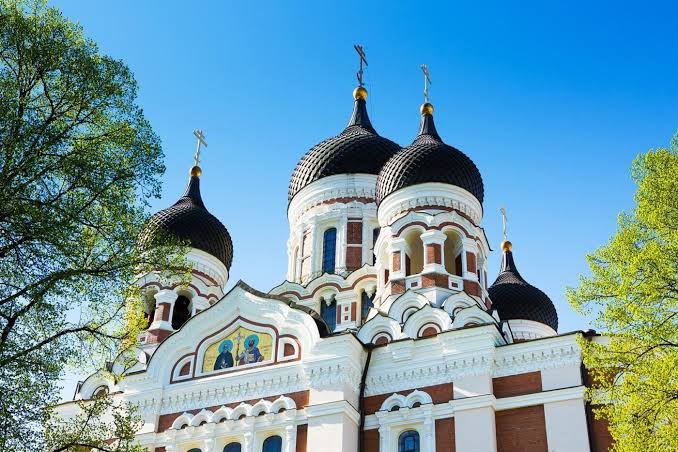
The statement was prompted by a proposal from Estonian Interior Minister Igor Taro, who called for terminating the agreement between Tallinn and the Estonian Orthodox Christian Church (formerly the EOC-MP) on the use of Alexander Nevsky Cathedral, which was consecrated in 1900.
Nikolay Balashov called the initiative a “gross violation” of human rights. He said that the actions of today’s Estonian politicians “effectively associate them with those who previously called for the cathedral to be destroyed.” He added that the initiative’s authors “are not ashamed to associate themselves with the position of rabid nationalists, German Nazis and the leaders of the Soviet totalitarian regime.”
As LF reported, a debate has erupted in Estonia over the future of the Moscow Patriarchate’s Alexander Nevsky Cathedral in Tallinn, which is regarded as a symbol of Russification. Proposals have included selling the cathedral, relocating it, demolishing it, converting it into a museum and linking it more closely to Estonian culture.
Since 2001, the Moscow Patriarchate-linked Estonian Orthodox Christian Church (EOCC, formerly the EOC-MP) has had an agreement with Tallinn on the use of Alexander Nevsky Cathedral.
By decision of the Tallinn City Council the building was transferred to the parish for free use. In return, the parish was required to assume responsibility for managing and maintaining the cathedral and to insure the building for 6.7 million kroons.
Earlier, Patriarch Kirill Gundyayev of the Russian Orthodox Church said that a campaign against the Russian Orthodox Church was allegedly continuing in several countries, including Estonia.
Although the Russian Orthodox Church in its documents treats Estonia as part of its canonical territory, this is not the case under Orthodox canon law. This has been stated by church historian Priyt Rokhtmets and Orthodox canon law specialist David Khayt-Shtade.
As stated in an interview with LF by University of Tartu associate professor Priyt Rokhtmets, the Russian Orthodox Church will have to abandon its own imperial identity.