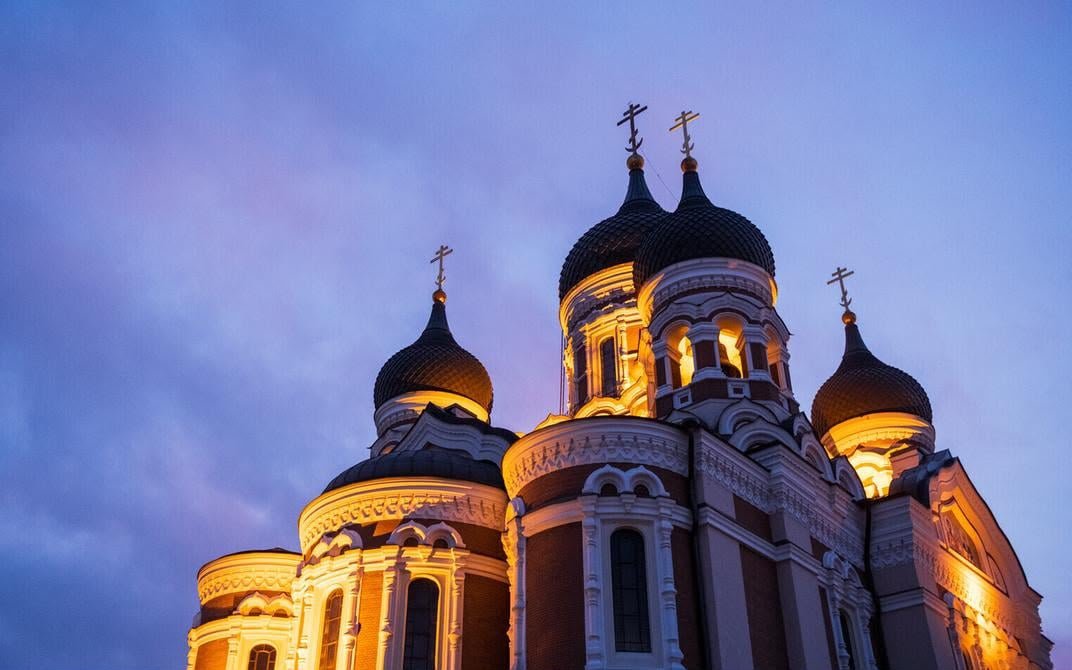
A public debate has emerged in Estonia over the future of the Alexander Nevsky Cathedral of the Moscow Patriarchate in Tallinn, which is widely regarded as a symbol of Russification. Proposals have included selling the cathedral, relocating it, demolishing it, converting it into a museum, or strengthening its connection with Estonian culture, ERR reports.
Historian Lauri Vahtre proposed selling the Alexander Nevsky Cathedral and thereby removing it from the city.
“It could be installed somewhere else, and everyone who loves it so much could go to it, into it, and around it. Tallinn, meanwhile, would rid itself of this arrogant symbol of Russification,” Vahtre said.
Interior Minister Igor Taro responded to Vahtre’s remarks, noting that the Isamaa party, which is currently in power in Tallinn, could terminate the long-term lease agreement under which the city-owned building is used by the Moscow-linked church.
“There is no need to nationalize anything. It is enough to terminate the agreement early and cut off the financial source of the Moscow organization. This is not a typical parish church but a tourist attraction,” he said. “Whose interests are served by continuing to lease the Alexander Nevsky Cathedral to the Moscow Church as the official representation in Estonia of the war criminal Kirill?”
Since 2001, the Estonian Orthodox Christian Church affiliated with the Moscow Patriarchate, formerly known as the Estonian Orthodox Church of the Moscow Patriarchate, has operated under an agreement with the City of Tallinn governing the use of the Alexander Nevsky Cathedral.
Under a decision of the Tallinn City Council, the building was granted to the parish for free use. In return, the parish assumed responsibility for managing and maintaining the cathedral and for insuring the building for 6.7 million kroons.
At the time, Estonia was preparing to join the European Union. Politicians feared that issues related to the Russian minority and the Orthodox Church could slow the accession process.
Tallinn’s decisions were also influenced by domestic political and commercial interests.
Sources interviewed by ERR emphasized that the system of governance in Tallinn was complicated at the time. Against that background, entrepreneurs conducting business with Russia actively engaged in lobbying efforts, which may have influenced decisions concerning church property.
On 24 July, Tallinn Deputy Mayor Tiit Terik of the Centre Party said on Vikerraadio that the city has a valid agreement with the parish and that there are no legal grounds for terminating it. He stressed that as long as the activities of this church remain lawful in Estonia, the city has neither legal grounds nor practical means to terminate the lease agreement concerning the Alexander Nevsky Cathedral.
Earlier, Patriarch Kirill Gundyayev of the Russian Orthodox Church claimed that a number of countries, including Estonia, continue what he described as a campaign against the Russian Orthodox Church.
Although the Russian Orthodox Church considers Estonia part of its canonical territory in its official documents, this is not the case under Orthodox canon law. This assessment is shared by church historian Priit Rohtmets and specialist in Orthodox canon law David Heith-Stade.
In an interview with LF, University of Tartu Associate Professor Priit Rohtmets said that the Russian Orthodox Church will have to abandon its own imperial identity.