Libertas Fidei has obtained a circular from the Moscow Patriarchate instructing Russian pilgrims to be informed that they must not participate in services at the Novyy Afon Monastery, where Archimandrite Dorofey (Dbar) serves. The story of one monk reveals a much broader picture of how the Russian Orthodox Church maintains influence over church life in occupied Abkhazia without formally incorporating it into its jurisdiction.
Libertas Fidei has obtained an interesting document passed to us by church officials from one of the autocephalous Orthodox churches.
The circular letter is signed by Metropolitan Grigoriy of Voskresensk, the administrator of the Moscow Patriarchate and Patriarch Kirill’s first vicar for Moscow. A copy of the letter, which was distributed to Russian Orthodox Church bishops, is attached.
The document concerns the Novyy Afon Monastery in Abkhazia.
In several paragraphs, Metropolitan Grigoriy recalls that Archimandrite Dorofey (Dbar) was defrocked by a decision of the Moscow Patriarchate’s ecclesiastical court but continues to conduct services. This leads to a practical instruction: Russian pilgrims should be informed that they must not participate in the sacraments he celebrates or engage in prayerful communion with him.
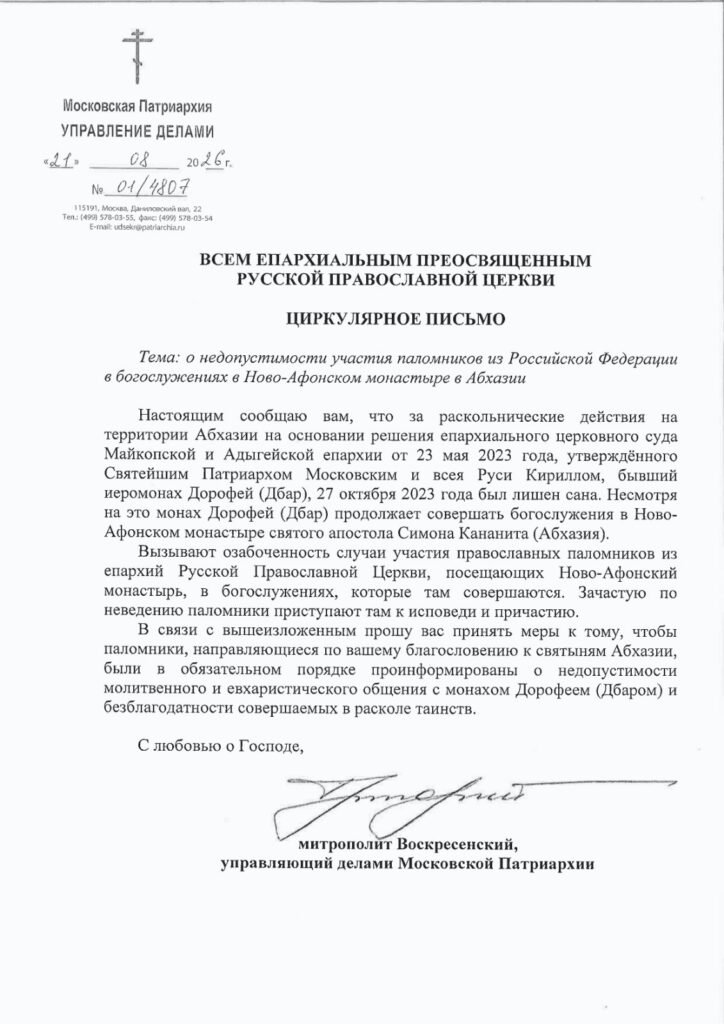
The requirement itself is not entirely new. As early as 2013, Russian church authorities warned pilgrims that they must not participate in services conducted by Dorofey (Dbar) and his supporters.
And now, thirteen years later, the Moscow Patriarchate has deemed it necessary to centrally address a church community located outside the Russian Federation, moreover in territory that the Russian Orthodox Church itself officially recognizes as the canonical territory of the Georgian Orthodox Church.
This is the central paradox of the church situation in Abkhazia.
Abkhazia is part of the internationally recognized territory of Georgia and is under Russian occupation. From a canonical perspective, the Orthodox parishes of Abkhazia belong to the Georgian Orthodox Church. No autocephalous Abkhazian Church has been recognized by any autocephalous Orthodox church. But in practice, this canonical map scarcely functions. The process of pushing out Georgian clergy began in the 1990s, and after 2008 the Georgian church structure was almost completely pushed out of Abkhazia.
Georgian clergy cannot freely enter Abkhazia or conduct services there, including in areas with a significant Georgian population. At the same time, Moscow has not formally incorporated Abkhazia into the Russian Orthodox Church.
A much subtler arrangement has emerged: control without formal ecclesiastical annexation.
For years, Abkhaz candidates for the priesthood studied at Russian theological seminaries and academies. Some future Abkhaz clergy were ordained by Russian bishops. Clergy from Russian dioceses near the border traveled to Abkhazia to conduct services.
Russian church infrastructure became a source of personnel, education, pilgrimage flows, and church connections for local Orthodoxy.
At the same time, Moscow continued to state that, canonically, the territory belongs to the Georgian Orthodox Church.
It was within this contradiction that Dorofey Dbar emerged.
Who Is Dorofey Dbar?
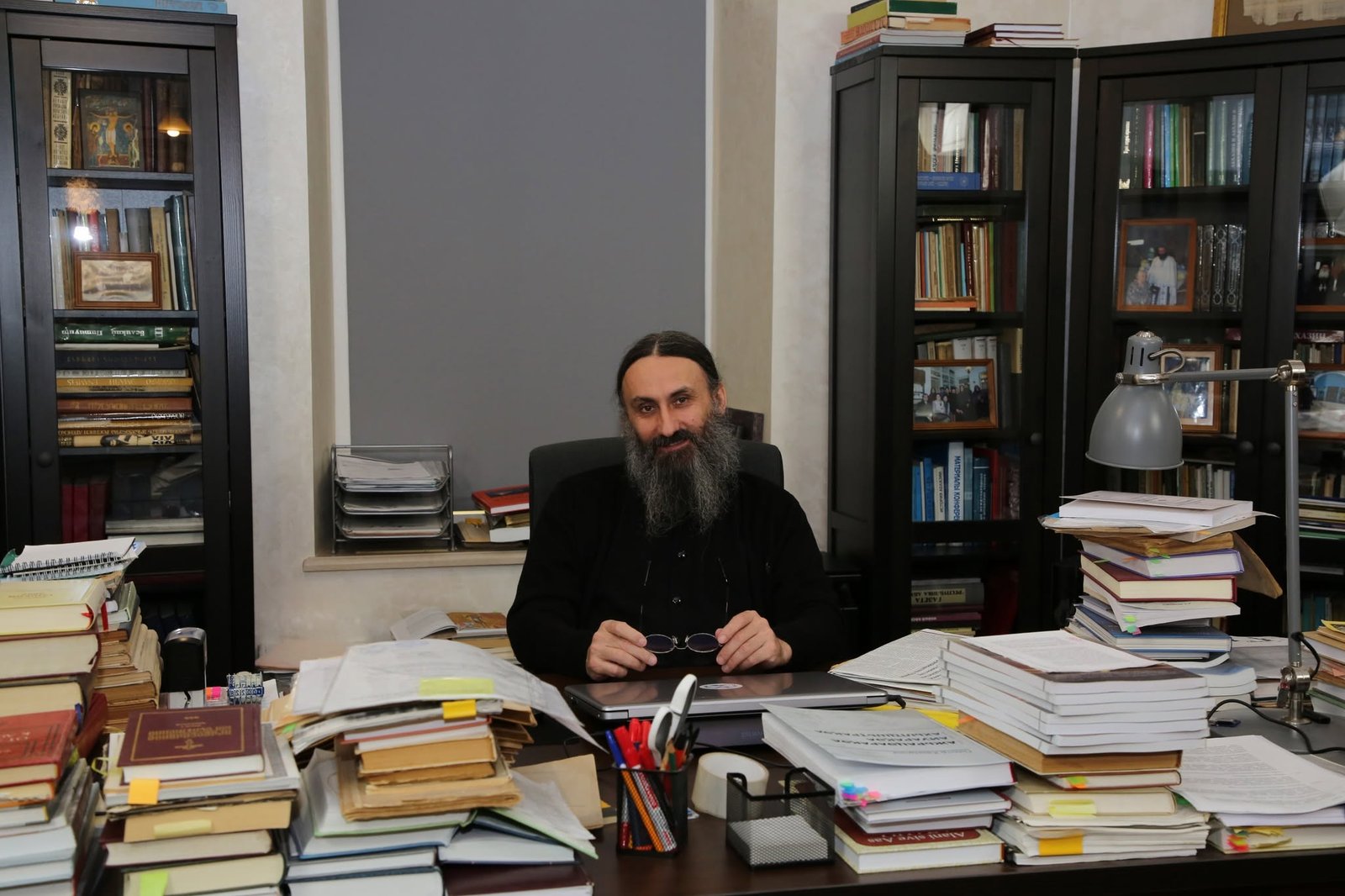
Father Dorofey (Dbar) is 54 years old. He was born on January 18, 1972, in Abkhazia.
This is important. Father Dorofey was not sent to Abkhazia as a foreign missionary from the Russian Orthodox Church. He is a native of the region, raised within Abkhaz society while also having gone through the classical Russian theological educational system.
He graduated from the Moscow Theological Academy. His early academic work was devoted to the history of Christianity in Abkhazia during the first millennium.
In 2001, Father Dbar became a monk and was ordained a priest in the Maykop Diocese of the Moscow Patriarchate.
The following year, he became one of the founders of a theological school in Novyy Afon and headed it for several years. Then an important turn occurred in his biography. In 2007, Dbar went to Greece. There he continued his education at Aristotle University of Thessaloniki, studying modern and ancient Greek, church history, and the Byzantine tradition.
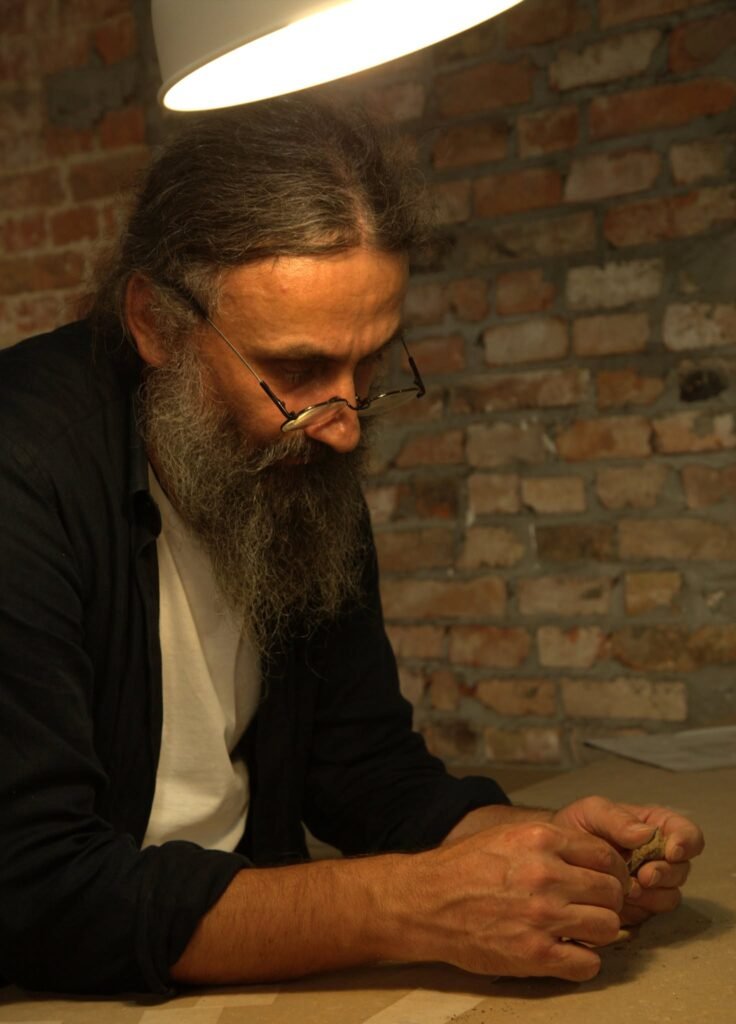
At the time his native Abkhazia was being occupied, he was studying Greek theology and tradition.
In 2014, he defended a doctoral dissertation on the place of death and burial of St. John Chrysostom. Today, Dbar works in church history and archaeology, researches ancient and medieval churches, works with Greek sources, teaches, and translates liturgical texts into the Abkhaz language.
In other words, it is difficult to portray him simply as a marginal “schismatic.” Dorofey (Dbar) became one of the most consistent supporters of the idea of an independent Abkhazian Church. His model differs fundamentally both from the position of Tbilisi and from the de facto system of Moscow’s influence. In simplified form, his concept looks like this: ancient Abkhaz Christian tradition, its own liturgy and Abkhaz language, its own clergy, restoration of a local church structure, and ultimately recognized autocephaly.
In May 2011, a church and popular assembly was held at the Novyy Afon Monastery, after which the Holy Metropolis of Abkhazia was established.
Dorofey (Dbar) became chairman of its Council and one of the candidates to become a future bishop. Novyy Afon became the center of the movement.
Thus, a third path emerged. Not a return to de facto control by Tbilisi. But neither gradual absorption into the Russian ecclesiastical sphere. He advocated an independent Abkhazian Church whose status should be decided through pan-Orthodox dialogue, including with the participation of Constantinople.
For Moscow, this orientation is particularly inconvenient. After the sharp conflict between the Moscow and Constantinople Patriarchates over Ukrainian autocephaly, any church movements in areas of Russian influence that orient themselves toward Constantinople are viewed by Moscow with particular sensitivity.
Moscow Ordained Him. Moscow Banned Him. Moscow Defrocked Him
In the same year, 2011, the Maykop Diocese prohibited Dbar from exercising his priestly ministry.
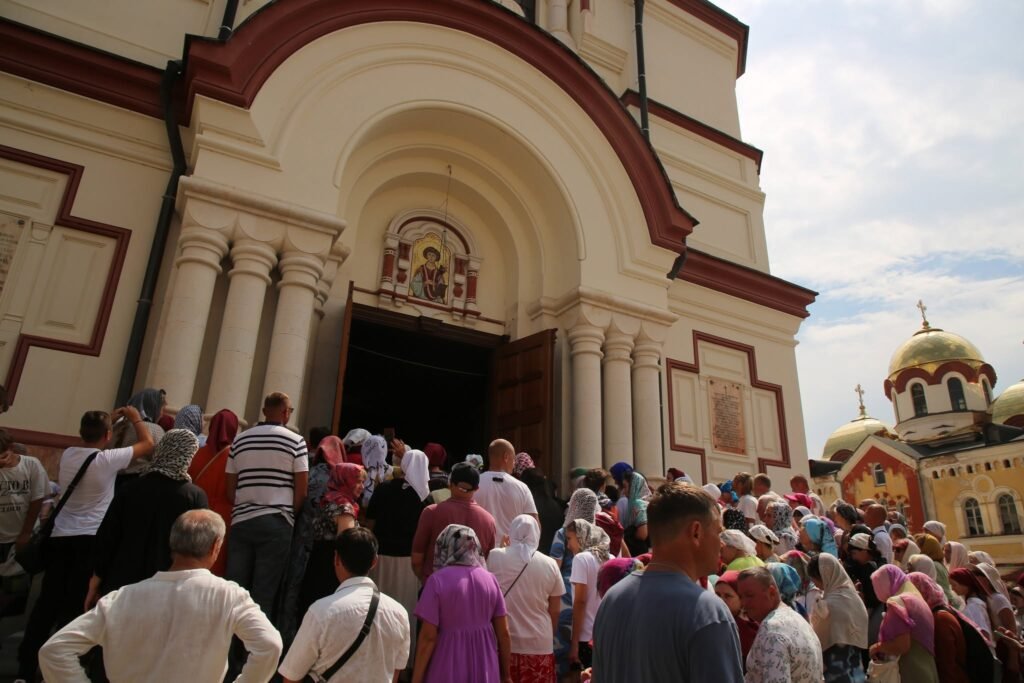
He did not recognize the decision and continued to serve.
The Moscow side maintained that Father Dorofey remained a cleric of the Russian Orthodox Church because he had not received a canonical letter of release allowing him to transfer to another autocephalous Orthodox church. The conflict continued for another twelve years.
In 2023, the ecclesiastical court of the Maykop Diocese of the Russian Orthodox Church decided to petition for his defrocking. The decision was approved by Patriarch Kirill. From the perspective of the Russian Orthodox Church, this was a disciplinary decision concerning its own cleric. But an obvious paradox arises. Moscow recognizes Abkhazia as territory of the Georgian Orthodox Church, yet it was a Russian bishop who once ordained Dbar to serve Abkhaz people. A Russian diocese prohibited him from serving. A Russian ecclesiastical court defrocked him. And now the central administration of the Moscow Patriarchate is sending instructions to its dioceses on how Russian believers should conduct themselves in a monastery on this territory.
Formally, there is no jurisdiction.
In practice, Moscow creates levers of influence whenever it chooses.
One might have assumed that after the ban and subsequent defrocking, Dbar would become a lone church dissident. But that did not happen. The Novyy Afon Monastery is not merely a tourist attraction visited annually by numerous pilgrims from Russia.
A local community of its own formed around Father Dbar. It specifically distinguished them from tourists and visiting pilgrims. These were people who regularly attended services, went to confession, and received Communion. After the Russian Orthodox Church’s decision to defrock Dbar, this community did not disappear.
In 2025, the Council of the Holy Metropolis of Abkhazia approved Dorofey Dbar as abbot of the Novyy Afon Monastery. In the summer of the same year, his opponents demanded that he leave the monastery. Parishioners came to his defense. Moscow was able to declare him defrocked. But it could not, with a single administrative decision, turn him into a man without a flock. This is precisely why the new circular from the Moscow Patriarchate carries additional significance.
If it is impossible to remove Dbar from Novyy Afon with a single decision of an ecclesiastical court, an attempt can be made to marginalize his community.
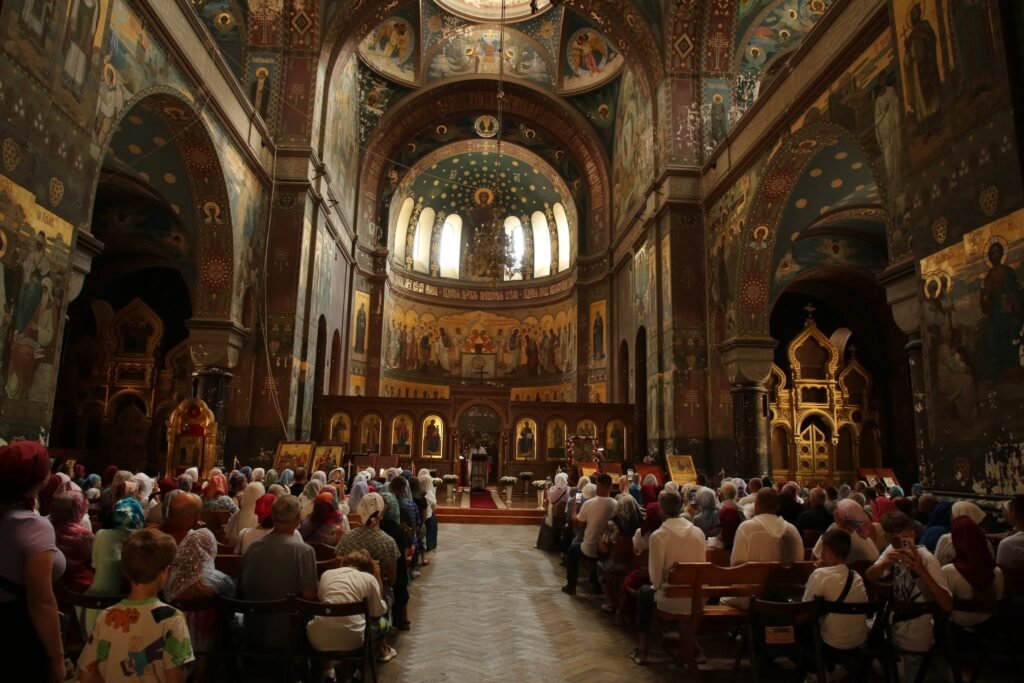
Russian pilgrims are being made to understand that Novyy Afon can be visited as a tourist attraction, but they must not participate in the community’s liturgical life under Dbar. At the same time, it would be a mistake to portray Dorofey Dbar as a representative of the Georgian church position. Dbar does not advocate returning Abkhaz Orthodoxy to direct control from Tbilisi. He supports a separate Abkhazian Church.
The Georgian Orthodox Church, for its part, does not recognize the Holy Metropolis of Abkhazia as a canonical structure. There is also an independent Abkhaz church movement that does not want to be either Moscow’s or Georgian.
And Moscow’s attitude toward this movement is particularly revealing.
Gocha Barnova, Doctor of Theology, commented on the situation to LF:
“Moscow itself ordained Dorofey, then itself banned him and defrocked him, and today it prohibits its pilgrims from participating in his services.
All of this is happening in territory that the Moscow Patriarchate itself recognizes as the canonical territory of the Georgian Orthodox Church.
If there are sentiments in Abkhazia in favor of its own autocephaly, this issue should be resolved canonically and through dialogue with other Orthodox churches, including the Ecumenical Patriarchate.
Moscow, however, does not solve the problem through its interference. It creates even greater ecclesiastical uncertainty.”
This paradox is indeed difficult to overlook.
Moscow ordained him. Moscow banned him. Moscow defrocked him. Now Moscow determines whom people may pray with in Novyy Afon.
Nukzar Suaridze, journalist and director of the film Spiritual Struggle about Ukrainian and Georgian autocephaly, is even more categorical:
“After the conflict between Russia and the Ecumenical Patriarchate, Moscow is trying by every possible means to prevent the emergence of any pro-Greek and especially autocephalous sentiments in territories it considers part of its sphere of influence. The monk Dorofey Dbar is passionate about the idea of an Abkhazian Church. He does not want to be part of the Georgian Church, and certainly not part of the Moscow Church. At the same time, he is oriented toward Constantinople. Such sentiments can arise in any church environment. Normally, such situations should be resolved through dialogue. I think our Catholicos-Patriarch Shio III should respond to what is happening. Our patriarch is also the metropolitan of Abkhazia, but de facto the Georgian Church has practically no opportunity to operate there.
This is a typical Russian instrument when it extends ecclesiastical power. Recall how Patriarch Tikhon behaved in 1917, when Georgia declared autocephaly. He declared the actions of the Georgian bishops uncanonical and effectively regarded the church structure they restored as schismatic. After that, normal canonical communion between the Moscow and Georgian churches was severed and was restored only in 1943, when the Moscow Patriarchate recognized Georgian autocephaly. He said that they had broken relations with the Russian Church, committed unauthorized acts, violated their oath, breached church obedience, and acted against the canons.”
XXХ
At the same time, Father Dorofey is flesh and blood of Abkhazia, and according to media reports, a living church community exists around his monastery.
And this final circumstance is particularly significant.
Priest Dorofey (Dbar) can be defrocked by a decision of a Moscow ecclesiastical court. But the same decision cannot abolish the existence of people who regard him as their pastor.
Occupation and Control Without Formal Annexation
The Abkhaz model differs markedly from what Russia did with church structures in the occupied territories of Ukraine after 2022. In Ukraine, Moscow went much further toward the direct incorporation of captured dioceses into the administrative structure of the Russian Orthodox Church.
In Abkhazia, a more cautious model is being applied.
Moscow officially says, “This is the territory of the Georgian Orthodox Church.” But Georgian clergy are effectively deprived of the opportunity to serve there.
Local clergy have depended on Russian theological schools for decades.
Russian clergy have participated in the religious life of the region.
The Russian pilgrimage flow is of enormous importance to local monasteries. And when a priest emerges who attempts to build church life outside Moscow’s influence, it is Moscow that bans him, puts him on trial, defrocks him, and sends out instructions stating that its own believers must not participate in his services.
An extraordinary structure emerges. Canonically, Moscow appears to have nothing to do with it, while in practice Moscow is present almost everywhere. This is the model of control without formal ecclesiastical annexation. And perhaps one of the most effective forms of spiritual occupation, when the occupier does not even need to declare the church territory its own.
Today, the Catholicos-Patriarch of Georgia, Shio III, also bears the title of Metropolitan of Abkhazia. He is the canonical hierarch of a territory where his own church is effectively deprived of the ability to operate fully. Yet it is Moscow that sends out circulars specifying with whom pilgrims there may or may not pray.
It would be much easier if the idea of an independent Abkhazian Church were associated exclusively with marginal figures.
But Dbar does not fit that image.
He knows ancient and modern Greek. He received a serious theological education. He defended his doctoral dissertation in Thessaloniki.
He works in history and archaeology. He translates liturgical texts into the Abkhaz language. He teaches.
And most importantly, a real church community has formed around him.
One may dispute his historical interpretations and consider the idea of Abkhazian autocephaly canonically unacceptable.
One may agree with Georgian historians who challenge attempts to draw a direct line from the ancient church structures of Abkhazia to a modern national autocephalous church.
But it is no longer possible to pretend that no independent Abkhaz church environment exists.
And therefore the story of the circular obtained by Libertas Fidei is not merely a story about the punishment of one disobedient monk.
It shows how painfully Moscow reacts to the emergence of an independent center of church life in territory within its sphere of political influence.
The story of Dorofey (Dbar) illustrates an old Russian model of behavior.
Moscow enters where a complex local problem exists.
It declares itself a mediator. It creates dependence on its own infrastructure. Then it gradually begins to determine the boundaries of what is permissible. Whom to ordain. Where to train priests. Whom to allow to serve. Whom to declare a schismatic. With whom to allow people to pray.
And even when the territory is one that Moscow itself officially recognizes as belonging to another autocephalous Orthodox church, it still reserves the right to intervene.
This is what is happening now in Novyy Afon.
One may argue with Dorofey (Dbar).
One may reject his concept of a historical Abkhazian Church.
One may consider the Abkhazian autocephaly project mistaken.
But such questions should be resolved by the church community of Abkhazia itself, the Georgian Orthodox Church, and the Ecumenical Patriarchate through dialogue and canonical procedures.
Moscow, as always, prefers to intervene first.
It does not recognize Abkhazia as its own church territory, yet it determines what happens within it.
It cannot grant Abkhazia autocephaly, yet it obstructs those who try to discuss it without Moscow.
It failed to destroy Dbar’s community by defrocking him, and now it is trying to isolate it. This is precisely why the circular obtained by us is more important than it may appear. It is not simply a letter about where a Russian pilgrim may or may not attend a service.
It is a small document revealing a much larger system.
Moscow formally stands outside the door.
But it still keeps its hand inside.
Anna Yansone