More than 1,000 parishes operating in the European Union are under the influence and control of the Moscow Patriarchate.
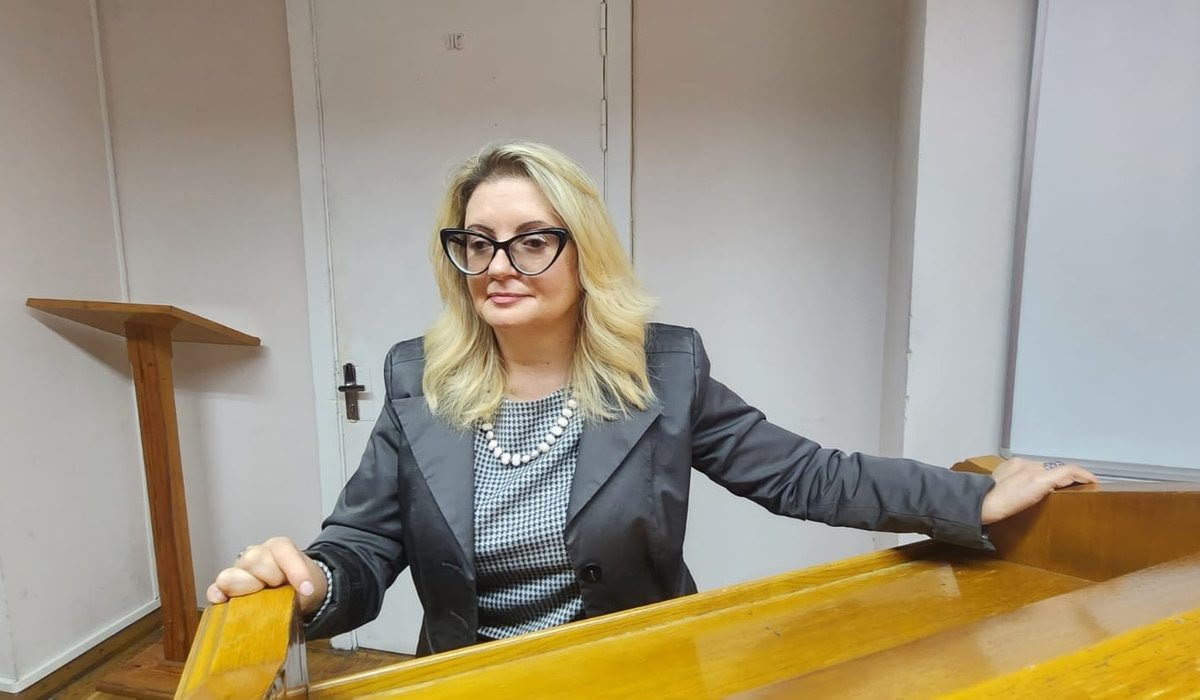
This was reported in an interview with the RISU news agency by Yekaterina Nastoyashchaya, Doctor of Sociology and initiator of the study by the Institute of National Resilience and Security.
According to her, Russian influence is not limited to Russian Orthodox Church communities.
“This architecture is complex and consists of three institutional branches. These are the Russian Orthodox Church (ROC) itself, the Russian Orthodox Church Outside Russia (ROCOR), which Moscow brought under its control in 2007, and the Ukrainian Orthodox Church of the Moscow Patriarchate, which is currently expanding actively in Europe. If we add up the number of parishes belonging to these branches in the EU, we get a striking figure: at least 560, or 660 ROC cells including unregistered ones, in EU countries. And if we add satellite churches, such as the Bulgarian and Serbian Orthodox Churches, as well as legally independent structures that are in fact oriented toward Moscow, the figure exceeds 1,000,” Yekaterina Nastoyashchaya said.
According to her, the network has recently been expanding actively at the expense of the Ukrainian Orthodox Church of the Moscow Patriarchate.
“This is evidenced by media analysis, analytical materials, and press releases from the Foreign Intelligence Service. These two structures operate as a single body, one network with a single funding center. Today, this network is expanding actively precisely through the Ukrainian Orthodox Church of the Moscow Patriarchate. As of 2023, 83 UOC MP parishes in the EU had been officially recorded. By 2026, there were already more than 120,” the study’s initiator reported.
She stressed that Russian special services operate through such cells, collecting parishioners’ data.
“Information about the collection of personal data from our citizens in churches has been documented not only by us but also by the Foreign Intelligence Service of Ukraine. Its head has publicly stated that Russian special services use the network of Moscow Patriarchate churches abroad to recruit Ukrainian refugees, while databases are compiled under the guise of charitable activities. It is noted that the UOC MP is specifically involved in this,” the sociologist said.
According to her, information is collected even directly inside churches.
“If a new person comes to a church, someone with a notebook will invariably approach them and ask questions about them. The parish network collects personal data on Ukrainian refugees both offline and online. Our respondents reported that at some UOC MP parishes in Berlin, services are being recorded on video and photographed. We do not know where this information is transmitted, but based on the background of the Russian special services, we can assume that there is a risk that all this data is being passed specifically to the special services,” the study’s initiator believes.
Earlier, we reported that at Russian Orthodox Church parishes in Europe, Ukrainian refugees are being recruited under the guise of “spiritual support” or “assistance.”
As LF reported, at the beginning of May, the European Parliament’s Committee on Foreign Affairs (AFET) voted on an unprecedentedly clear and strongly worded draft resolution on how authoritarian states operating in the European Union (in this case, the Russian Federation – LF), and structures linked to them, persecute, intimidate, and control dissidents, opposition figures, journalists, human rights defenders, activists, and diaspora communities outside their countries.
Earlier, we reported that analysts describe Council of Europe Parliamentary Assembly and European Parliament documents concerning the Russian Orthodox Church as Europe’s great awakening to the influence of the Russian Church on European communities.