The Estonian Orthodox Christian Church (Moscow Patriarchate) is withholding the text of its application to the European Court of Human Rights (ECtHR). This appears to be an attempt to generate publicity aimed at discrediting lawmakers and the Estonian state.
This assessment was made in comments to Postimees by attorney-at-law Tarmo Pilv, who has experience representing a client in proceedings before the ECtHR.
“In my opinion, this looks more like an attempt to generate publicity. Unfortunately, it gives the impression that they are trying by any means possible to discredit lawmakers and the Estonian state,” he said.
The Estonian Orthodox Christian Church’s application appears questionable because Article 35(1) of the European Convention on Human Rights stipulates that the Court may only deal with a matter after all domestic remedies have been exhausted, in accordance with the generally recognised rules of international law.
This means that the Estonian Orthodox Christian Church and Pühtitsa Monastery should first have brought their cases before the Estonian courts and exhausted all levels of appeal before applying to the ECtHR. The Supreme Court’s ruling on amendments to the Churches and Congregations Act does not provide grounds for such an application, as the Church was not a party to those proceedings.
According to the lawyer, he sees no grounds for the application to be admitted for examination. However, he stressed that without all the relevant information or access to the application itself, it is difficult to make any definitive assessment. His comments are based solely on information available from public sources. “An application to the European Court must be lodged within four months of the final decision by a national court,” the attorney-at-law explained.
Tarmo Pilv also drew attention to a statement by a representative of the Estonian Orthodox Christian Church claiming that the law effectively forces believers to change their faith. “But that is simply not the case. The Orthodox faith does not cease to be Orthodox when ecclesiastical affiliation changes. This is a matter of church jurisdiction, of who governs the Church,” the lawyer emphasised.
As LF previously reported, the Estonian Orthodox Christian Church (Moscow Patriarchate, LF) and Pühtitsa Monastery filed applications with the European Court of Human Rights (ECtHR) over amendments to the Churches and Congregations Act.
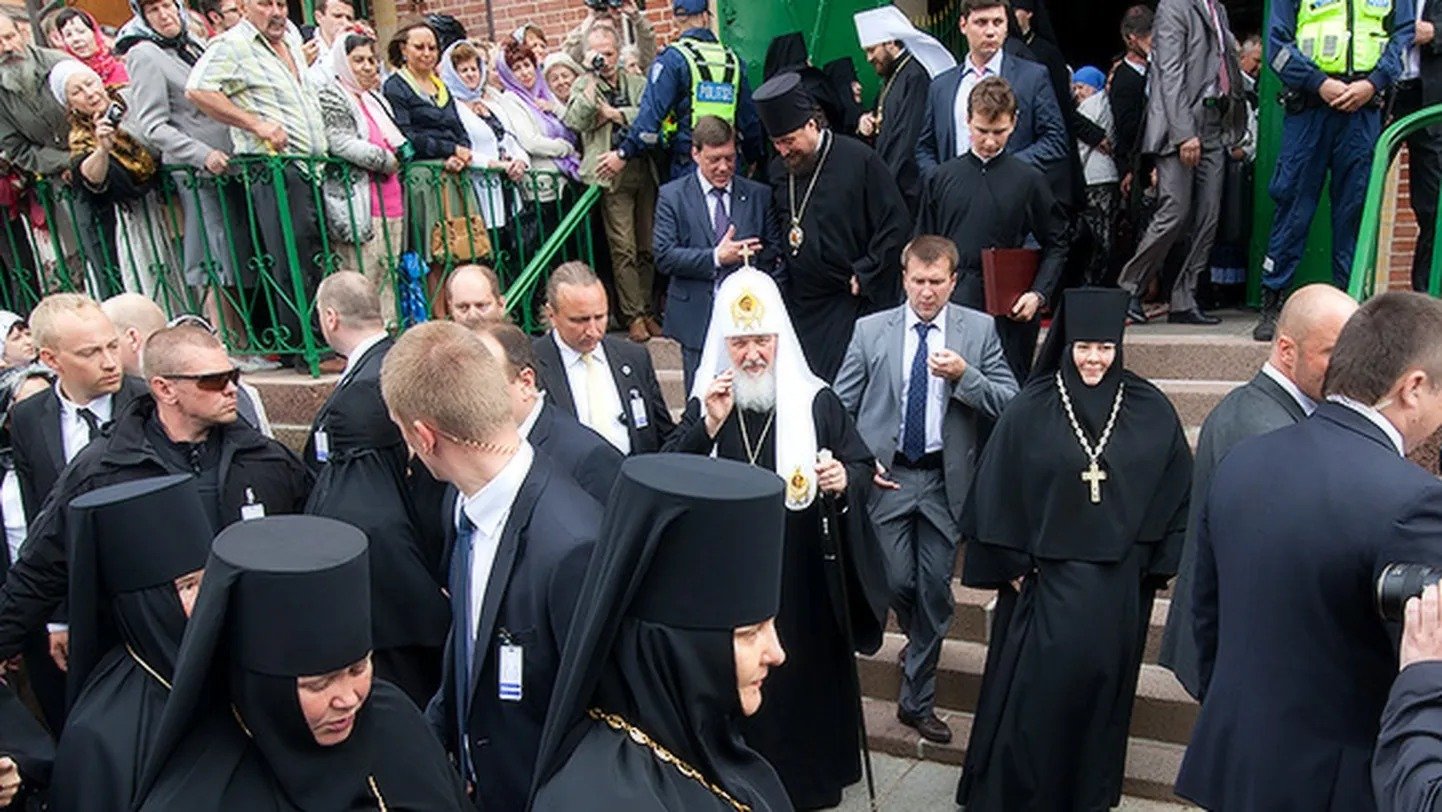
Earlier, Patriarch Kirill Gundyayev of the Russian Orthodox Church claimed that a campaign against the Russian Orthodox Church was allegedly continuing in several countries, including Estonia.
Although the Russian Orthodox Church regards Estonia as part of its canonical territory in its official documents, this position is not supported by Orthodox canon law, according to church historian Priit Rohtmets and Orthodox canon law specialist David Heith-Stade.