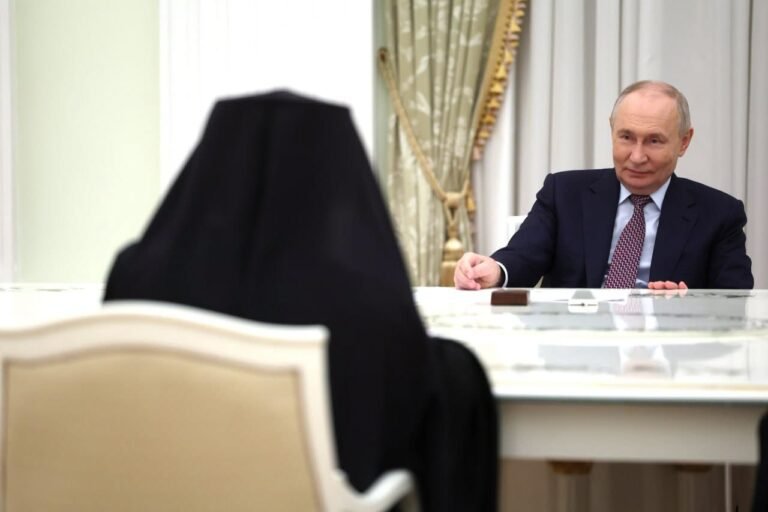
The growing rapprochement between Moscow and Jerusalem may be driven not only by ambitions to reshape interchurch relations but also by specific material interests.
This is the argument put forward by Bulgarian theologian and publicist Reneta Trifonova in her article, “Church Property, Diplomatic Gestures and Peace Initiatives: Is a New Centre of Influence Emerging in the Orthodox World?”, published by LF.
According to the author, Russian support for the Patriarchate of Jerusalem extends beyond diplomacy. It includes funding for restoration work and other church projects.
One illustrative example involves the Russian Foundation for the Support of Christian Culture and Heritage. On 3 February 2026, its executive director, Yegor Skopenko, was received by Patriarch Theophilos III. According to an official statement from the foundation, the organisation has been supporting the restoration of the monastery complex and the Church of the Annunciation at the Spring of the Blessed Virgin Mary in Nazareth since 2023.
As Reneta Trifonova points out, the financial difficulties facing the Patriarchate of Jerusalem are also no secret.
“In an official statement issued in 2023, the Patriarchate acknowledged that it had previously entered into partnership agreements to develop a plot of land it owned in Jerusalem’s Abu Tor neighbourhood precisely because of financial difficulties. The Patriarchate subsequently managed to regain full ownership rights to the property after paying approximately 80 million shekels.
This case demonstrates just how important property management, investment and securing funding for its activities are to the Patriarchate,” the article states.
The author identifies at least two possible dimensions to the rapprochement between Moscow and Jerusalem. The first is Moscow’s desire to strengthen its position in the Orthodox world by drawing on the authority of the Patriarchate of Jerusalem. The second is the Patriarchate’s own need for financial resources and international support.
“However, the question remains as to how far this mutual dependence influences Patriarch Theophilos’s public stance and his willingness to support initiatives that align with the Kremlin’s interests,” Reneta Trifonova concludes.