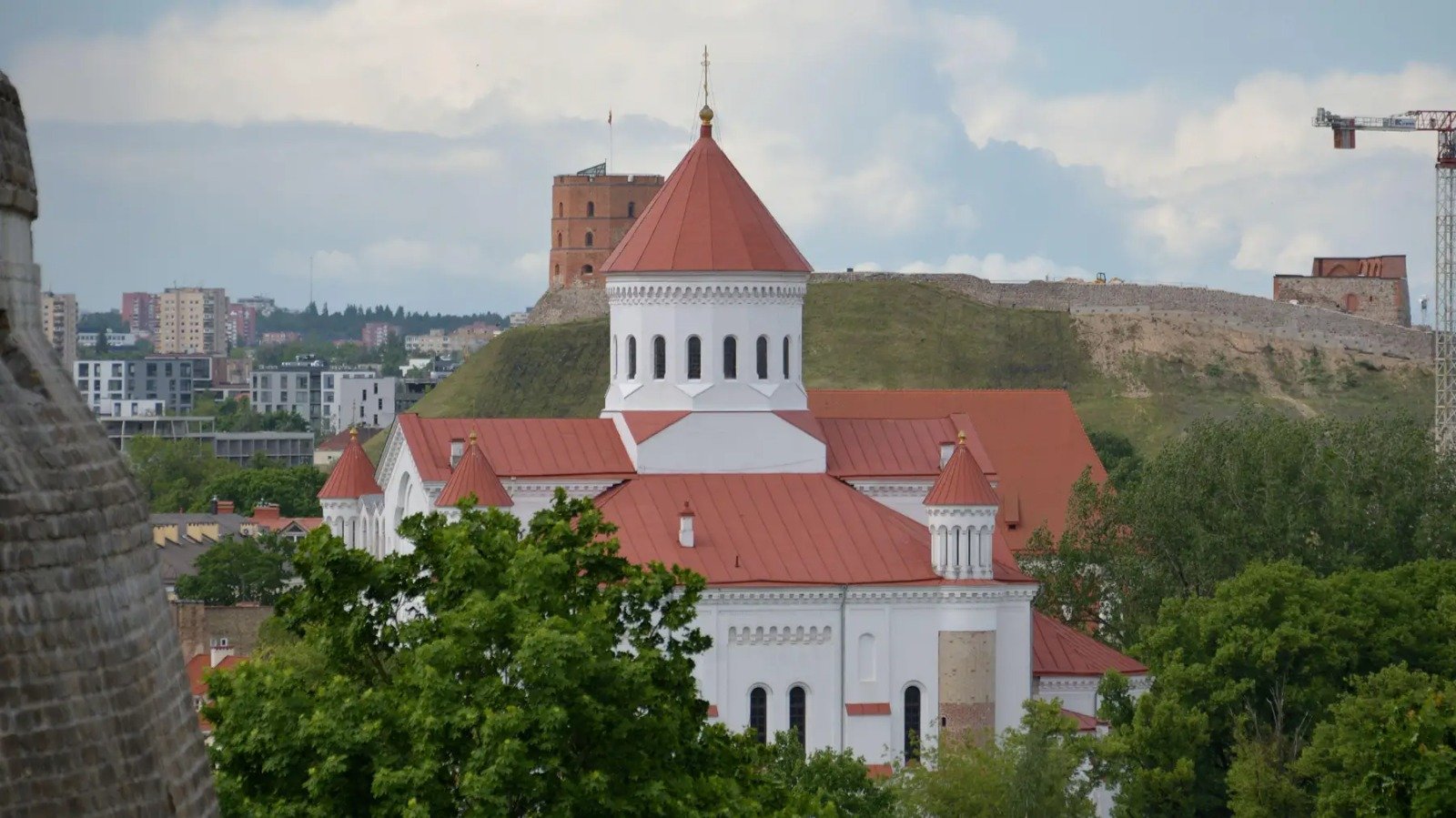
The Lithuanian Seimas Committee on Legal Affairs and Law and Order (TTK) has found a proposal to transfer property held by Orthodox Christian and Sunni Muslim communities to other religious organizations to be unconstitutional.
Seven committee members voted in favor of the decision, while three abstained, according to LRT.
The Legal Department of the Seimas Chancellery also concluded that the proposal was incompatible with the country’s Constitution.
As previously reported, Conservative Party members of the Seimas Audronius Ažubalis and Arvydas Anušauskas introduced legislative amendments under which all real estate owned by Orthodox Christian and Sunni Muslim religious communities in Lithuania would legally be transferred to the Ecumenical Patriarchate of Constantinople and the Spiritual Center of Sunni Muslims of Lithuania (Muftiate), respectively.
Ažubalis emphasized that civil law provisions cannot be considered in isolation from the constitutional principle of state continuity and the concept of justice.
“The current registration of property ownership is an important legal fact. However, it does not in itself answer the question of whether historical property rights were properly restored or whether the existing situation is the result of occupation and unlawful seizures in the past,” he noted.
According to the lawmaker, the Patriarchate of Constantinople had historically owned property belonging to the Orthodox Church in Lithuania for 523 years. However, during the occupation, this property was ultimately seized by structures affiliated with Moscow.
“The key question is not whose name the property is registered under today, but whether lawful restitution to the original owners has taken place. If not, the state has both the right and the obligation to review whether the determination of property ownership after 1990 effectively entrenched the status quo established during the occupation,” the Conservative lawmaker stated.
The Seimas member also referred to a national security threat assessment prepared by Lithuanian intelligence agencies, which states that Russia uses the Orthodox Church to promote the ideology of the “Russian World” and expand its influence abroad.
Giedrė Balčytytė, a Conservative lawmaker and member of the Committee on Legal Affairs, supported this position. “We are fully aware that the Moscow Patriarchate works closely with the Kremlin regime… effectively performing the functions of a kind of intelligence service, possibly even within our own country. At the same time, we have no legal mechanisms to protect ourselves against such activities. The principles, mechanisms and institutions of our democratic state are being exploited, potentially to the detriment of the Republic of Lithuania itself. Yet we lack the means to counter this because the entire situation is treated merely as a dispute between two private legal entities,” she said.
We previously reported that bills aimed at limiting the influence of the Moscow Patriarchate and addressing ownership issues involving historic religious buildings had been introduced in the Lithuanian Seimas.
As LF reported, an international analytical study entitled “The Use of Religion as an Instrument of Influence and a Threat to the Security of Lithuania and Europe in the Context of Russian Military Aggression” was presented in Vilnius.
The study’s presentation, organized by the Libertas Fidei International Center for the Study of Religious Freedom, highlighted how Russia can use religious organizations to spread political influence, propaganda and disinformation. It also emphasized the need to assess their activities in the context of national security.