(Video)
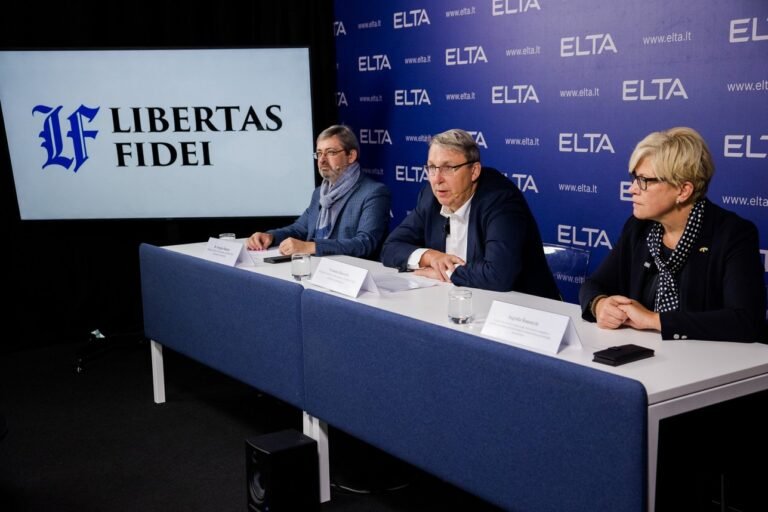
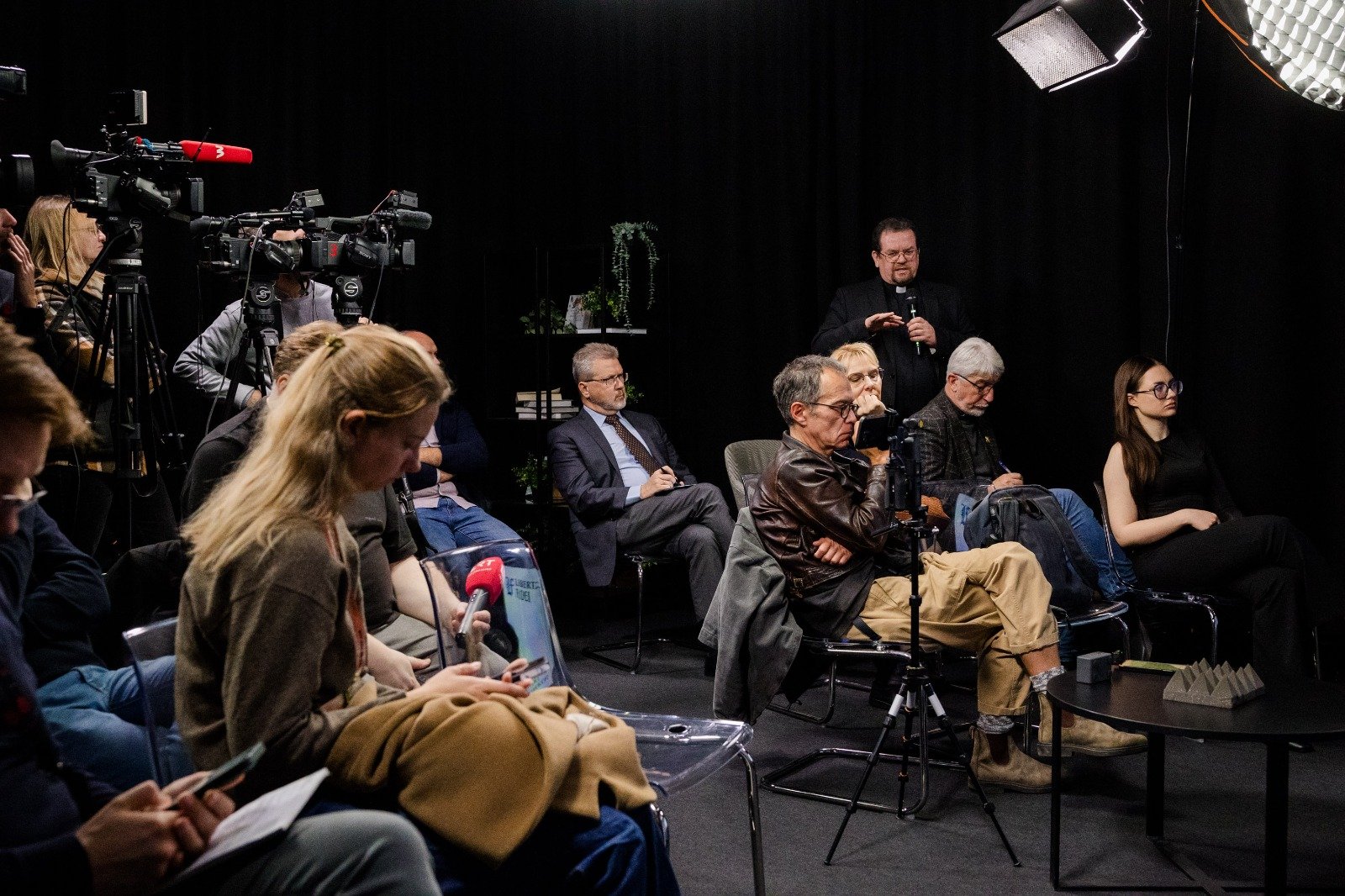
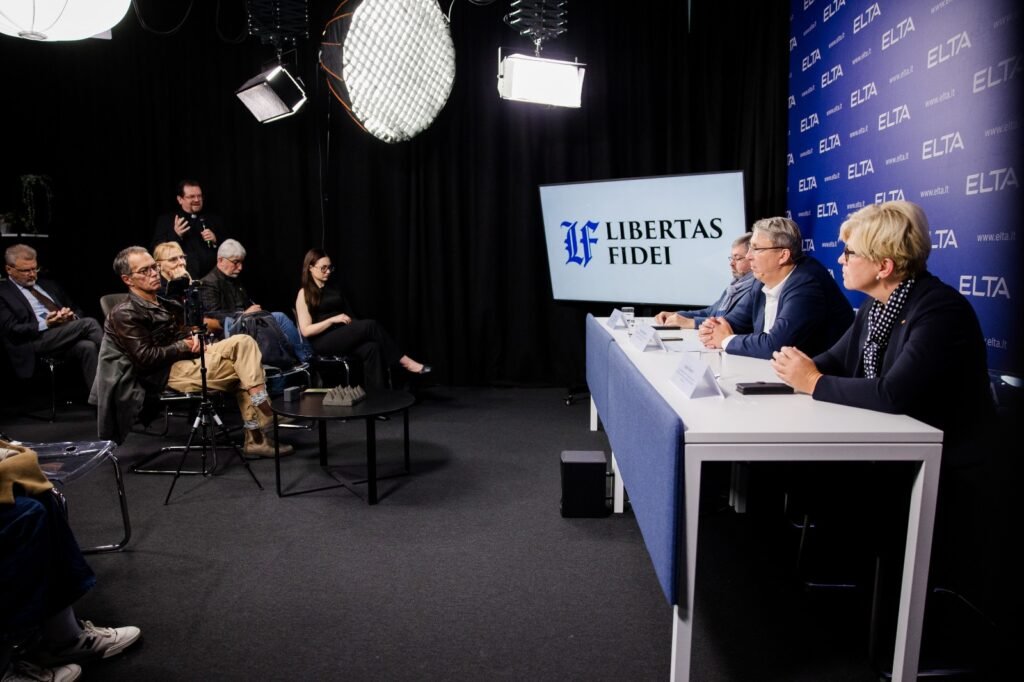
A press conference was recently held in Vilnius to present an international analytical study entitled “The Use of Religion as an Instrument of Influence and a Threat to the Security of Lithuania and Europe in the Context of Russian Military Aggression.” The event brought together journalists, analysts, academics and government officials.
The event also marked the launch of the Libertas Fidei International Centre for the Study of Religious Freedom. Participants in the discussion included former Lithuanian Prime Minister and member of the Seimas Ingrida Šimonytė, political commentator and chairman of the Centre’s board Vytautas Bruveris, and church historian, religious studies scholar, senior research fellow at the Faculty of History of Vilnius University and executive director of Libertas Fidei, Dr Serhii Shumylo.
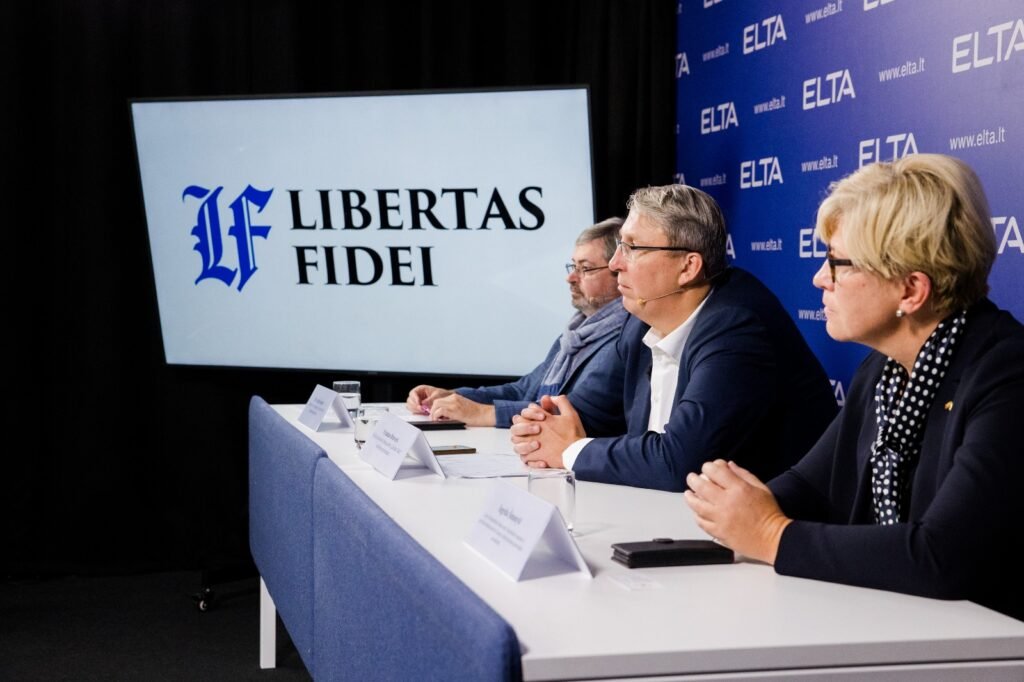
We present an overview of the views expressed by the Centre’s participants and founders.
The Moscow Patriarchate as an Instrument of Russian Influence
According to Vytautas Bruveris, structures affiliated with the Moscow Patriarchate outside Russia are not merely religious organisations but also potential instruments for advancing the Kremlin’s interests.
He stressed that their activities should receive greater attention in Lithuania and the other Baltic states, as well as at the European level.
Bruveris believes the issue is particularly relevant to major Western European countries, including Germany, where, in his assessment, the risks associated with the Moscow Patriarchate are not yet sufficiently recognised.
Bruveris highlighted a contradiction between the extensive public discussion of the Russian threat in Lithuania and the insufficient attention paid to organisations operating within the country that, according to assessments by Lithuania’s State Security Department, may be linked to that threat.
Šimonytė: Claims of Independence from Moscow Do Not Mean a Genuine Break
Ingrida Šimonytė noted that attempts by certain Orthodox structures to distance themselves from the Moscow Patriarchate do not necessarily mean that their actual dependence on Moscow has ended.
She said that assessing such claims requires consideration not only of the public positions taken by church representatives but also of the canonical mechanisms of governance, including procedures for appointing leaders and making decisions.
Šimonytė believes that declarations of autonomy are sometimes used as a convenient justification, even though the actual levers of influence may remain in Moscow.
She also pointed out that the Russian authorities use the Moscow Patriarchate to justify the war against Ukraine and interfere in the domestic political affairs of other countries.
At the same time, she assessed the scope for such influence in Lithuania as limited by the relatively small size of the Orthodox community.
Shumylo: Religious Structures May Be Used for Intelligence Purposes
Religious studies scholar Serhii Shumylo said that the use of religious organisations to advance Russian state interests has a long history.
According to him, ideological preparations for Russian military aggression began long before 2014 and 2022.
As an example, he cited the “Russian Doctrine”, developed in 2005, which he linked to the activities of the current Patriarch Kirill.
Shumylo claimed that the document outlined plans to restore Russian imperial influence and envisaged a role for Russian Orthodox Church parishes abroad as a supporting infrastructure.
The expert also cited examples of the alleged use of church connections during the events of 2014 in Crimea and Donbas.
He claimed that religious structures may have been used to establish contacts, organise support and facilitate operations by Russian forces.
The Scale of the Moscow Patriarchate’s Presence in Europe
According to figures presented by Serhii Shumylo, there are approximately 700 Moscow Patriarchate parishes in European Union member states.
Including affiliated foundations, cultural centres, schools and other organisations, he estimated that the overall network comprises more than 1,000 entities.
The expert also focused specifically on the Baltic states. He reported that the Moscow Patriarchate operates 52 parishes in Lithuania, 125 in Latvia and 37 in Estonia.
He estimated the number of Moscow Patriarchate adherents in Lithuania at between 100,000 and 140,000.
Shumylo also stated that some newly built Russian Orthodox churches in Western Europe are located near strategically important facilities.
In particular, he mentioned a church in Västerås, Sweden, built approximately five kilometres from a nuclear facility. According to the expert, Swedish security services had considered it a possible base for intelligence activities.
Shumylo also referred to allegations that church structures in Estonia had collected aid for Russian military personnel, reports of similar incidents in the Czech Republic, and the expulsion of clergy from Bulgaria on suspicion of acting on behalf of Russian intelligence services.
The expert presented all these claims as arguments for closer scrutiny of the Moscow Patriarchate’s activities in Europe.
The Lithuanian Diocese’s Canonical Dependence on Moscow
Serhii Shumylo addressed the status of the Moscow Patriarchate’s Diocese of Vilnius and Lithuania.
According to him, it is not an independent ecclesiastical body and remains canonically subordinate to Moscow.
The expert noted that the use of the name “Lithuanian Orthodox Church” does not, in itself, signify the existence of an independent church organisation.
He cited the mandatory commemoration of Patriarch Kirill during religious services as one indication of this continuing dependence.
Shumylo stressed that canonical rules and relationships often carry greater practical weight in church life than outward declarations of autonomy.
The Constantinople Exarchate: Restoring Historical Justice
Ingrida Šimonytė described the establishment of an exarchate of the Ecumenical Patriarchate of Constantinople in Lithuania as an important historical event.
According to her, it represents more than the creation of a new religious structure. It is also a restoration of historical justice and a step towards overcoming the consequences of centuries of ecclesiastical dependence on Moscow.
Šimonytė emphasised that the exarchate has already become an active religious community, although it still lacks sufficient churches of its own and a stable material foundation.
She acknowledged the contribution of clergy who had remained true to their principles, as well as the support provided by the Patriarchate of Constantinople.
The former prime minister believes that strengthening the exarchate should remain a priority for both society and the state.
Bans or Targeted Measures: How to Counter the Threats
Participants in the discussion expressed differing views on possible legislative restrictions affecting Moscow Patriarchate structures.
Ingrida Šimonytė urged caution against hasty or radical decisions.
In her view, simply passing a law requiring the severance of ties with Moscow would not necessarily bring about a genuine change in a religious organisation’s canonical status.
She also warned against blanket bans on entire religious communities or the transfer of their property to other church organisations.
Šimonytė stressed that Lithuania must take account of its own historical experience of religious persecution and guarantee freedom of religion.
At the same time, she advocated targeted measures against specific individuals where there are grounds to suspect them of acting on behalf of Russian intelligence services. In such cases, she said, measures involving visas, residence permits and deportation could be applied.
Serhii Shumylo, for his part, welcomed Estonia’s legislative measures aimed at ending religious organisations’ dependence on the Moscow Patriarchate.
He emphasised that such requirements do not entail the abolition of a religious denomination and should not affect the language of worship, the church calendar, religious rites or other aspects of religious life.
In his view, severing administrative and canonical ties with centres of Russian political influence does not violate freedom of religion. On the contrary, it helps protect that freedom.
The Threat Must Be Addressed Before a Crisis Develops
Ingrida Šimonytė drew attention to the fact that the activities of the Moscow Patriarchate had, for the first time, received such an explicit assessment in reports by Lithuania’s state security authorities.
According to her, the issue had previously been discussed mainly among experts and had not featured prominently in public debate.
The situation began to change after clergy spoke out against the Moscow Patriarchate’s position and subsequently came into conflict with the church leadership.
Šimonytė believes that the state must find ways to reduce the risks rather than wait for a potential threat to develop into a serious problem.
Overall, the press conference participants agreed that the activities of religious structures linked to Moscow require closer scrutiny by European governments. The central challenge, however, remains finding the right balance between protecting national security and upholding freedom of religion.